Shrines & Temples of Japan
Stop photographing the gate.
Walk through it properly.
Guidebooks tell you a shrine is beautiful. They rarely tell you which kami is enshrined there, what people are actually asking for, how to bow and clap, or how to receive a goshuin without being rude. That information exists — it is just written in Japanese, on the shrine’s own pages. We read those and write down what a visitor needs.
What are you going to ask for?
Japanese shrines are not interchangeable. Each is associated with particular concerns — a match, a recovery, an exam — and people choose accordingly. This is how a Japanese visitor picks.
Bonds & Matchmaking
6縁結び
En means a tie between people — a partner, but also a friendship or a working relationship. Shrines associated with en-musubi are where people go to ask for a good connection, or for an existing one to hold.
Money & Business
2金運
Requests about money: a business that keeps going, debts collected, a household that balances. Japanese practice treats this as an ordinary thing to ask for, without embarrassment.
Health & Recovery
2健康
For recovery from a specific illness, for an operation to go well, or for a long life. Often visited on behalf of someone else rather than for oneself.
Warding Off Misfortune
5厄除け
Yakuyoke is protection against bad luck, particularly during the yakudoshi — the ages traditionally considered unlucky. It is preventive rather than curative.
Study & Exams
3学業
Overwhelmingly about entrance examinations. The exam-season crowds at Tenjin shrines are one of the most visible acts of popular devotion in Japan.
Work & Career
1仕事運
Promotion, finding a job, a project landing. Distinct from business prosperity, which is about the enterprise rather than the person.
Childbirth & Children
1安産
Safe delivery and conceiving a child. The traditional visit is on a Day of the Dog in the fifth month of pregnancy, dogs being thought to give birth easily.
Performing Arts
1芸能
For performers, musicians, actors and anyone whose work is judged by an audience — a successful run, an audition passed, a skill improved.
Travel & Road Safety
1交通安全
Protection on the road. In Japan this is concrete rather than abstract: cars themselves are brought to the shrine and purified.
Victory
1必勝
For a contest with a clear winner — a match, a competition, a negotiation. Historically the concern of warriors, now largely of athletes and candidates.
Turning Fortune
8開運
The broadest category: a general request that things start going better. Where you go when the problem is not one specific thing.
Every place we have written up
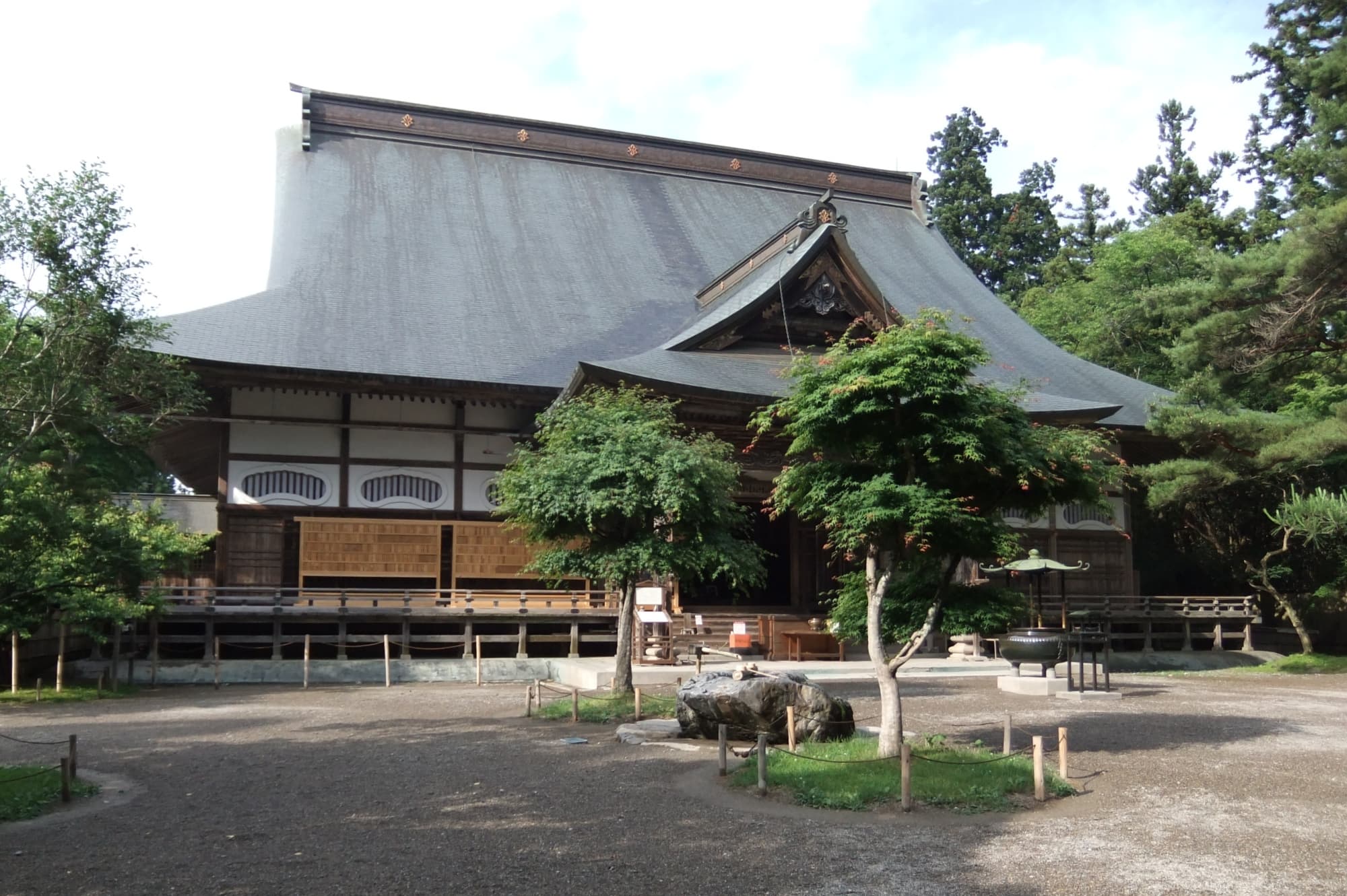
Chuson-ji
中尊寺 · Hiraizumi, Iwate
A World Heritage Tendai temple whose golden hall was raised in 1124 as a vow for the repose of the dead of both sides in a war — and it is a temple, so do not clap.
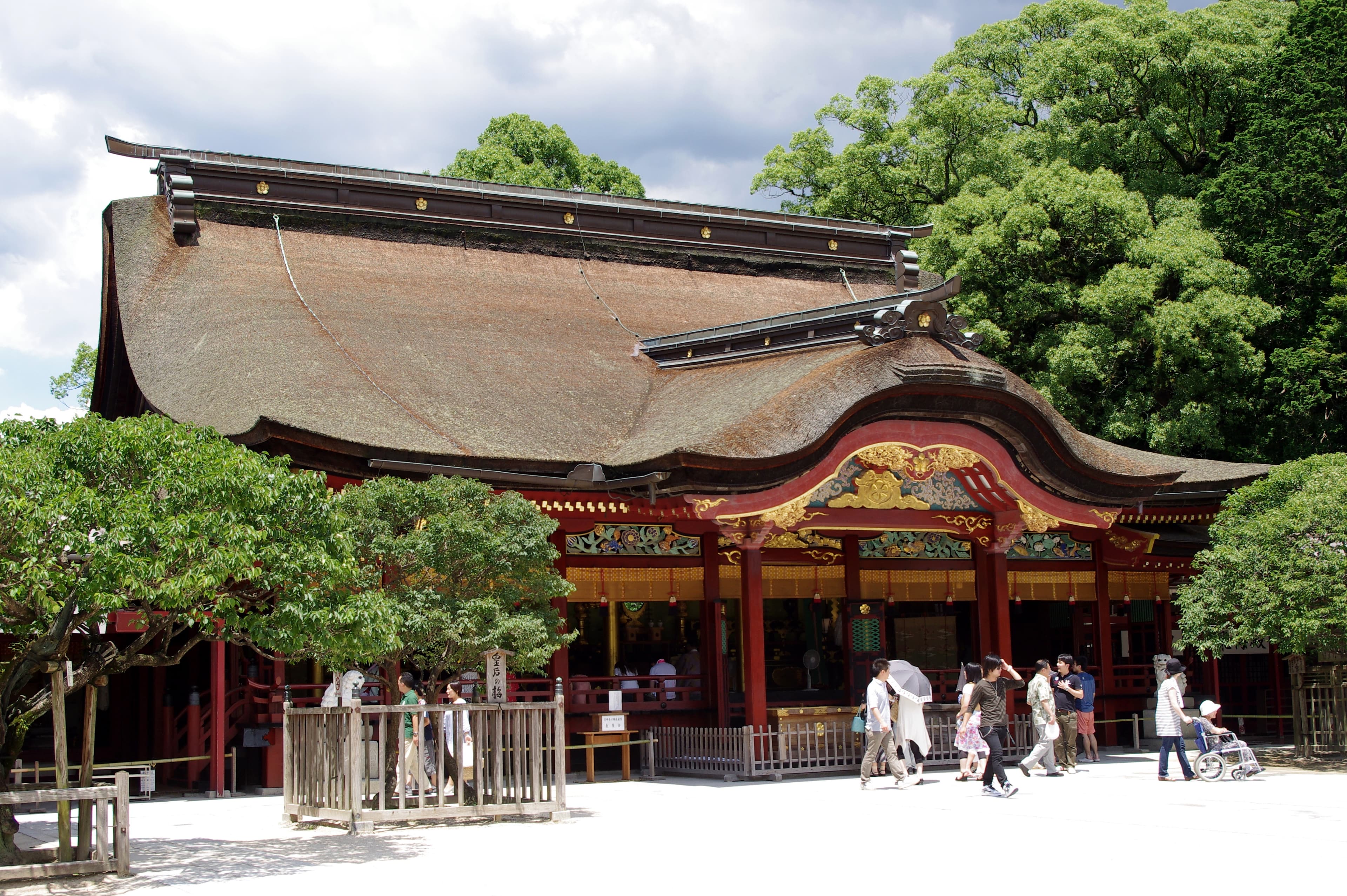
Dazaifu Tenmangu
partial太宰府天満宮 · Dazaifu, Fukuoka
The head shrine of every Tenmangu in Japan, built over the grave of an exiled scholar — and currently mid-way through the end of a 124-year restoration.
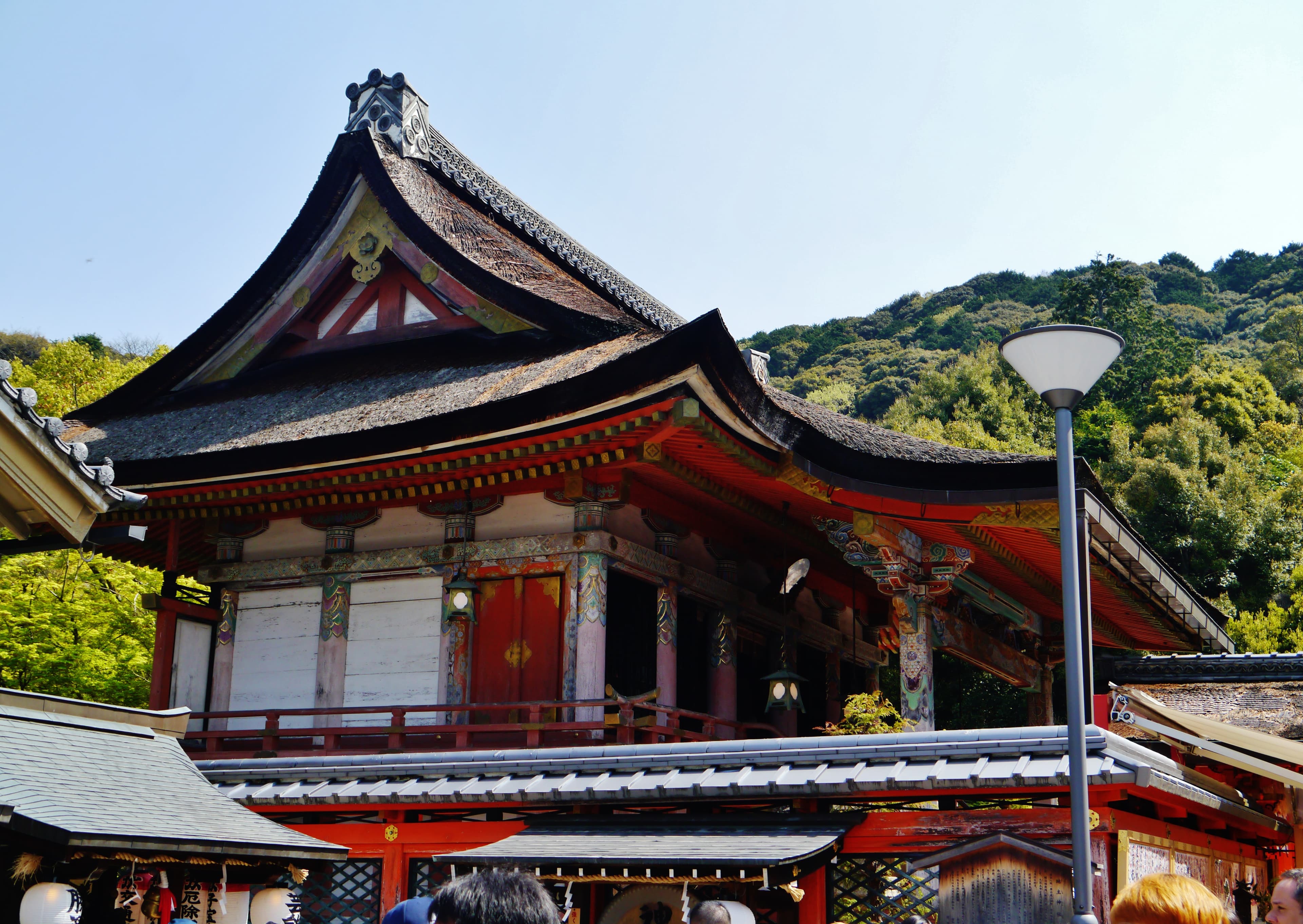
Jishu Jinja
closed地主神社 · Higashiyama, Kyoto
Kyoto's famous love-stone shrine inside Kiyomizu-dera — closed since 2022, with no reopening date, and still listed as open almost everywhere in English.
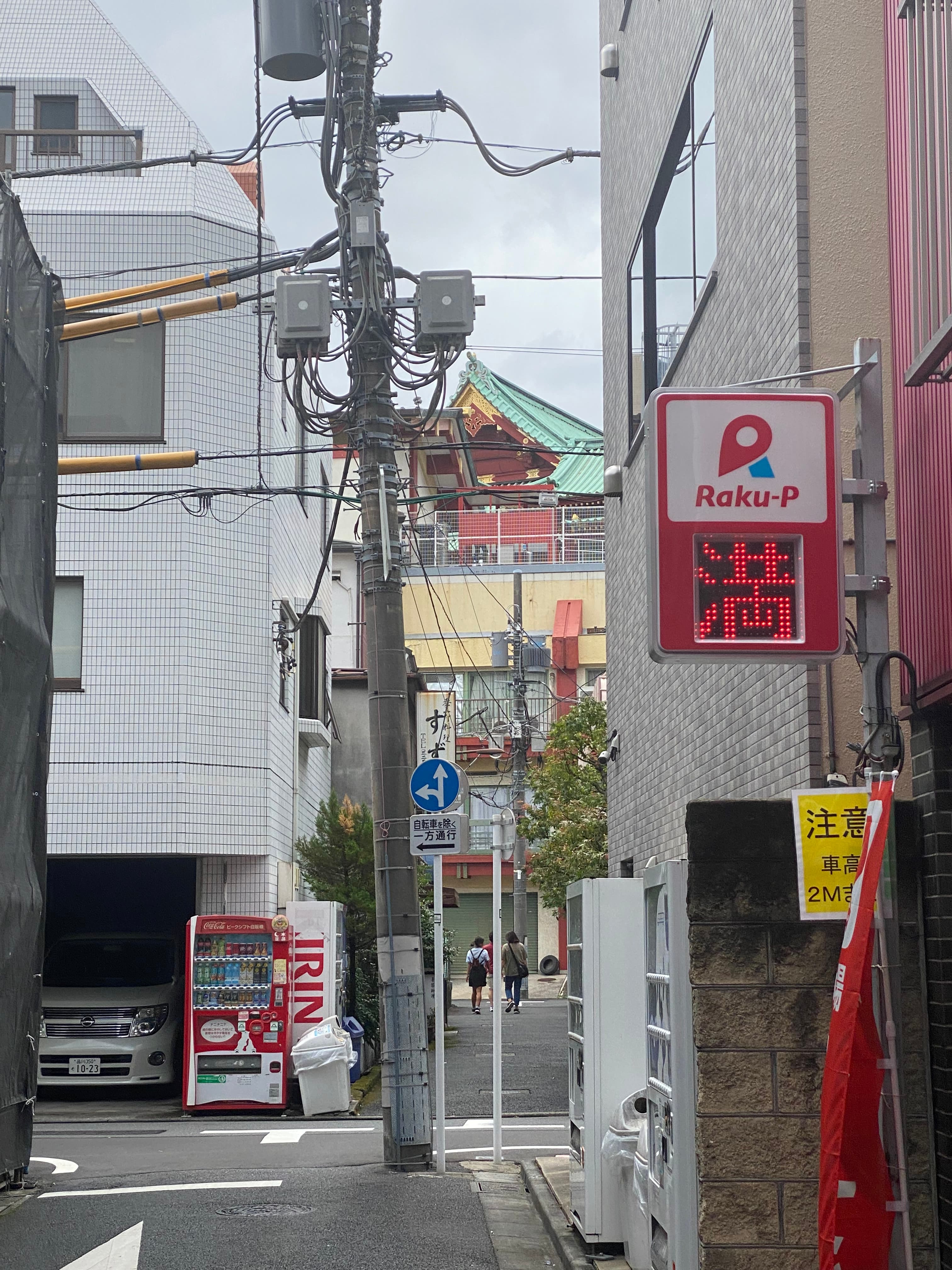
Kanda Myojin
神田明神 · Chiyoda, Tokyo
The tutelary shrine of Edo's merchant districts, next door to Akihabara — and the most relaxed major shrine in Tokyo about how you approach it.
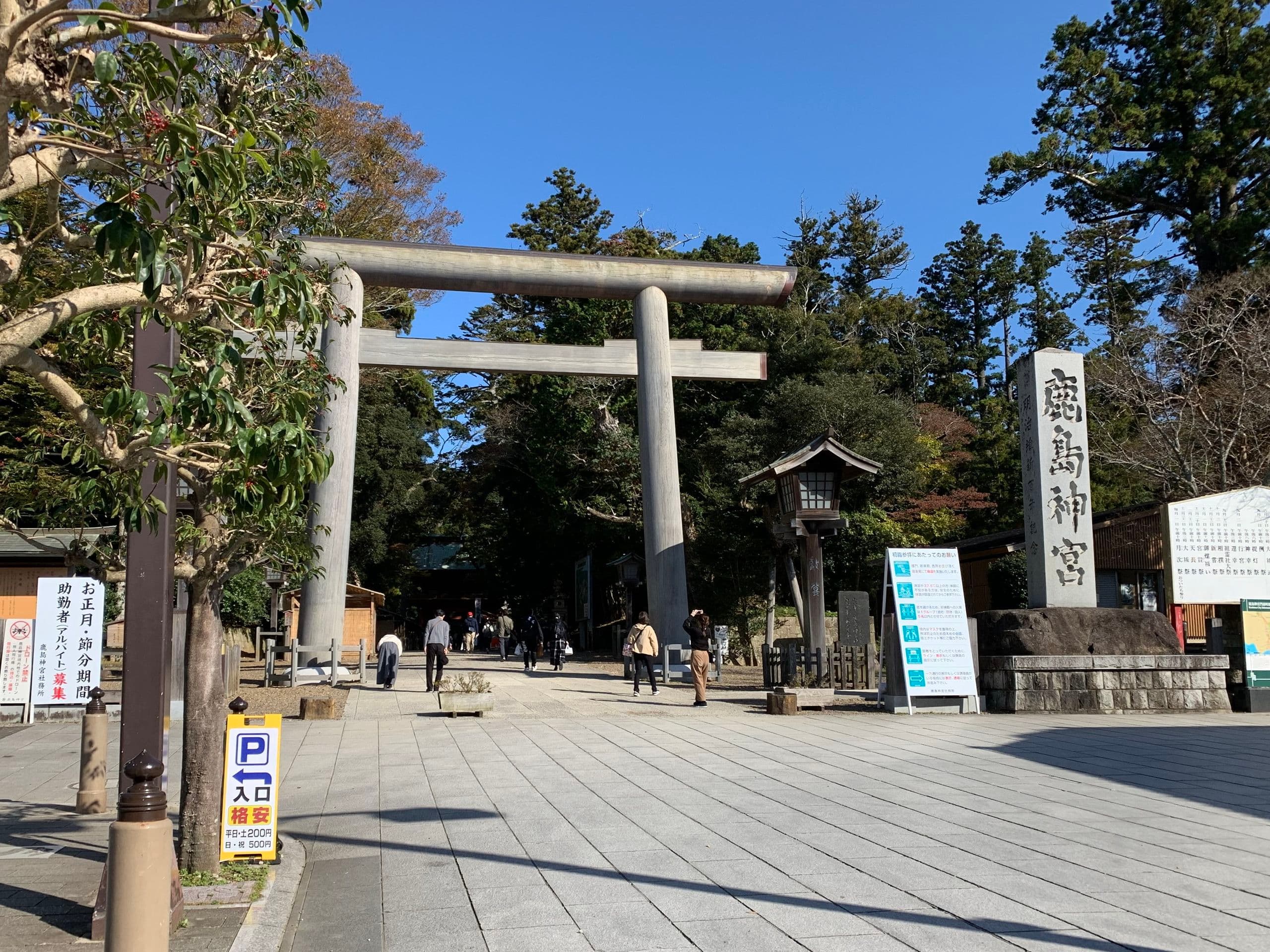
Kashima Jingu
partial鹿島神宮 · Kashima, Ibaraki
A vast forest shrine to the sword-and-thunder kami, where a stone said to pin down the earthquake catfish sits at the end of a 700-metre cedar path.
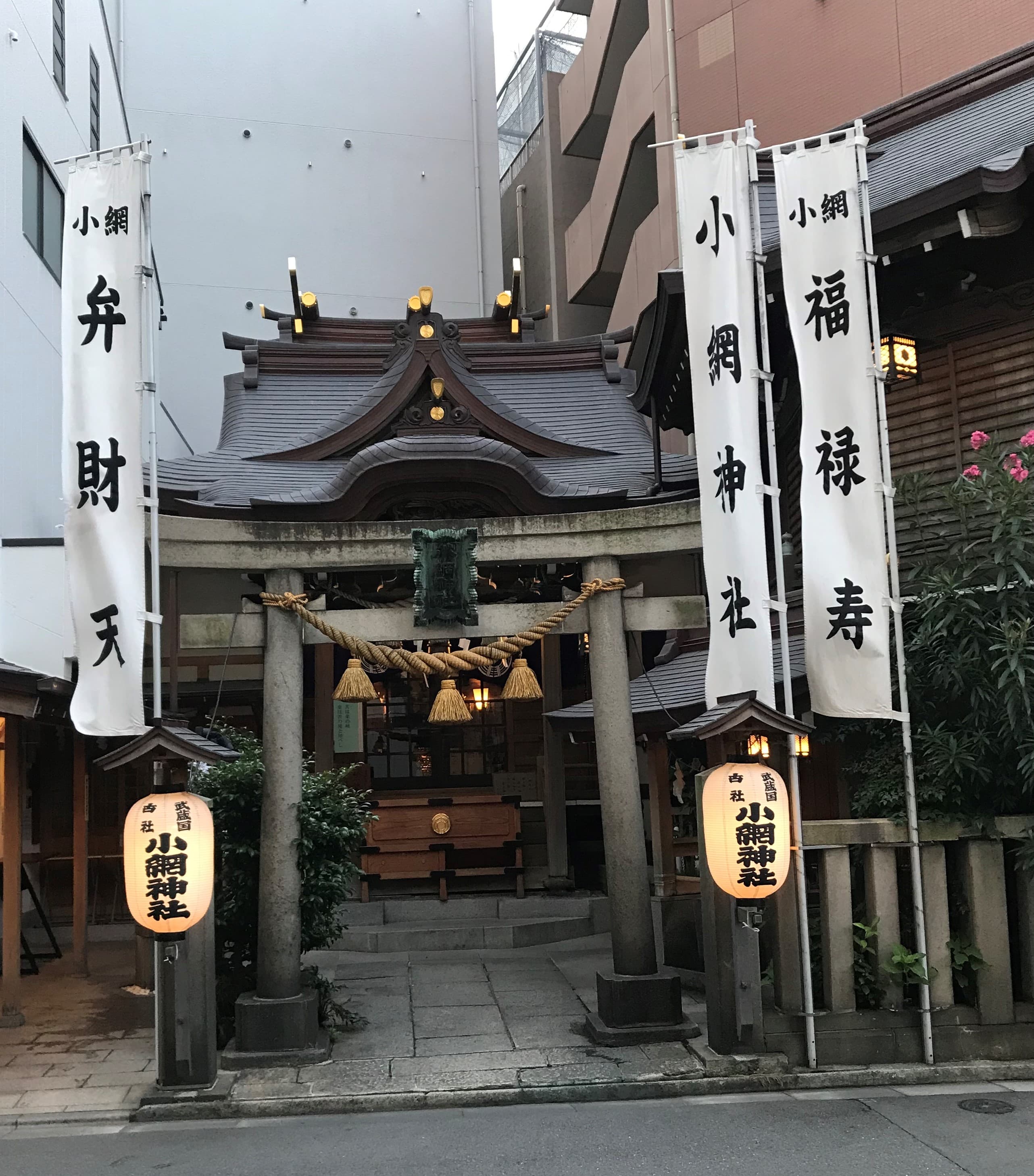
Koami Jinja
小網神社 · Chuo, Tokyo
A tiny Nihonbashi shrine with a reputation for strong luck built on two documented survivals — and a coin-washing well that is the reason most people come.
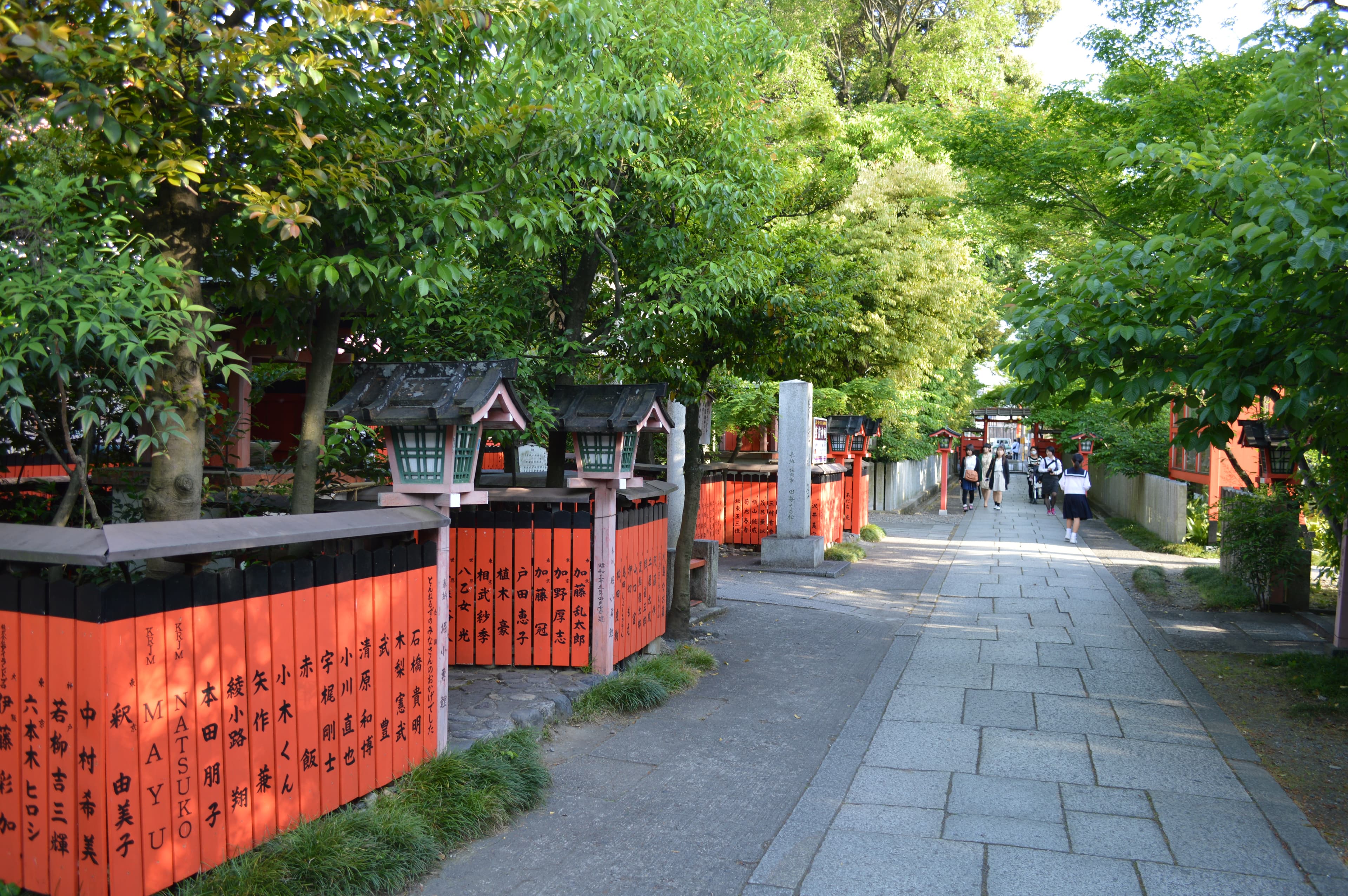
Kurumazaki Jinja
車折神社 · Ukyo, Kyoto
The Arashiyama shrine where promises are kept — and where four thousand vermilion plaques carry the names of Japanese performers, dedicated by the performers themselves.
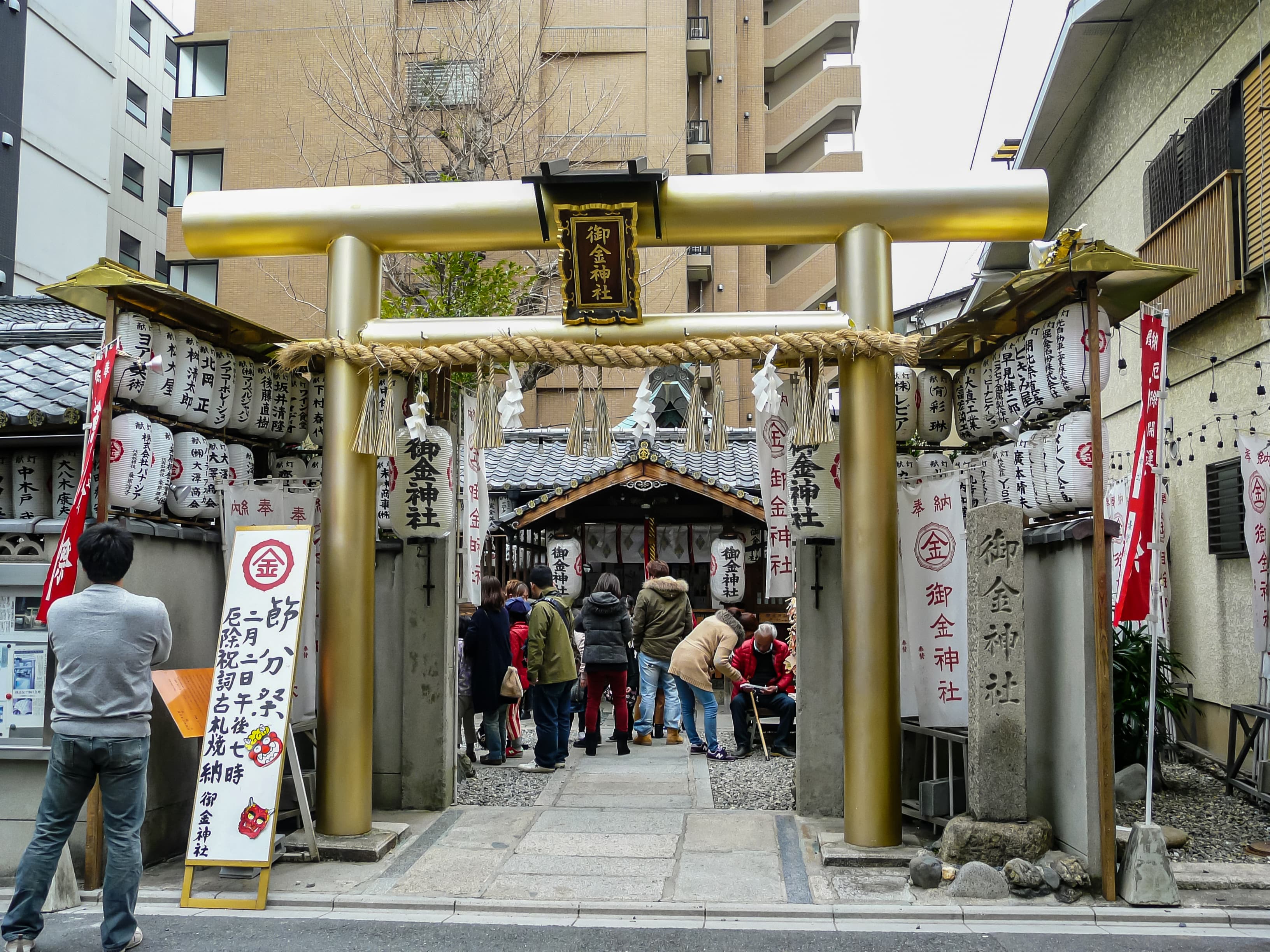
Mikane Jinja
御金神社 · Nakagyo, Kyoto
A tiny shrine to the deity of metals with a gold-leafed torii, wedged into a Kyoto residential street — and it publicly disowns the coin-washing ritual the internet teaches you to do there.
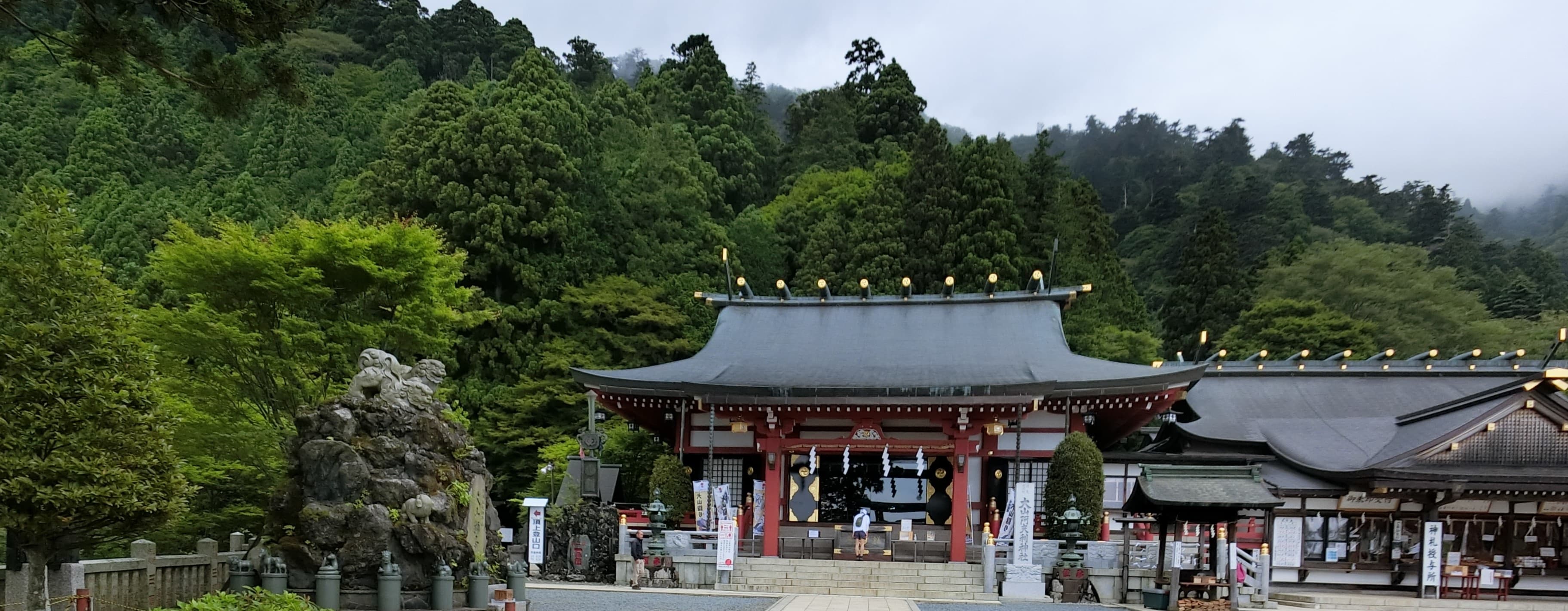
Oyama Afuri Jinja
大山阿夫利神社 · Isehara, Kanagawa
A mountain shrine ninety minutes from Tokyo where the lower hall is a cable-car ride and the upper hall is a two-hour climb — and the difference matters.
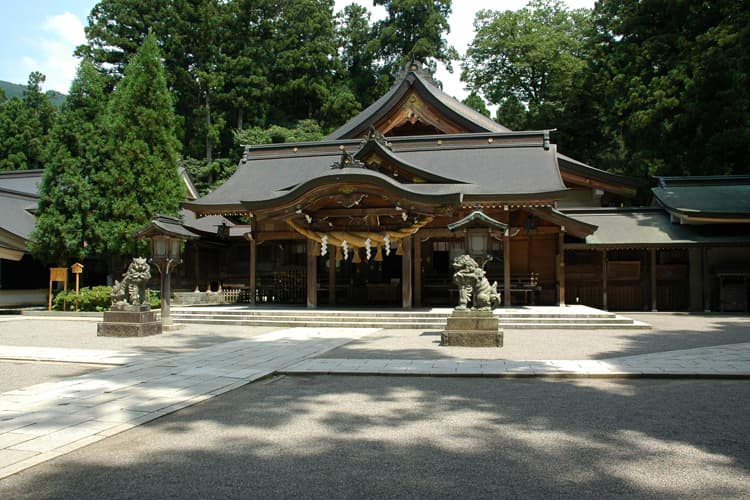
Shirayama Hime Jinja
白山比咩神社 · Hakusan, Ishikawa
Head shrine of some three thousand Hakusan shrines, at the foot of a sacred mountain — and one of the few places that still offers misogi, cold-water ablution, as a standing rite.
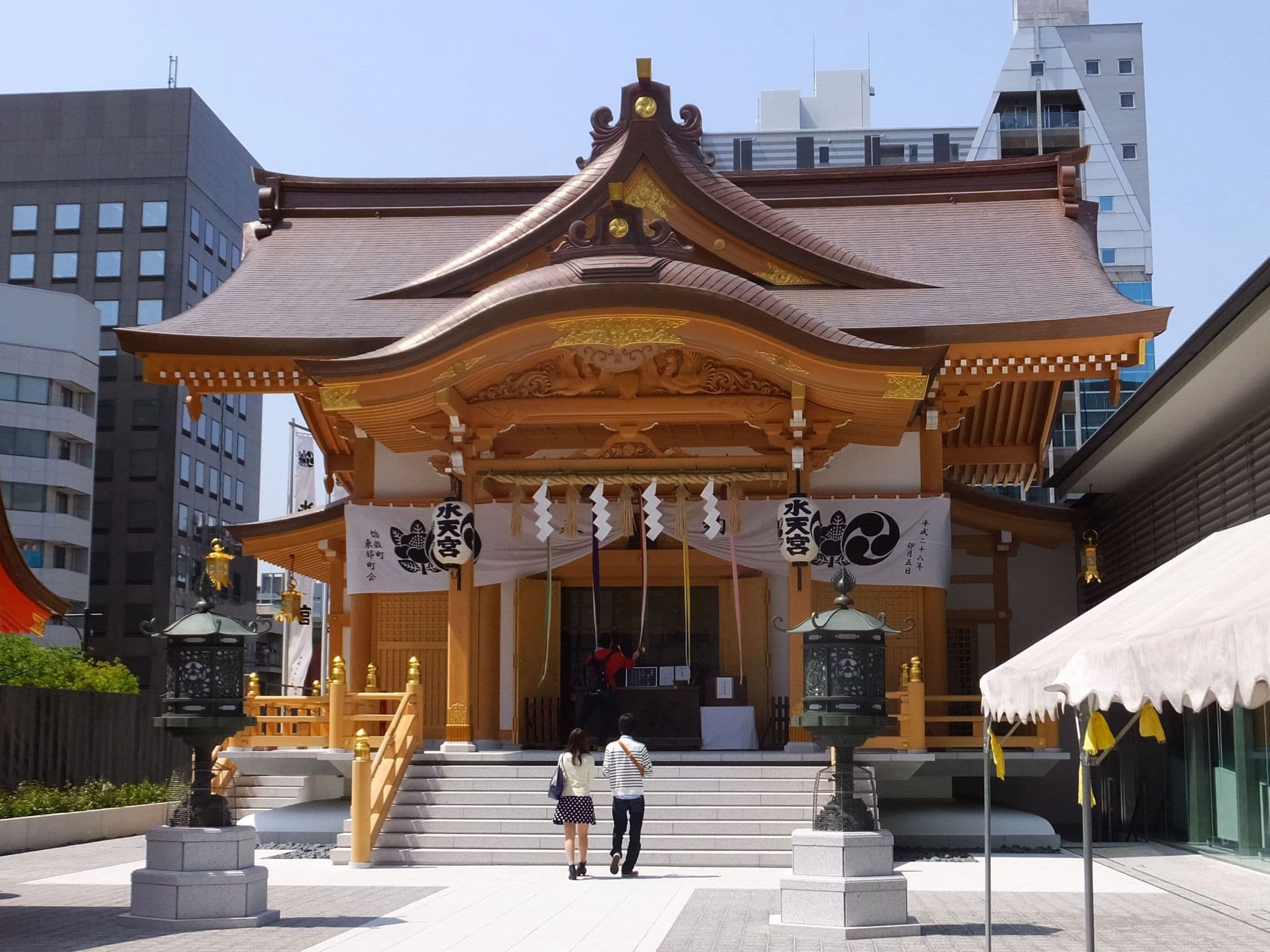
Suitengu
水天宮 · Chuo, Tokyo
Tokyo's shrine for safe childbirth, rebuilt in 2016 as a base-isolated modern structure raised above a car park — nothing about it looks the way visitors expect.
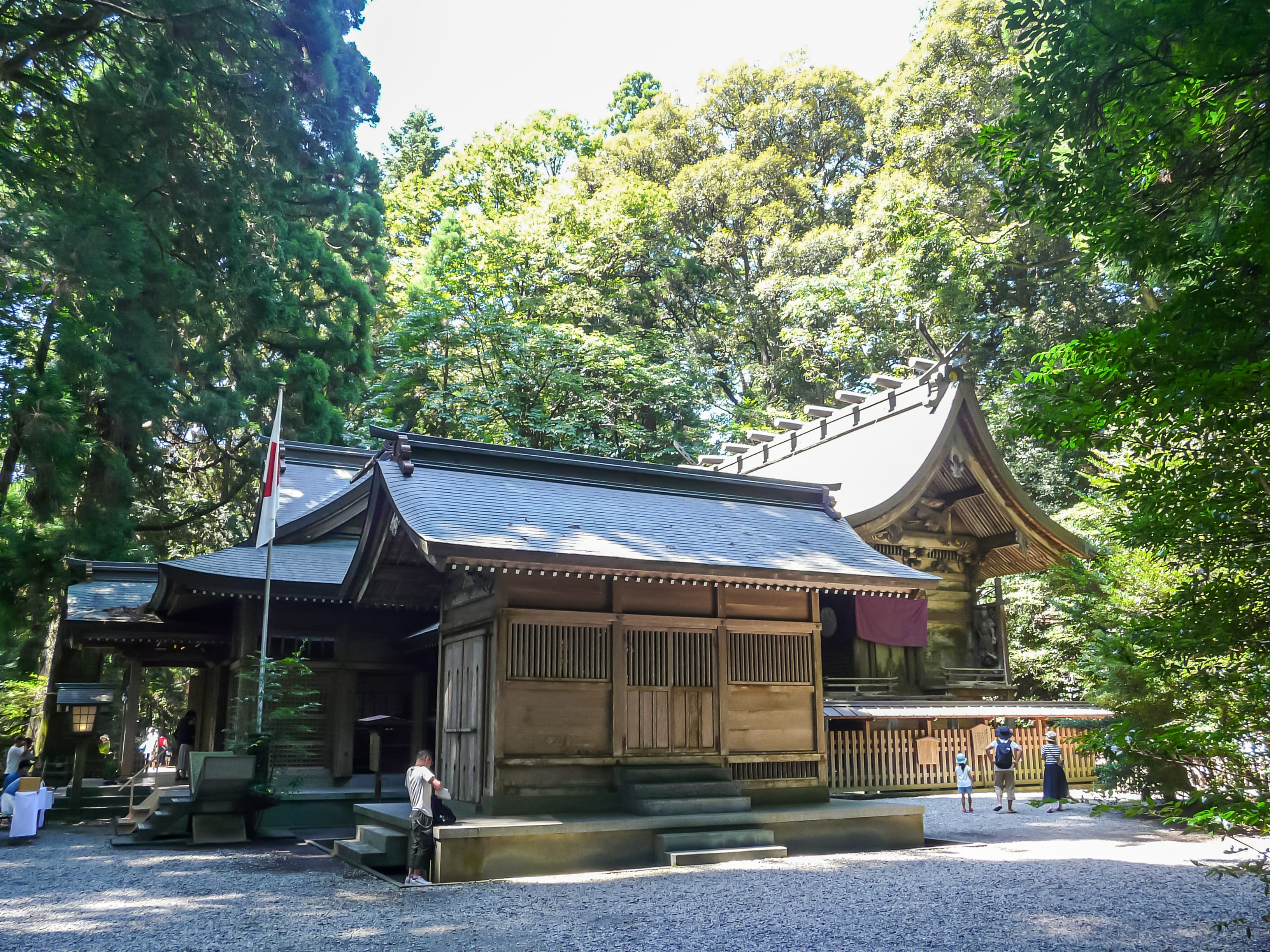
Takachiho Jinja
高千穂神社 · Takachiho, Miyazaki
The head shrine of Takachiho's eighty-eight shrines, where four kagura dances are performed for visitors every night of the year at eight o'clock.
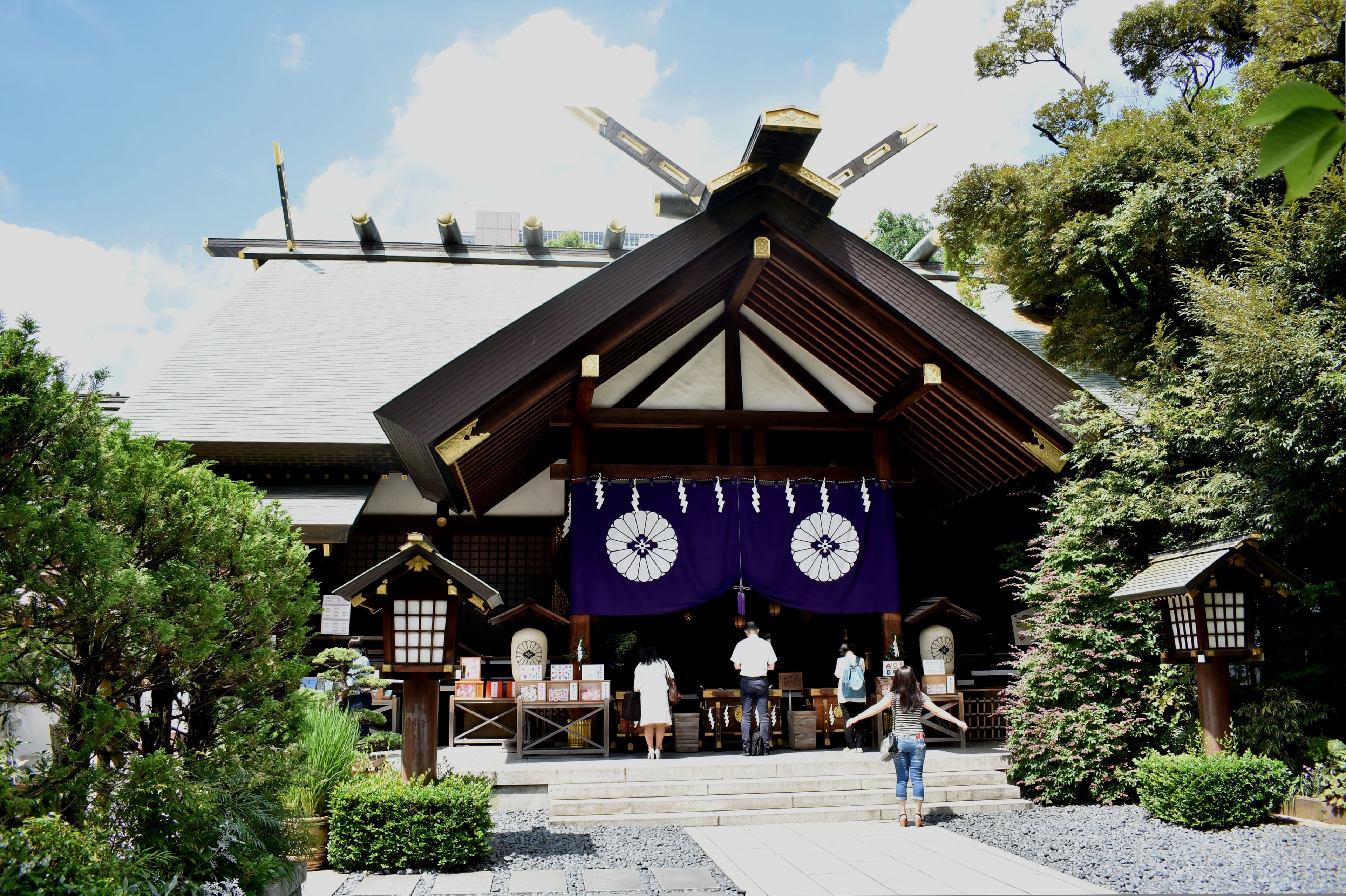
Tokyo Daijingu
東京大神宮 · Chiyoda, Tokyo
Tokyo's stand-in for Ise, and the shrine that invented the modern Shinto wedding — now the busiest place in the city to ask for a partner.
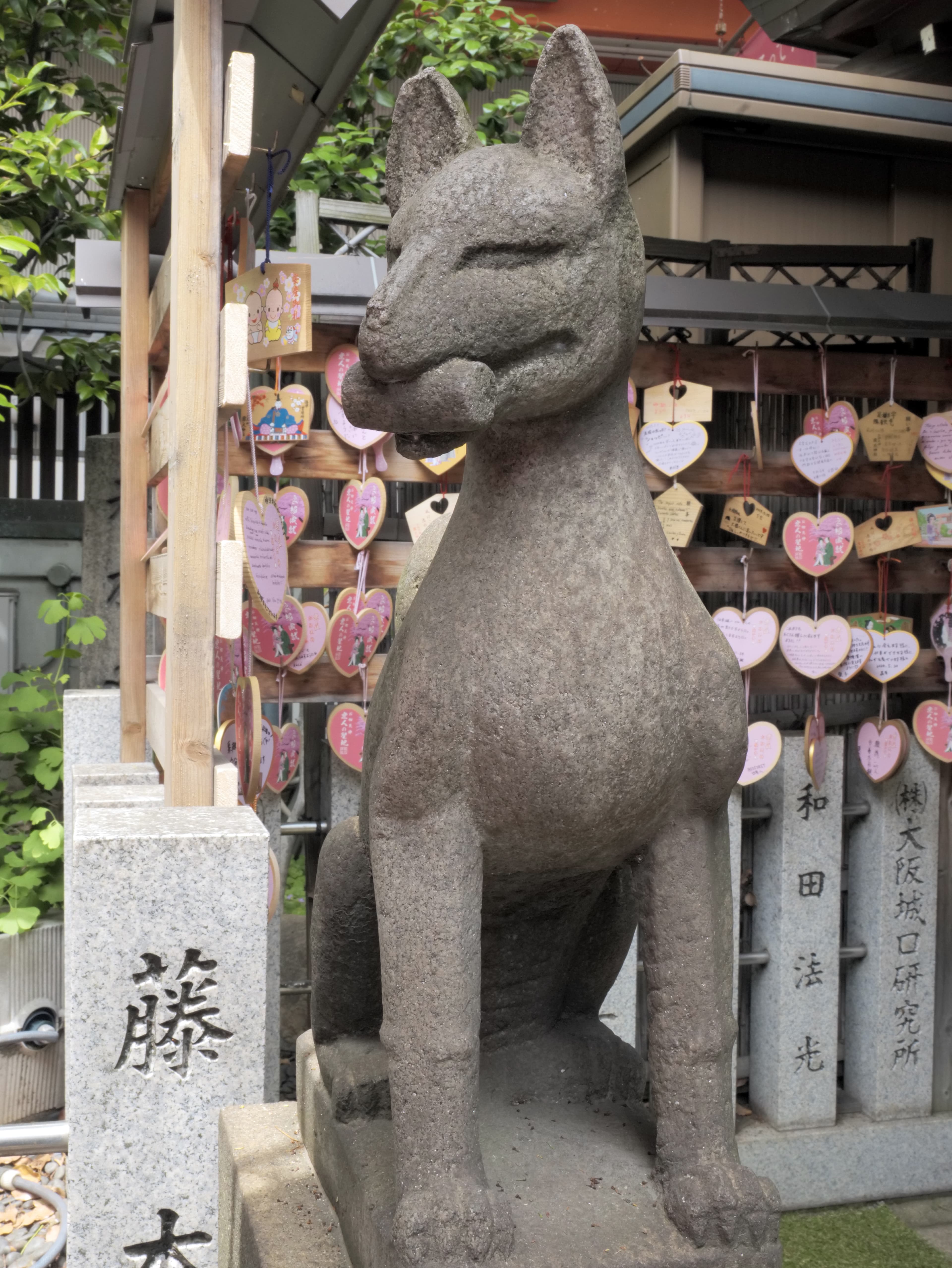
Tsuyu no Tenjinsha (Ohatsu Tenjin)
露天神社(お初天神) · Kita, Osaka
A small Osaka shrine hemmed in by izakaya, known for love — because two people really did die here in 1703, and Japan's greatest playwright wrote it down.
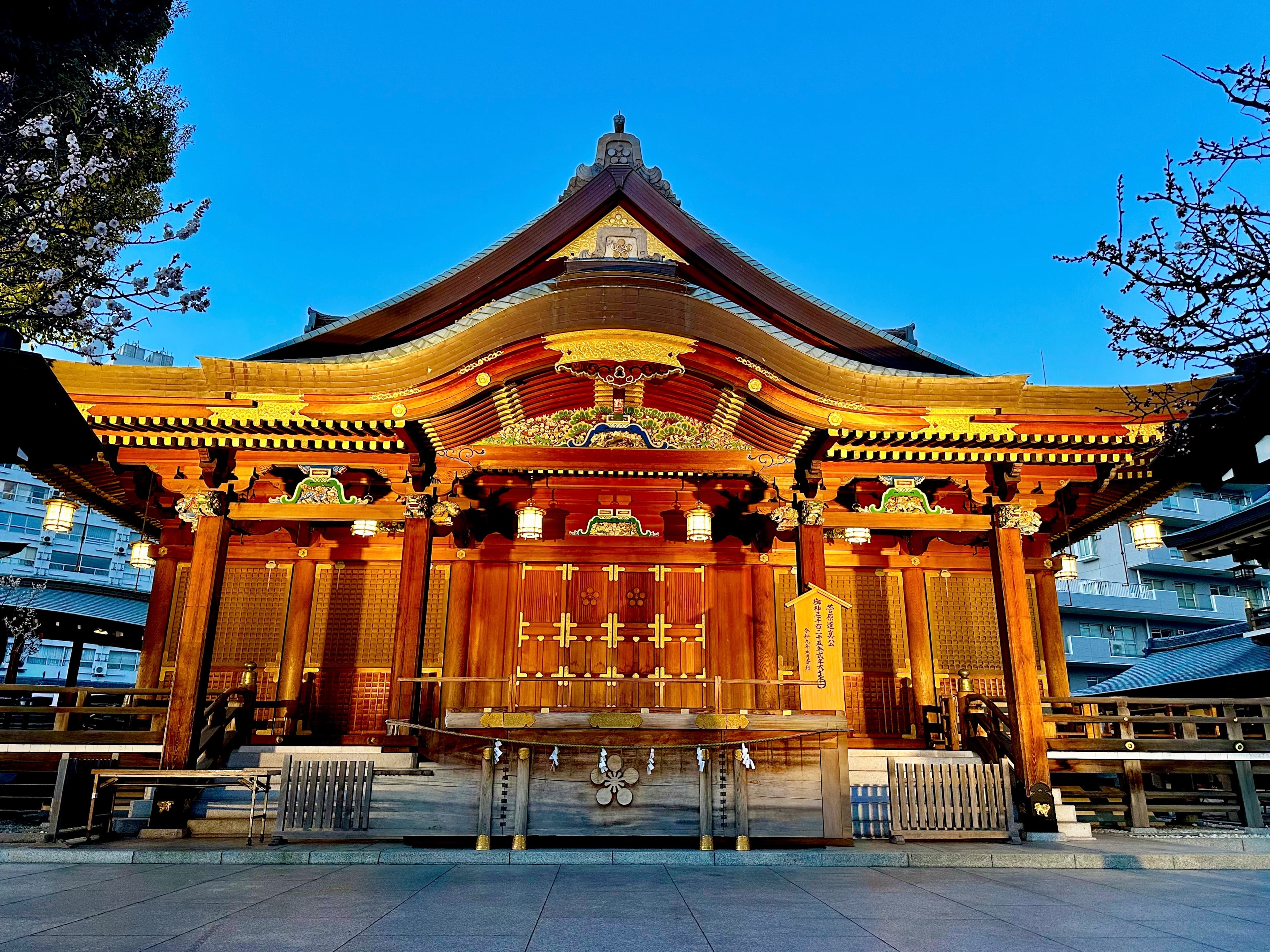
Yushima Tenmangu
湯島天満宮 · Bunkyo, Tokyo
Tokyo's exam shrine. In February the ema racks are so dense with entrance-exam prayers that you cannot see the wood.