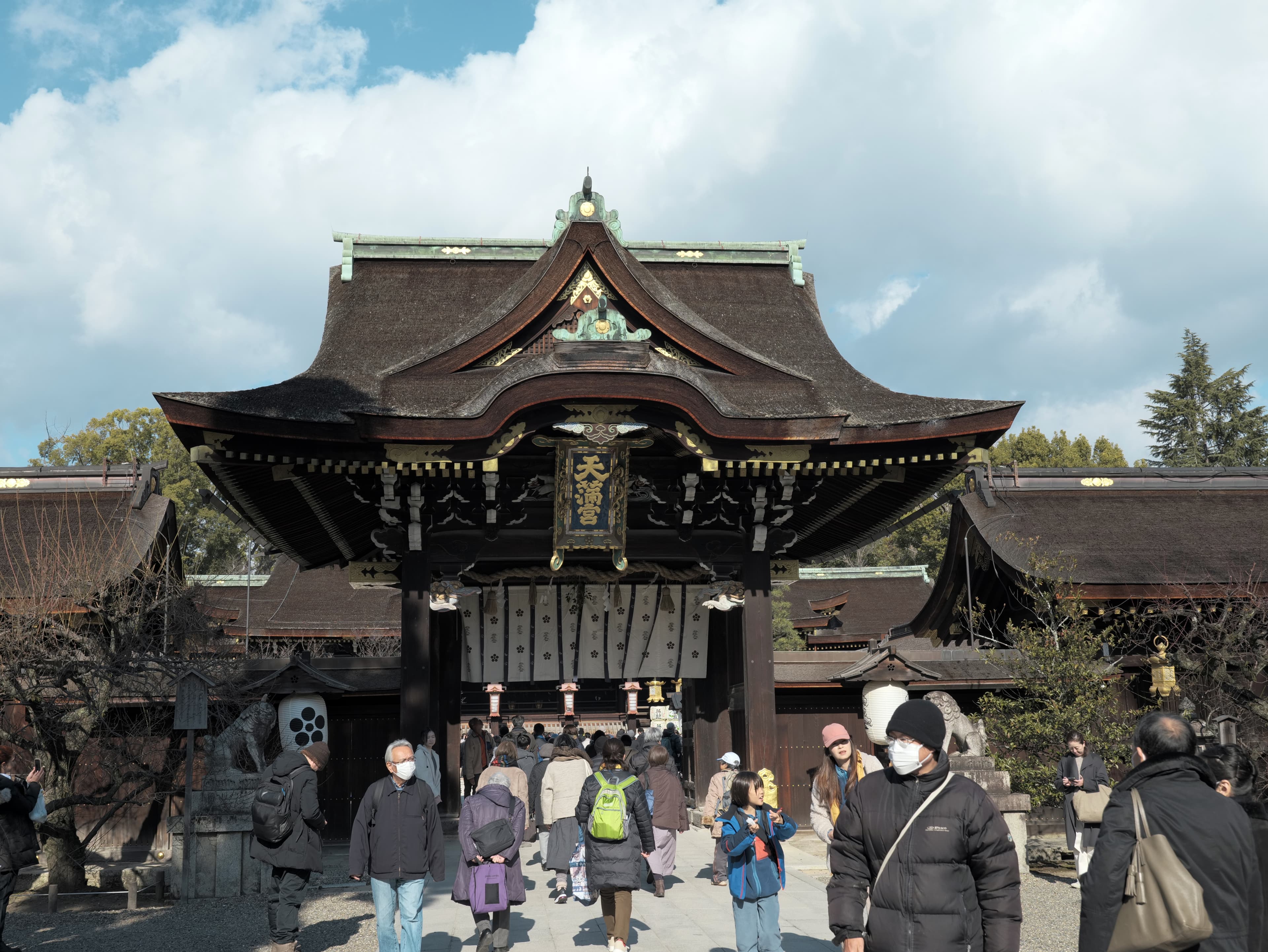
Kitano Tenmangu
北野天満宮
Kyoto, Kyoto · Shinto shrine
Kyoto's Tenjin shrine, where an academic prayer, a touchable ox and a large monthly market all occupy the same grounds.
Kitano Tenmangu is the head shrine of the Tenjin tradition: its principal deity is Sugawara no Michizane, the scholar and court official whose posthumous veneration spread through thousands of shrines across Japan. The shrine's own account says it was founded here in 947, at the north-western edge of Heian-kyō, and that the present honden is a National Treasure rebuilt by Toyotomi Hideyori in 1607.
The association with learning is real and specific, but it is not a promise of an exam result. The shrine presents itself as a place for prayers for entrance-exam success and academic achievement, and also for culture, the arts and protection from calamity. Kyoto's city guide likewise describes Michizane as the deity of this shrine and Kitano as a place people visit for learning.
The visit has two practical anchors beyond the main sanctuary. The shrine's north-western Ushisha holds the old one-wish ox, and the 25th of every month brings the Tenjin-san market, a different kind of crowd from an ordinary worship visit. Plan around both rather than treating the famous gate as the whole experience.
Which kami is enshrined here
- Sugawara no Michizane 菅原道真公
- The principal deity. The shrine presents him as the scholar and court official enshrined here, and as the figure at the centre of the nationwide Tenjin tradition.
- Chujo-dono 中将殿
- Michizane's son, enshrined in the east seat alongside the principal deity.
- Kisshojo 吉祥女
- Michizane's wife, enshrined in the west seat alongside the principal deity.
Take part
What you can actually do here
The ox and the request
The shrine's official account describes the seated ox as a messenger of Tenjin. At the Ushisha in the north-west of the grounds, the old ox is known as the one-wish ox and has long been visited by students and other worshippers. The shrine's published explanation of nade-ushi says that visitors touch the head while asking for academic achievement, or touch a hand or foot when praying about a problem with that part of the body.
The shrine also places the prayer-ema rack at the one-wish ox. Write the request on the ema and hang it there. This is a local form of prayer and a way to state what you are asking for; it is not a guarantee that an examination or other outcome will follow.
The 25th is a different visit
Every 25th is the Tenjin-san day, a monthly sacred day associated with Michizane's birth date and death date. The Kyoto City tourism listing describes the market as running from the early morning to around sunset, with stalls and evening illumination. It is a useful time to see the shrine as a living neighbourhood institution, but it is also the day the shrine tells drivers that its visitor parking cannot be used.
Etiquette
Where this place differs
This is a Shinto shrine: at the main sanctuary, use two bows, two claps and one bow. The ox-touching and ema instructions above belong to the Ushisha and its ema rack; they are not a general rule for every shrine.
The famous Sanko-mon is the gate in front of the National Treasure honden. The shrine's opening hours, office counter and formal-prayer reception are separate services, so worship at the honden before collecting a goshuin or other item. On the 25th, use public transport because the shrine says the visitor car park is unavailable for the market.
New to this? Read the full worship sequence first.
Goshuin
Getting the seal here
The shrine's school-visit guide gives the ordinary reception window as 9:00–16:00 and says that goshuin writing outside that window is available only when a school has contacted the shrine in advance. The official pages checked do not identify a regular individual goshuin counter, or state whether the regular seal is direct-written or supplied on paper. The official amulet catalogue lists a Kitano Tenmangu goshuincho at ¥2,000, but does not list the price of the regular seal itself.
For ordinary individual visitors, the official pages checked do not publish a regular goshuin price, whether the regular seal is direct-written or supplied on paper, or a separate counter name. The current official homepage does publish one concrete exception: a special goshuin for the 12–23 September 2026 night opening, ¥500, with an image of the design. Confirm the regular format and amount at the counter on the day.
Before you go
Academic prayer is not an admission guarantee. The shrine documents the request and the ema custom; it does not establish that touching an ox produces a particular result.
Do not drive on the 25th. The monthly market brings stalls and crowds, and the shrine explicitly says its visitor parking cannot be used that day. Check the latest notice before travelling because the market and other events can change.
The official homepage's special goshuin notice is tied to the 12–23 September 2026 night opening. After that period, treat the ¥500 design as historical and ask about the current regular offering at the授与所.
Map
Sources
This page draws on the following sources, most of them in Japanese.
- 北野天満宮 — 北野天満宮について
- About the Kitano Tenmangu Shrine — official English guide
- 北野天満宮 — 北野天満宮と牛
- 北野天満宮 — 参拝時間・アクセス
- 北野天満宮 — 修学旅行のご参拝
- 北野天満宮 — 御祈祷
- 北野天満宮 — お守り・お札・授与品
- 北野天満宮 — 2026年9月の夜間公開と特別御朱印(公式トップ)
- 北野天満宮 — 2026年9月特別御朱印の掲載画像(公式)
- 北野天満宮 — 2026年夜間ライトアップ案内(公式PDF)
- 京都市公式 京都観光Navi — 天神市(北野天満宮)
- 京都市公式 京都観光Navi — 北野天満宮
- 京都総合観光案内所 京なび — 北野天満宮への行き方
- 北野天満宮 — 公式Instagram
- 北野天満宮 — 公式X
Others people visit for the same reasons
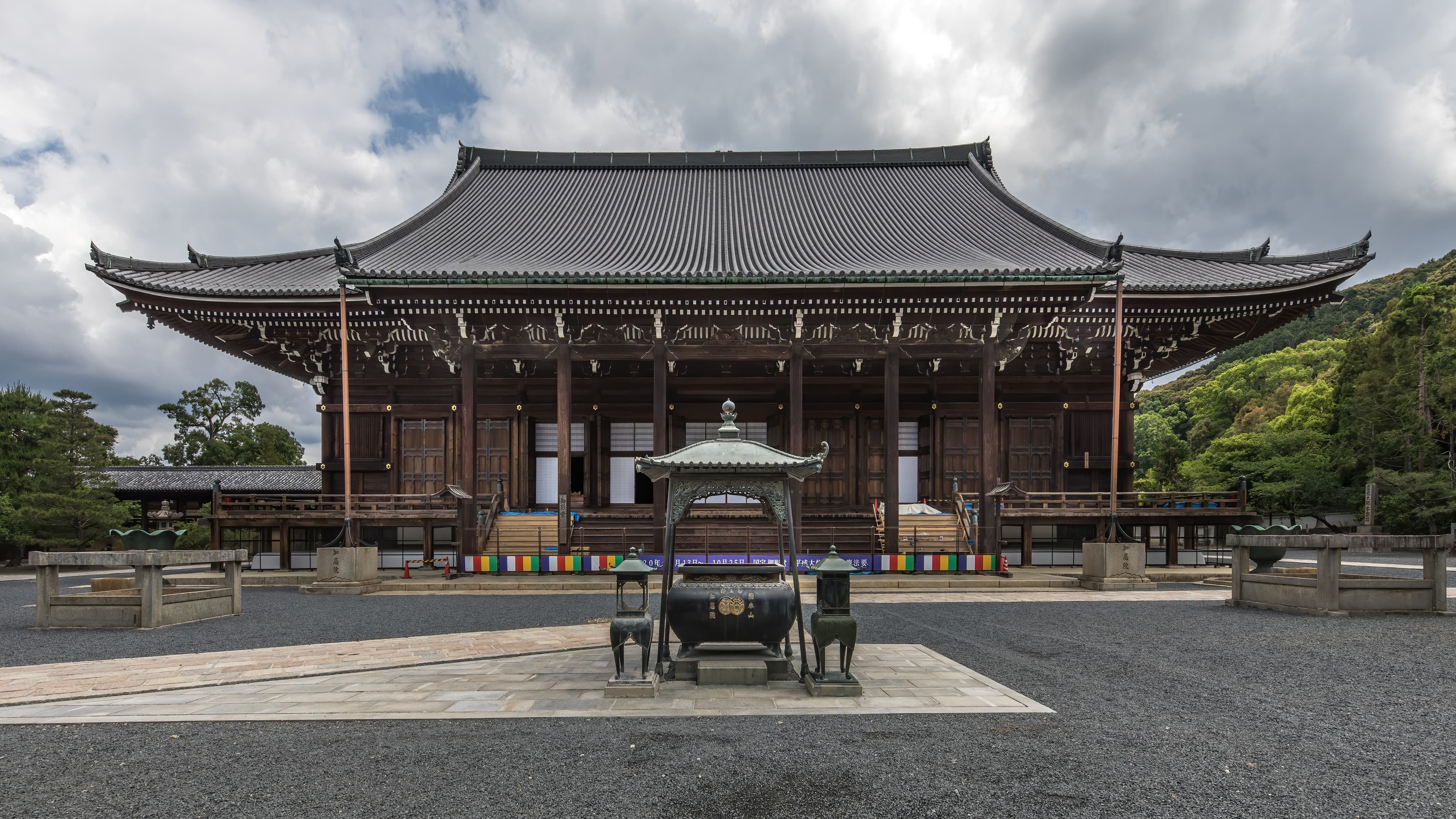
Chion-in Temple
知恩院 · Kyoto, Kyoto
Kyoto's Jōdo-shū headquarters, where a free visit to Hōnen's hall, a separate garden ticket and an exact Nembutsu practice form one useful route.
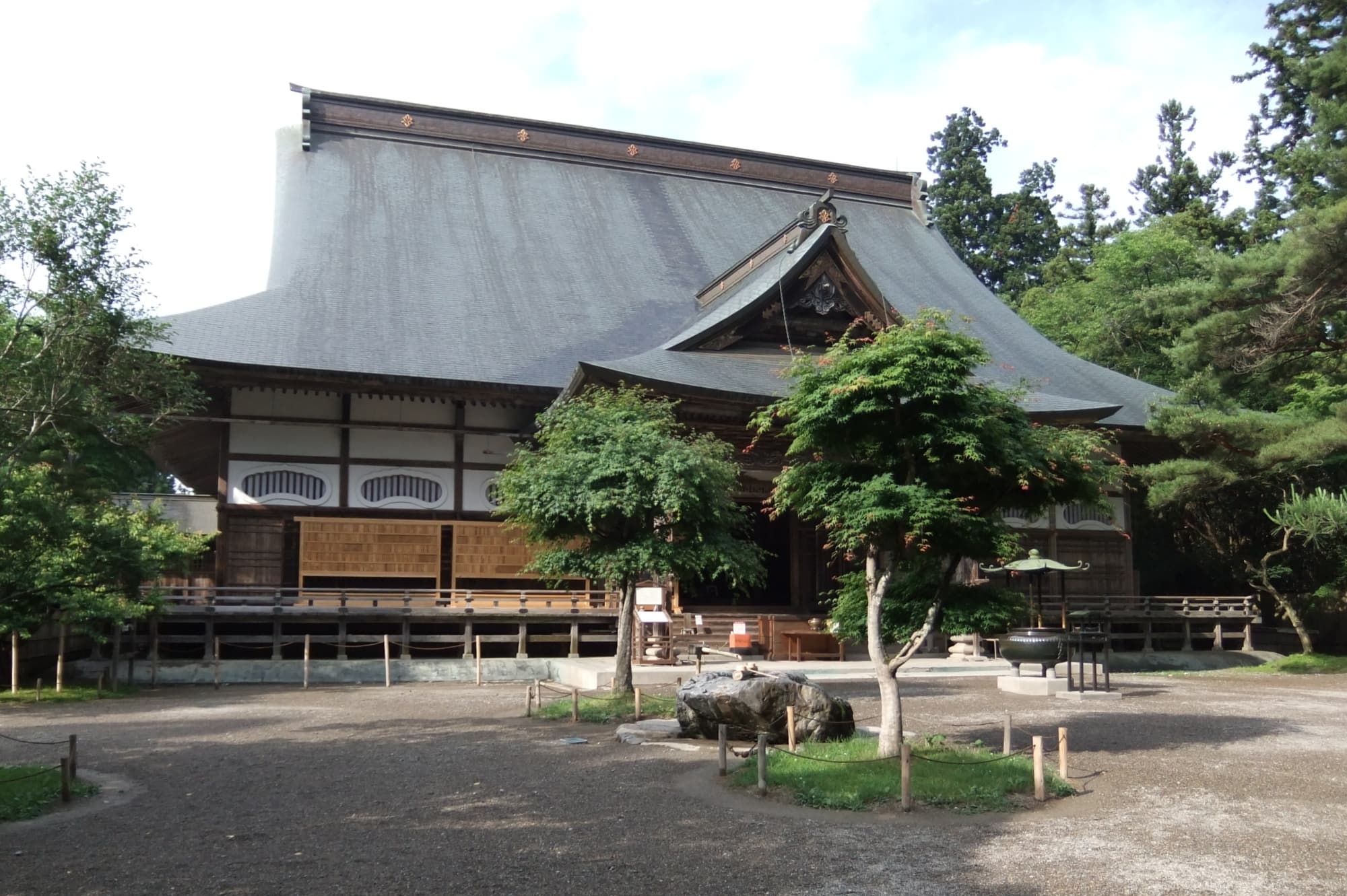
Chuson-ji
中尊寺 · Hiraizumi, Iwate
A World Heritage Tendai temple whose golden hall was raised in 1124 as a vow for the repose of the dead of both sides in a war — and it is a temple, so do not clap.
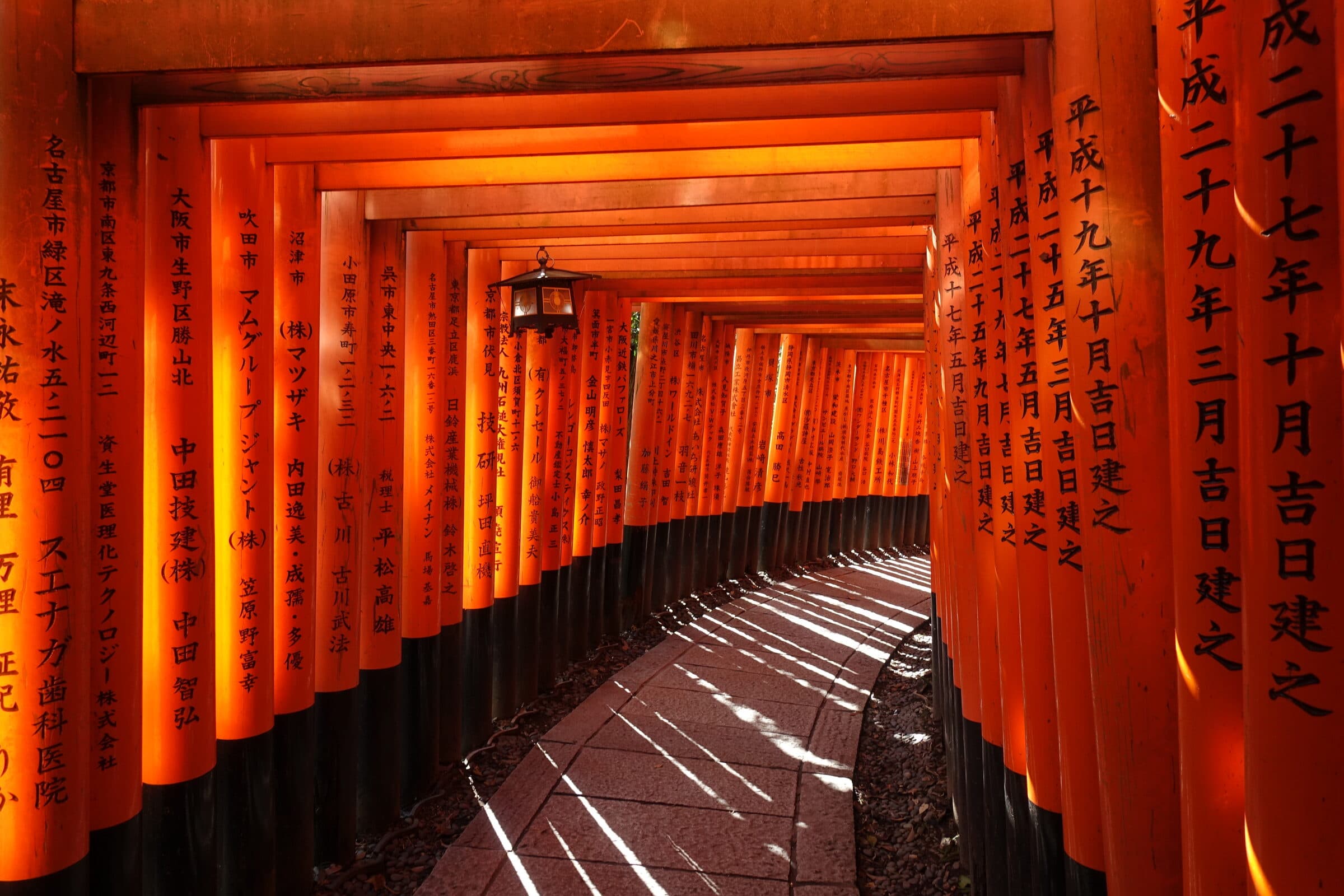
Fushimi Inari Taisha
伏見稲荷大社 · Fushimi, Kyoto
Ten thousand vermilion gates, and every one of them is a receipt — somebody paid for it because something they asked for came true.
Heian Jingu Shrine
平安神宮 · Kyoto, Kyoto
A 5:8-scale reconstruction of Kyoto's ancient State Hall, where the shrine courtyard is free and the four landscape gardens are a separate visit.