A shrine for people whose work is judged
This is the narrowest category on the site and the most specific. It is for performers — actors, musicians, dancers, anyone whose work exists in front of an audience and is assessed by it. The requests are correspondingly concrete: an audition passed, a run that sells, a technique that finally comes right, a solo exhibition that lands.
The deity is Ame-no-Uzume, and the myth is the founding story of performance itself. When Amaterasu withdrew into a cave and the world went dark, it was Uzume's dance outside it — wild enough to make eight hundred assembled deities roar with laughter — that drew the sun goddess out to see what the noise was. Performance, in that story, is the thing that brings light back.
The vermilion plaques
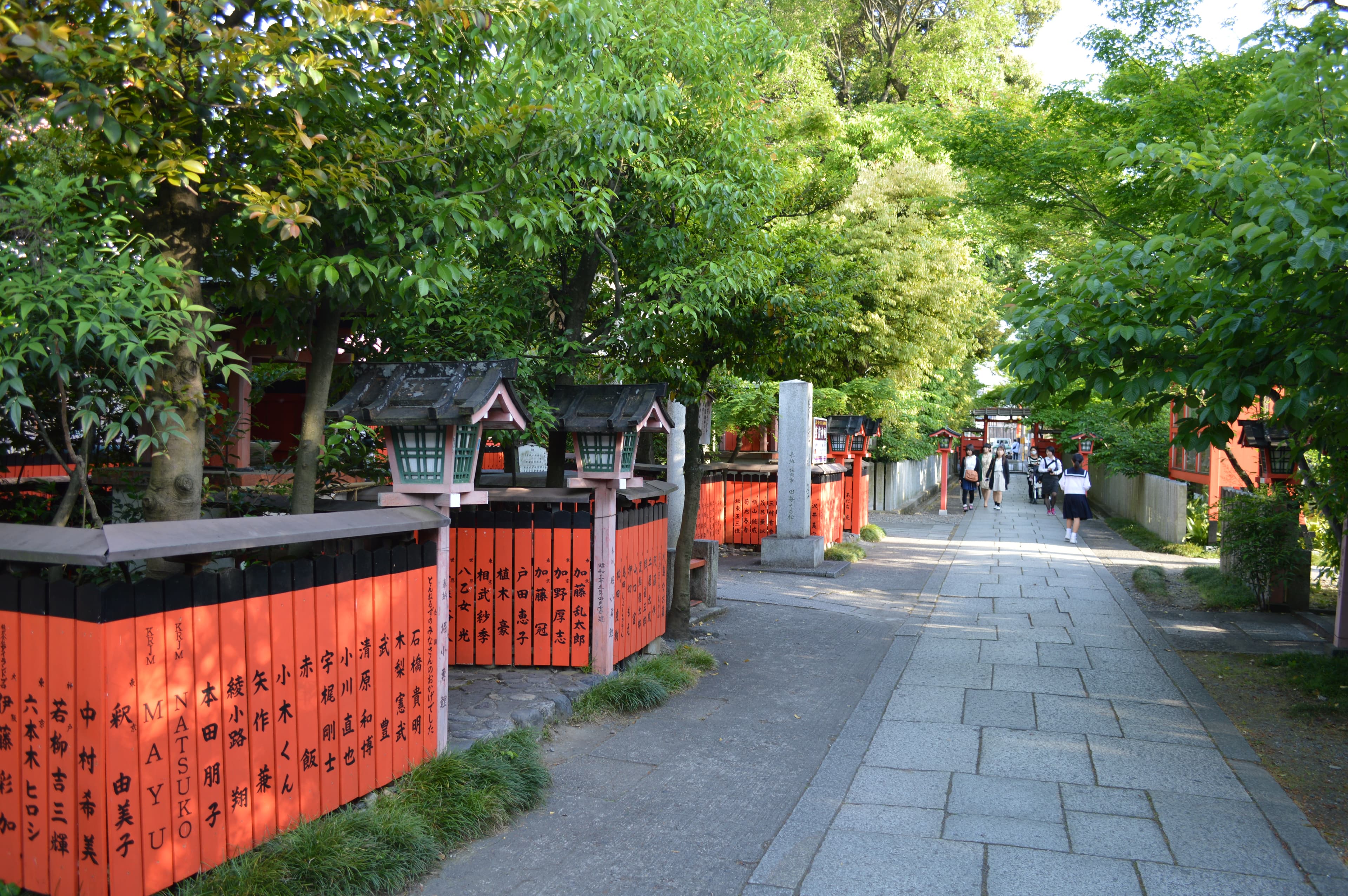
Kurumazaki Jinja's subsidiary Geino Jinja carries roughly four thousand vermilion tamagaki plaques bearing the names of Japanese performers, and it is one of the more striking sights in Kyoto. Two things about it that visitors usually have backwards.
The performers dedicate them, not the fans. The shrine accepts applications only from the performer in person or a formally authorised agent. You cannot dedicate one for someone you admire. Dedication costs ¥21,000 for two years, and a single member of staff hand-letters every plaque so the calligraphy stays uniform — which takes about two months.
The main hall comes first. The shrine publishes a page for first-time visitors specifically because so many people walk straight to the celebrity plaques and never visit the honden, which inverts the intended order. Purify at Kiyome-no-Yashiro, worship at the main hall, then go to Geino Jinja.
If performance is your work
Kurumazaki's kinen-shinseki prayer stone is a commitment across time rather than a purchase: you carry it, and when the wish is granted you return with a stone of thanks. Take it only if you mean to come back.