Kurumazaki Jinja
車折神社
Ukyo, Kyoto · Shinto shrine
The Arashiyama shrine where promises are kept — and where four thousand vermilion plaques carry the names of Japanese performers, dedicated by the performers themselves.
Kurumazaki Jinja enshrines Kiyohara no Yorinari, a late-Heian Confucian scholar and senior court official, and its claim is unusually precise: this is the kami who ensures that promises and contracts are not broken. Everything else follows from that. Money luck here is framed as receivables being collected and household finances working out. Matchmaking is framed as vows being kept.
The name comes from an ox-carriage shaft breaking in front of the shrine during an outing by Emperor Gosaga, after which the stone by the gate was named the Kurumazaki stone — and the shrine's long association with stones runs from there into its central practice.
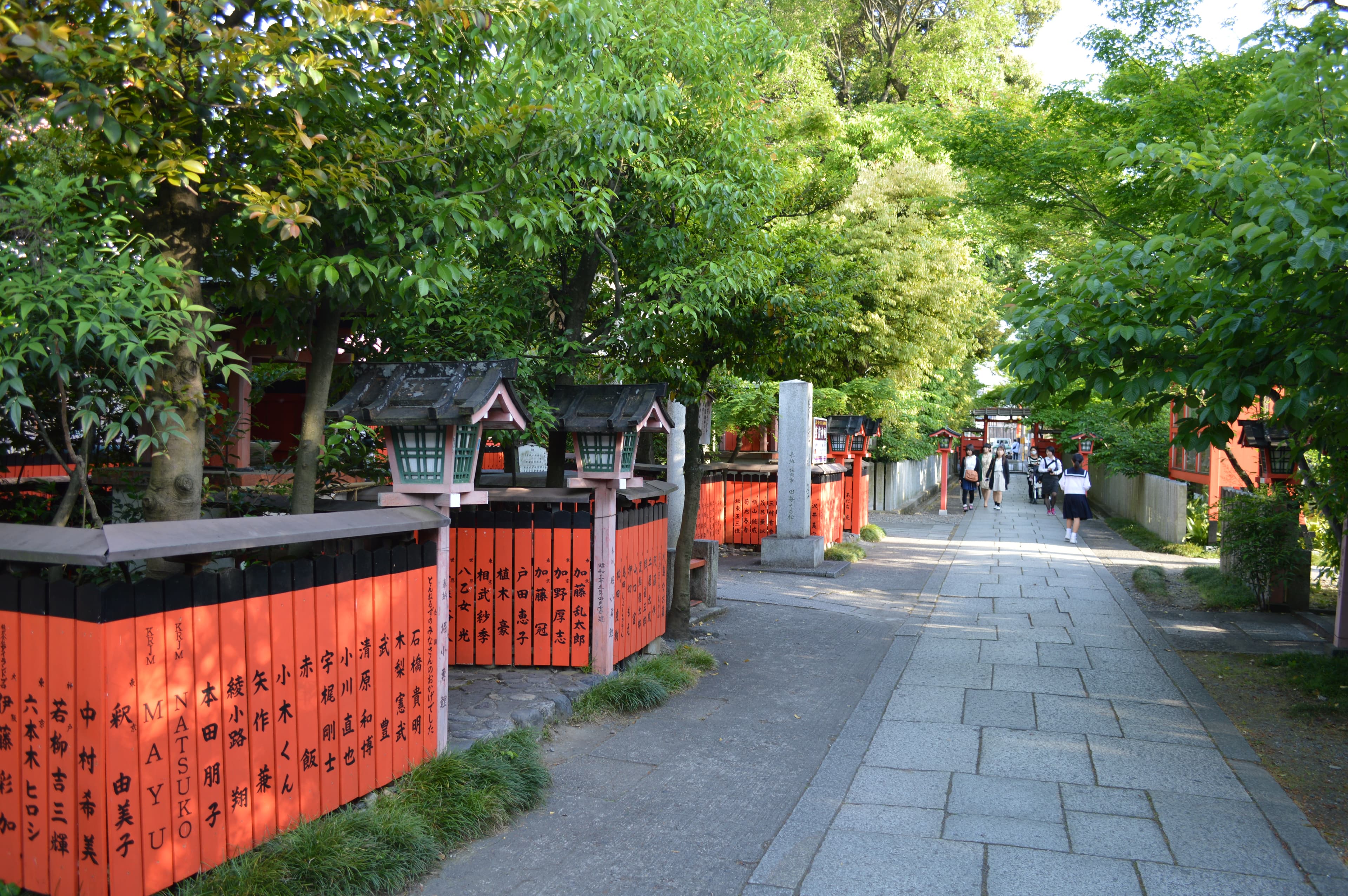
Its subsidiary Geino Jinja, founded in 1957 for Ame-no-Uzume, the kami of dance and performance, is what most visitors come to see: roughly four thousand vermilion plaques bearing the names of actors, musicians and other performers. Note the direction of that — the plaques are dedicated by the performers, not by their fans.
Which kami is enshrined here
- Kiyohara no Yorinari (as Kurumazaki Daimyojin) 清原頼業
- A deified late-Heian scholar and court official. In the shrine's own framing, the kami who ensures promises and contracts are not broken.
- Ame-no-Uzume-no-Mikoto 天宇受売命
- The kami of dance and performance, enshrined at the subsidiary Geino Jinja since 1957; patron of every performing and creative art.
Take part
What you can actually do here
Kinen-shinseki — the prayer stone. This is a commitment over time rather than a purchase, and the order matters.
- First, worship at Kiyome-no-Yashiro, the purification shrine by the stone torii near the main hall entrance, with its cone-shaped sand mound. The shrine says this clears bad luck and bad karma, and that doing it first makes what follows effective.
- Then receive the kinen-shinseki, an amulet containing a stone purified by a priest.
- Make your wish silently before the main hall, and carry the stone with you.
- When the wish is granted, you come back. You pick up a stone — from a garden, a river, the sea, a mountain — write words of thanks on it, and return it with the amulet before the worship hall, where the returned stones are piled high.
The shrine presents these steps as images on its site, so the detail of the closing sequence is drawn from the Kyoto Prefecture Tourism Federation rather than read directly on the shrine's own page; the widely-repeated custom of returning two stones is third-party only. The price is also unsettled — ¥500 and ¥700 both circulate, and the shrine publishes neither.
The vermilion plaques at Geino Jinja. Dedication costs ¥21,000 for two years, and the shrine accepts applications only from the performer in person or a formally authorised agent, across professional and amateur genres alike. Fans may not dedicate one for someone they admire. A single member of staff hand-letters every plaque to keep the calligraphy uniform, which takes about two months.
Etiquette
Where this place differs
The shrine publishes a page for first-time visitors because so many people get the order wrong. Its point: the main hall is the master of the precinct, and the subsidiary shrines are subordinate to it.
Most tourists walk straight to the celebrity-covered Geino Jinja and never visit the main hall, which inverts the intended sequence. Purify at Kiyome-no-Yashiro, worship at the main hall, then go to Geino Jinja.
New to this? Read the full worship sequence first.
Goshuin
Getting the seal here
Reportedly offered in two forms, one for Kurumazaki Jinja and one for Geino Jinja, at the shrine office.
We could not verify this on the shrine's own pages — hours, price and whether it is written into your book are all unconfirmed. The office is open 9:30–17:00, so that is the window to try.
Before you go
Parking is locked at 16:30, has ten spaces, is for worshippers only, and the shrine states that illegally parked cars are towed. Large tour buses are not permitted at all. Come by the Randen tram.
The prayer stone is not a souvenir. You are agreeing to return, or to send back, a stone of thanks. Take the amulet only if you mean to.
Map
Sources
This entry was compiled from the following, most of them in Japanese.
Others people visit for the same reasons
Chuson-ji
中尊寺 · Hiraizumi, Iwate
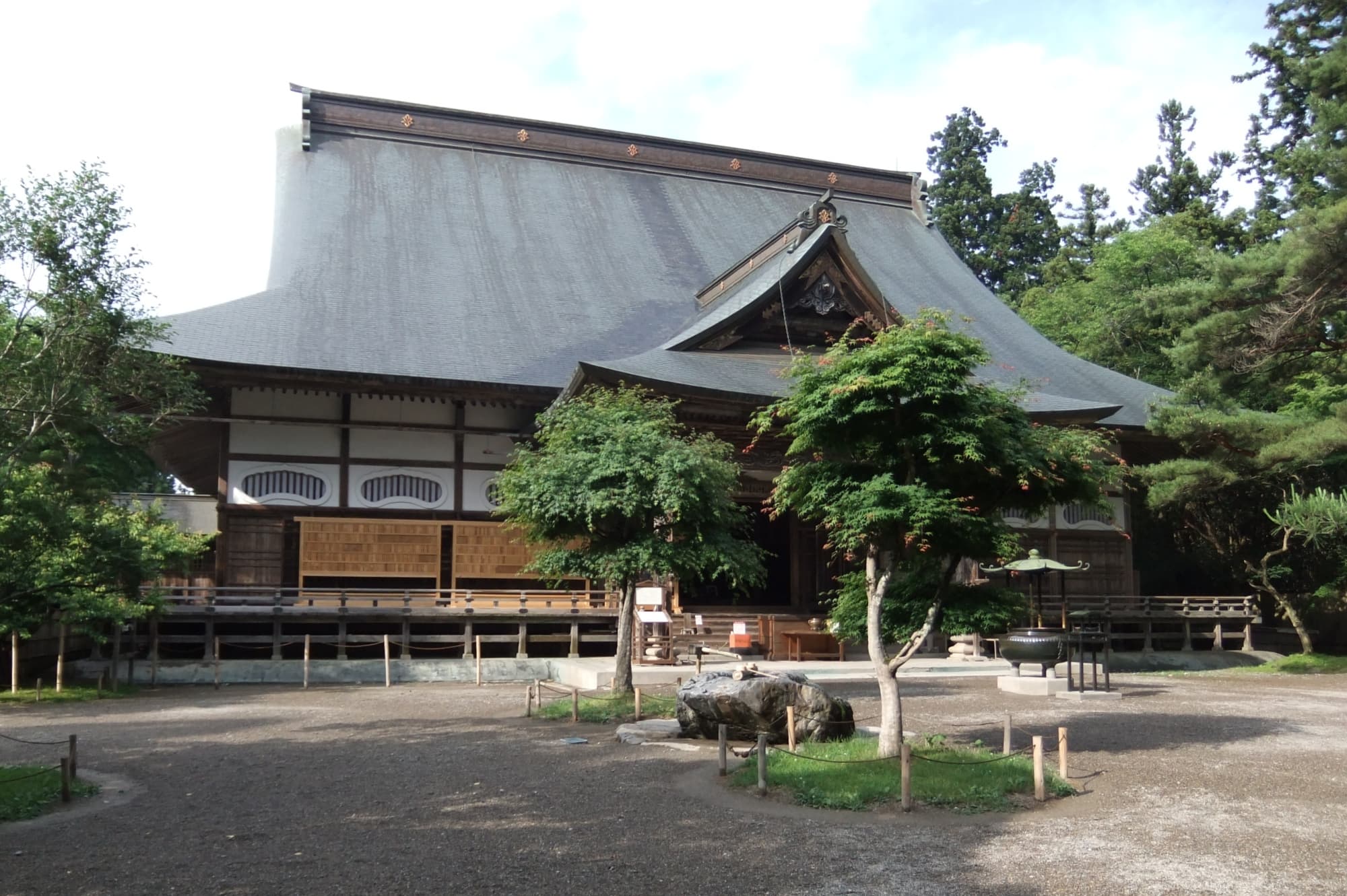
A World Heritage Tendai temple whose golden hall was raised in 1124 as a vow for the repose of the dead of both sides in a war — and it is a temple, so do not clap.
Dazaifu Tenmangu
partial太宰府天満宮 · Dazaifu, Fukuoka
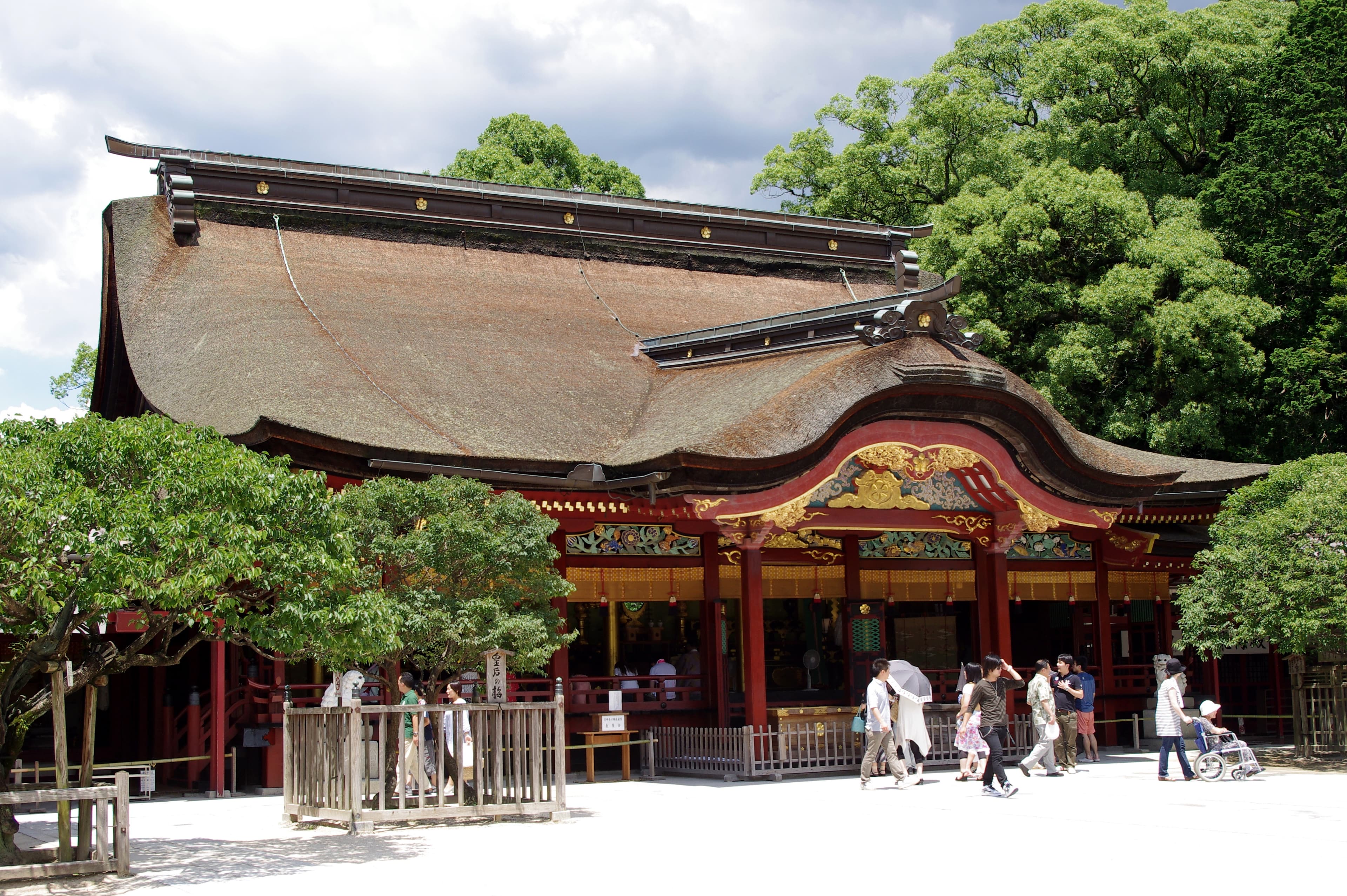
The head shrine of every Tenmangu in Japan, built over the grave of an exiled scholar — and currently mid-way through the end of a 124-year restoration.
Kanda Myojin
神田明神 · Chiyoda, Tokyo
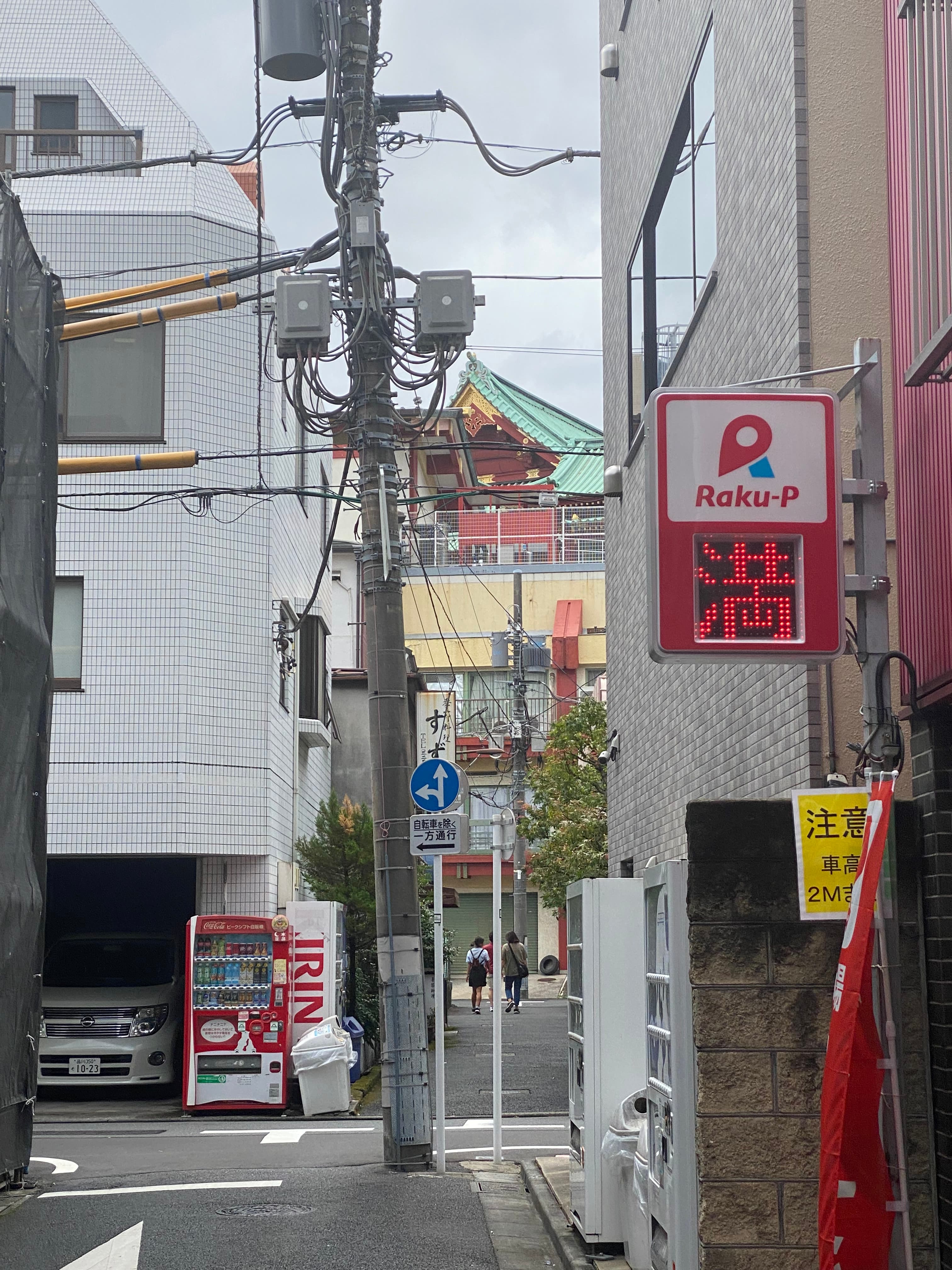
The tutelary shrine of Edo's merchant districts, next door to Akihabara — and the most relaxed major shrine in Tokyo about how you approach it.
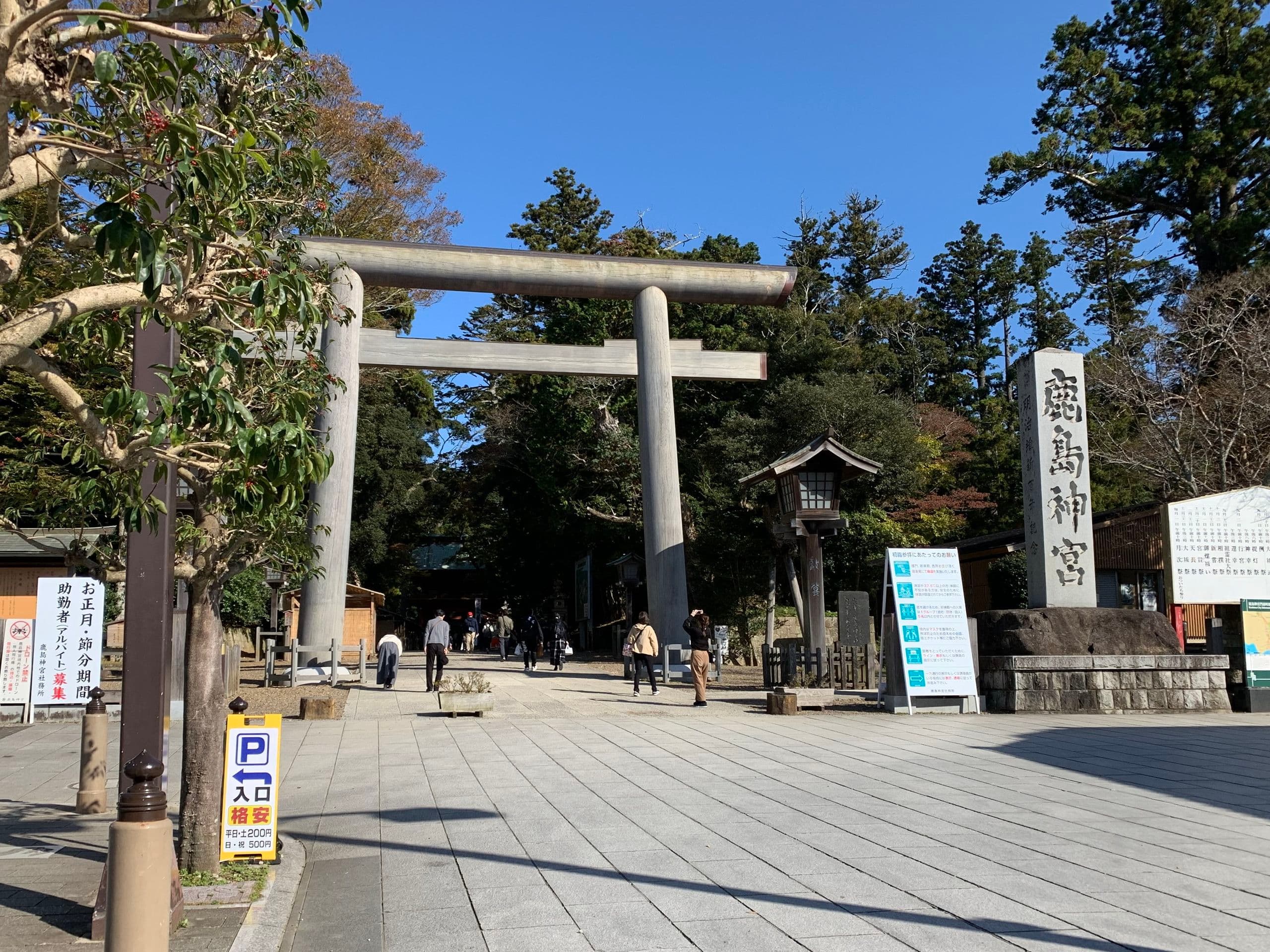
Kashima Jingu
partial鹿島神宮 · Kashima, Ibaraki
A vast forest shrine to the sword-and-thunder kami, where a stone said to pin down the earthquake catfish sits at the end of a 700-metre cedar path.