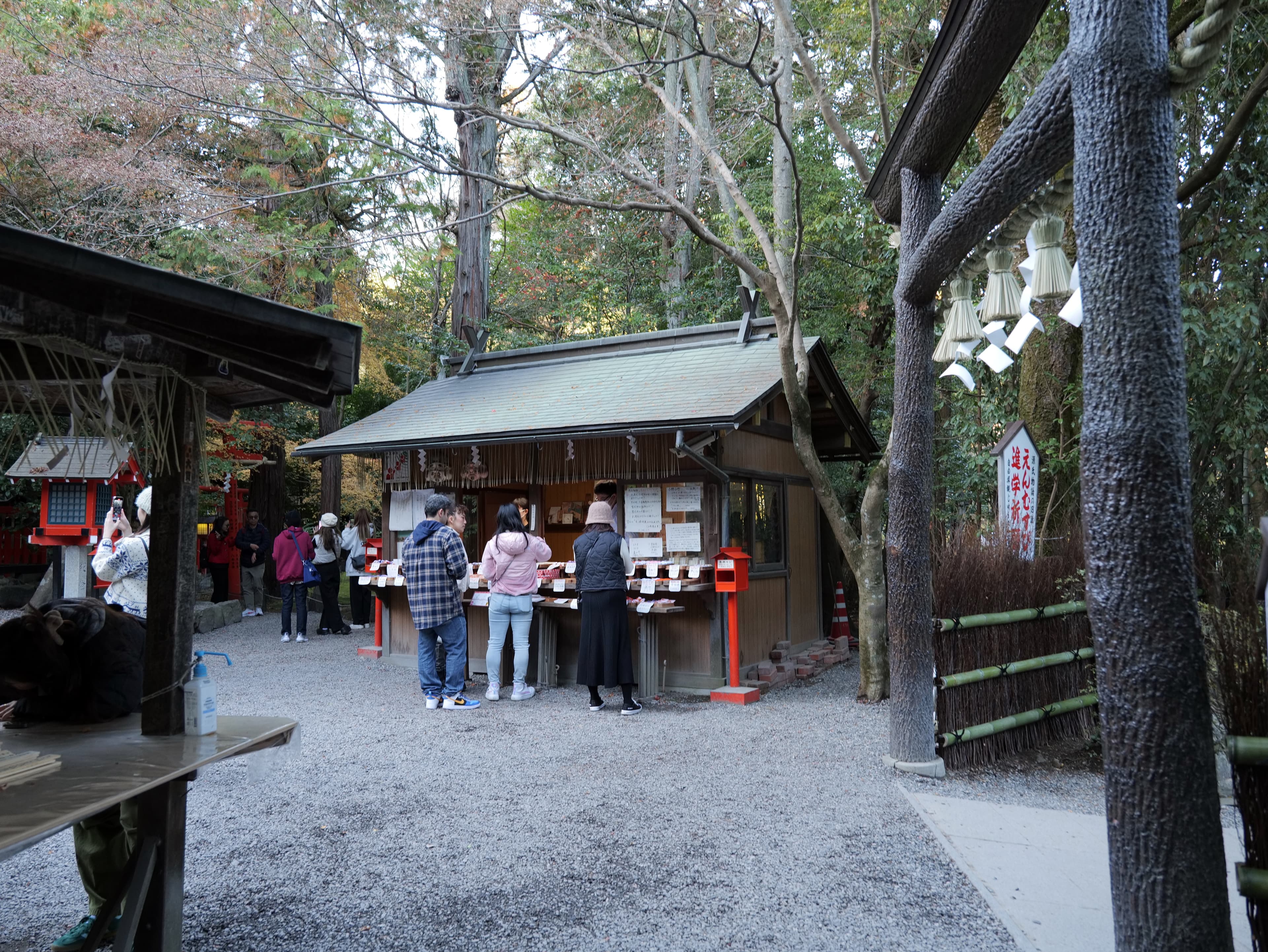
Nonomiya Shrine
野宮神社
Kyoto, Kyoto · Shinto shrine
A black-wood torii at the start of Sagano, where the shrine's own route ends at a turtle stone after separate prayers to each local deity.
Nonomiya Shrine sits in the Sagano bamboo country and preserves the memory of a Nonomiya, a sacred residence where a Saio — an imperial princess serving at Ise — prepared through purification. The shrine's official account connects the site with the Tale of Genji and the unbarked Black Torii and brushwood fence that still mark its entrance.
The main shrine enshrines Nonomiya Okami, identified by the shrine and Kyoto City as Amaterasu. The small grounds then separate several local worship points: Atago for fire protection and victory, Shiramine Benten for the arts, Shirafuku Inari for childbirth and business, Ooyama Benten for traffic safety and wealth, and Nonomiya Daikokuten for marriage. These are distinct subsidiary shrines, not interchangeable labels for the main sanctuary.
The visit is free and compact, but it is not just a photograph of the black torii. The shrine publishes a specific walking order that ends at the Turtle Stone beside Nonomiya Daikokuten. The shrine says a wish made while stroking it may be fulfilled within a year; that is a local belief to report accurately, not a result JinjaDB can guarantee.
Which kami is enshrined here
- Nonomiya Okami (Amaterasu) 野宮大神(天照皇大神)
- The main deity of the honden, identified by the shrine and Kyoto City as Amaterasu, the sun goddess served at Ise by the Saio tradition.
- Atago Okami 愛宕大神
- The deity of the right-side subsidiary shrine, associated by Nonomiya Shrine with fire protection and victory.
- Shiramine Benten 白峰弁財天
- A subsidiary deity that the shrine associates with progress in the arts.
- Shirafuku Inari Daimyojin 白福稲荷大明神
- A subsidiary deity that the shrine associates with childbirth, safe birth and business prosperity.
- Ooyama Benten 大山弁財天
- A subsidiary deity that the shrine associates with traffic safety and improving one's financial fortune.
- Nonomiya Daikokuten 野宮大黒天
- A subsidiary deity associated by the shrine with marriage and good relationships. The Turtle Stone is beside this worship point.
Take part
What you can actually do here
Follow the shrine's own order
Nonomiya Shrine publishes an unusually clear route for a small shrine. Bow once before entering the torii. At the temizuya, clean your hands; the shrine asks visitors to omit rinsing the mouth because the water is currently stopped. Go to the main shrine and use the shrine's stated two bows, one clap and one bow sequence.
After the main prayer, visit the subsidiary shrines according to what you are asking for. The shrine names Nonomiya Daikokuten for marriage and good relationships, and Shirafuku Inari Daimyojin for childbirth and safe birth. It then directs visitors to make their final prayer while stroking the Turtle Stone beside Nonomiya Daikokuten. Bow once again when leaving through the torii.
The Black Torii is not painted black: the shrine describes it as the old style made from unpeeled kunugi oak. The brushwood fence uses kuromoji branches. Look at both as the entrance to the shrine's ritual landscape rather than touching or climbing them.
Etiquette
Where this place differs
This is a Shinto shrine, and the shrine itself gives the sequence: bow at the torii, cleanse at the temizuya, omit the mouth rinse while the water is stopped, then pray at the main shrine with two bows, one clap and one bow. Visit the subsidiary shrines afterward and leave the Turtle Stone as the final prayer point.
The sequence belongs to this shrine's published visitor guide. The stone's “within one year” wording is a belief attributed to the shrine, not a promise of fulfilment. Keep the narrow approach and bamboo surroundings clear for other visitors, and bow again when you leave through the torii.
New to this? Read the full worship sequence first.
Goshuin
Getting the seal here
The official Nonomiya Shrine pages checked do not publish a current goshuin counter, reception time, writing method or fee. The Kyoto City listing gives the general visit and reception hours, but it does not identify a goshuin desk or seal format. Ask at the shrine office on the day; do not turn an older collector report into a current official price or method.
The formal prayer page is separate from goshuin: it lists prayer offerings for hatsumiyamairi, warding off misfortune and other requests, with advance contact recommended because the small shrine may be handling an outside festival.
Before you go
The Turtle Stone is a belief, not a guarantee. Nonomiya Shrine says that stroking the stone while praying may bring a wish to fulfilment within a year. Keep that wording attributed to the shrine; JinjaDB does not convert it into a promised result.
The shrine's 2026 Saio Procession page lists 18 October 2026 and an application deadline of 5 September 2026. That deadline has passed. Do not present the participation page as an open application or imply that a visitor can join the procession without the shrine's acceptance.
This is a small shrine. The official visitor page warns that outside festivals and regional events can delay formal prayers or require a later response. Check the shrine's current notice before planning a prayer appointment, and keep the black torii, fence and Turtle Stone within the shrine's stated visitor route.
Map
Sources
This page draws on the following sources, most of them in Japanese.
Others people visit for the same reasons
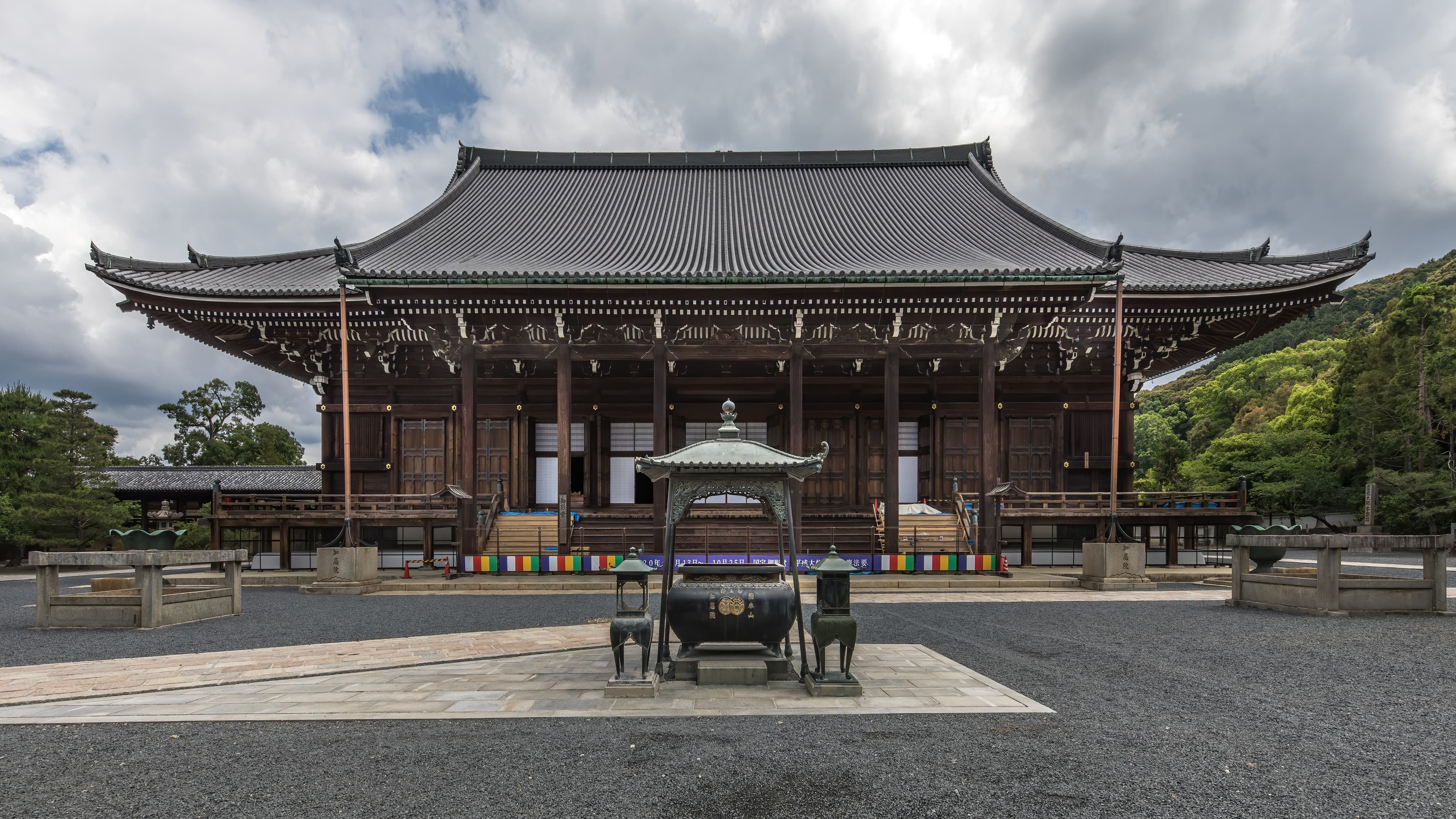
Chion-in Temple
知恩院 · Kyoto, Kyoto
Kyoto's Jōdo-shū headquarters, where a free visit to Hōnen's hall, a separate garden ticket and an exact Nembutsu practice form one useful route.
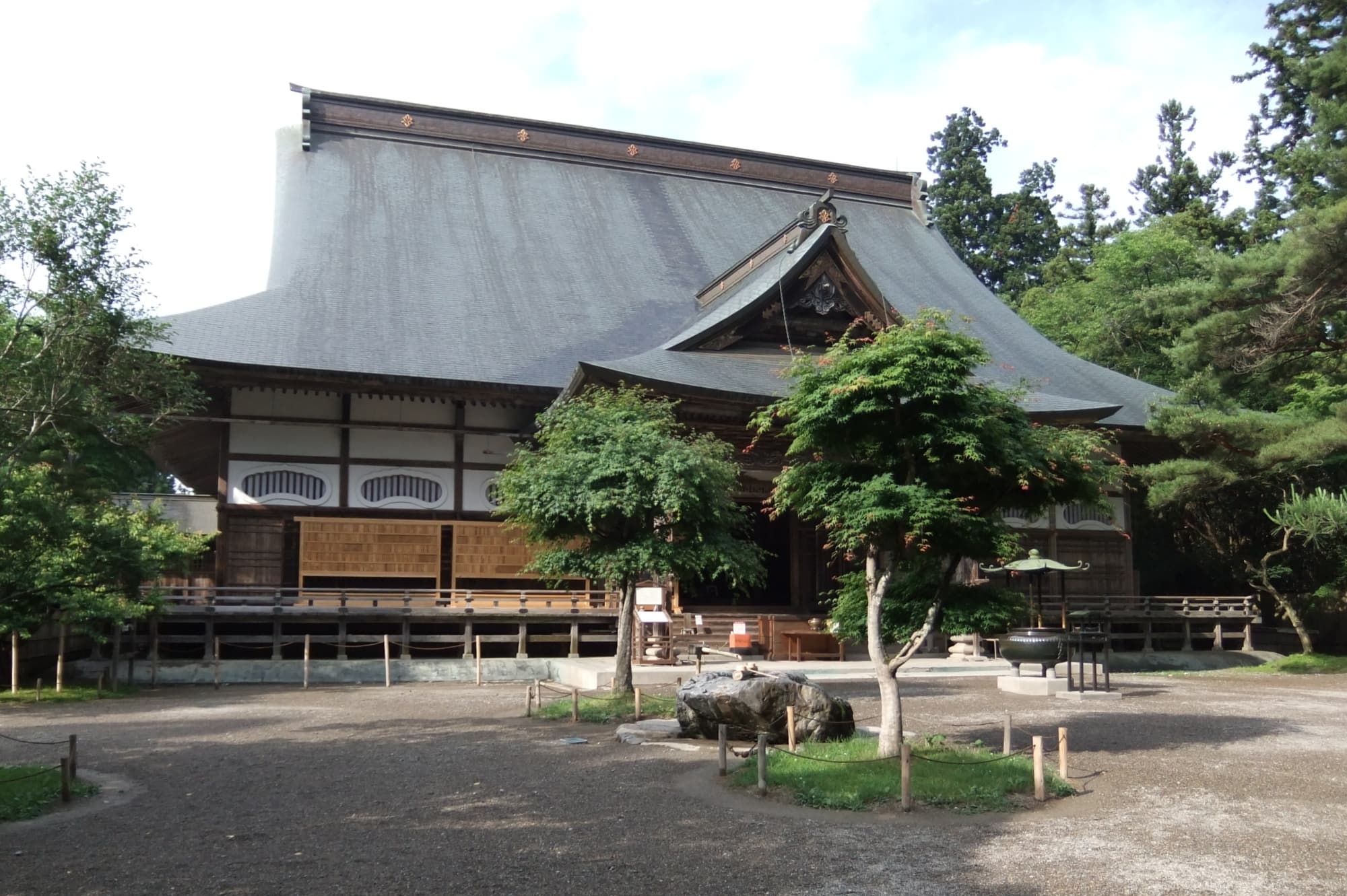
Chuson-ji
中尊寺 · Hiraizumi, Iwate
A World Heritage Tendai temple whose golden hall was raised in 1124 as a vow for the repose of the dead of both sides in a war — and it is a temple, so do not clap.
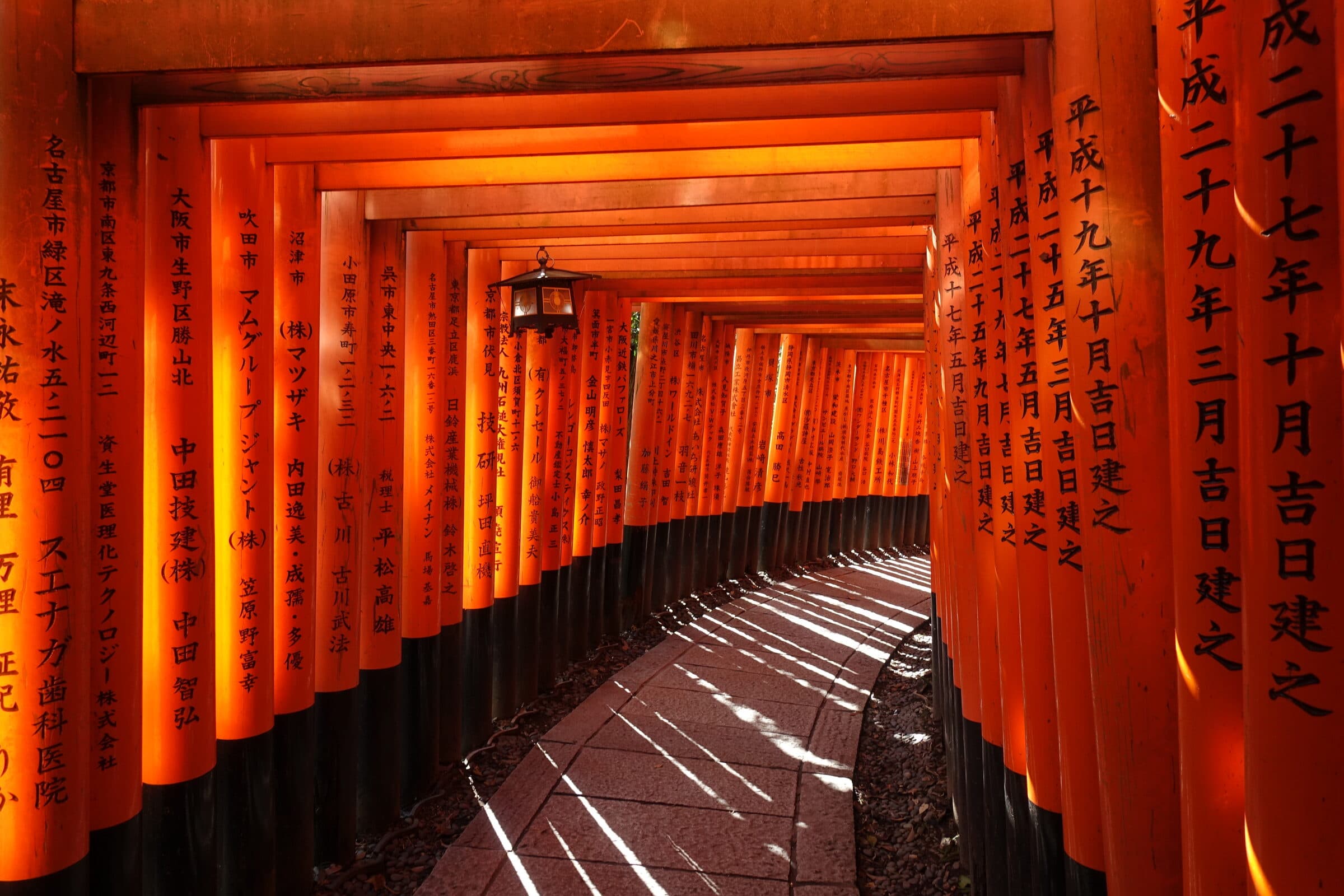
Fushimi Inari Taisha
伏見稲荷大社 · Fushimi, Kyoto
Ten thousand vermilion gates, and every one of them is a receipt — somebody paid for it because something they asked for came true.
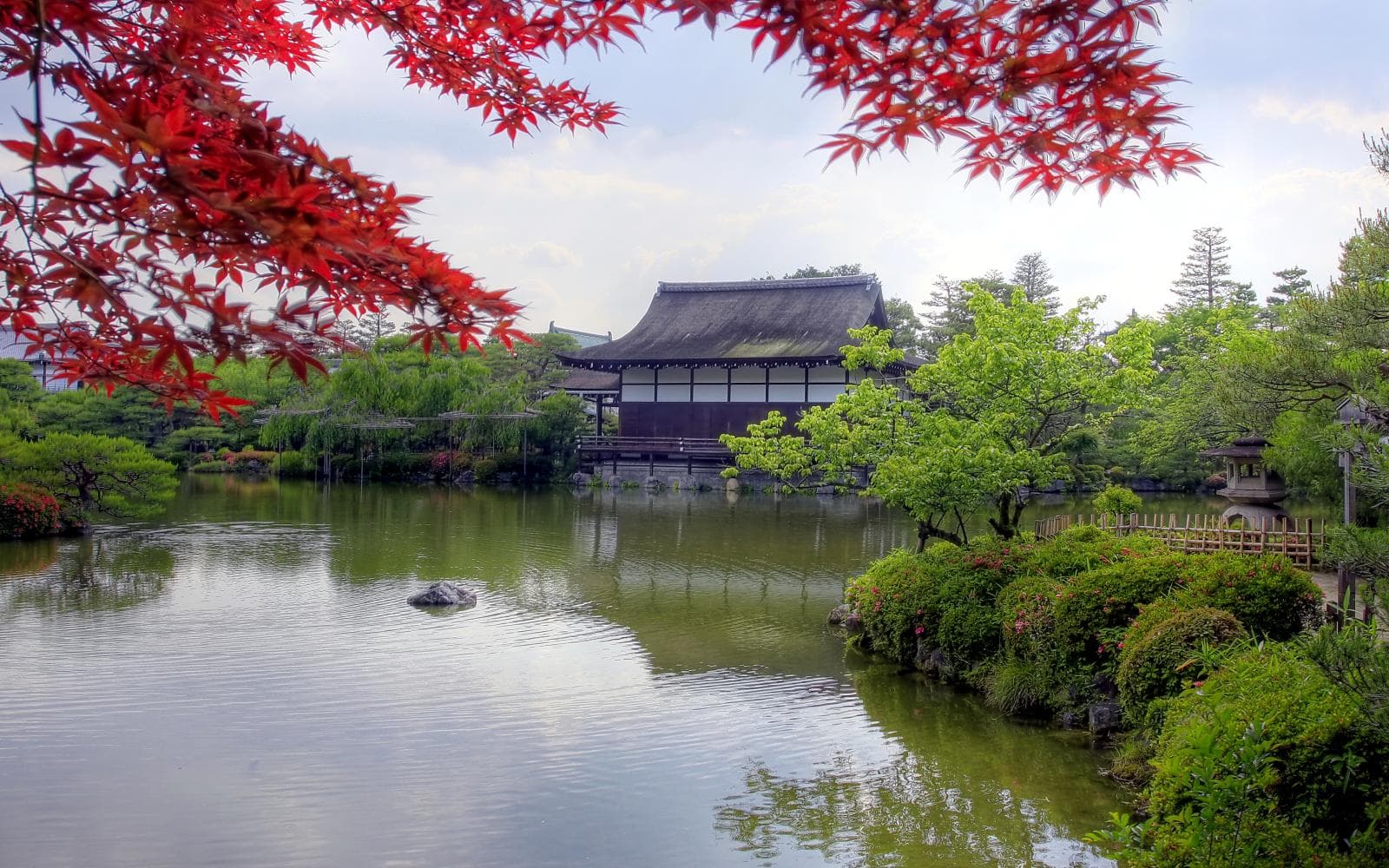
Heian Jingu Shrine
平安神宮 · Kyoto, Kyoto
A 5:8-scale reconstruction of Kyoto's ancient State Hall, where the shrine courtyard is free and the four landscape gardens are a separate visit.