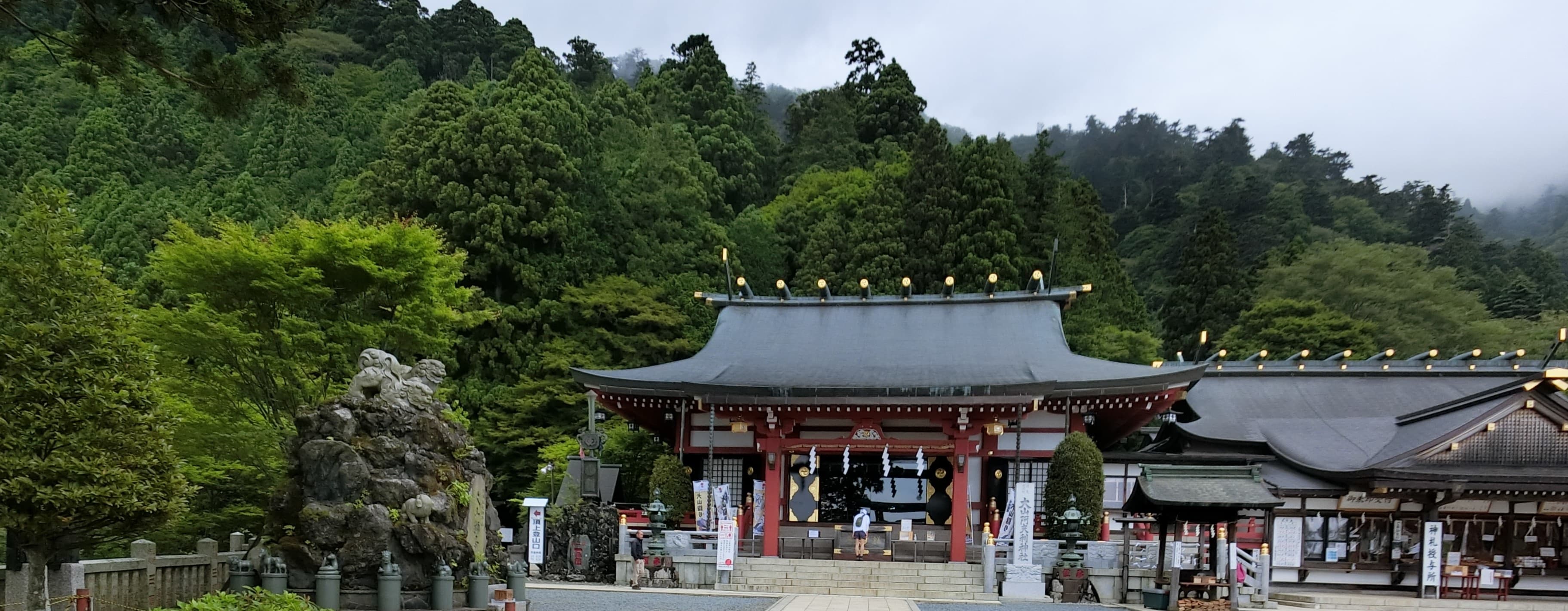
Concrete in a way visitors do not expect
Traffic safety sounds like the most abstract category here and is in fact the most literal. In Japan you do not merely ask for safe travel — you bring the vehicle. Shrines with the space for it have a designated area where a priest performs kuruma-barai, purifying the car itself, and you will see new vehicles lined up for it. Shirayama Hime Jinja offers this as a standing service alongside weddings and life-passage rites.
The visible result is the sticker or hanging amulet in the windscreen of an enormous number of Japanese cars. Once you notice them you cannot stop noticing them.
Where the association comes from
Mostly from water and mountains — the two things that historically killed travellers.
Suitengu's origin is a water deity, and protection from water accidents is still part of its portfolio, carried down from an era when a river crossing was the dangerous part of a journey. Mountain shrines like Oyama Afuri Jinja sit on the passes, which is where travellers prayed before attempting them, and where the weather decided outcomes. Jishu Jinja's Otoha-Ryujin, a dragon deity, is invoked for travel safety in the same register.
What a visitor can actually do
You are unlikely to be purifying a car. What is available is the amulet: a kotsu anzen omamori, which is among the most common types sold and is meant to travel with you rather than sit at home.
One instruction from Jinja Honcho's English guidance that applies to every amulet and is widely broken: do not open the pouch to look inside. And they are not souvenirs. It is appropriate to keep one yourself or give it to family or a close friend, not to hand them out as gifts from a trip.