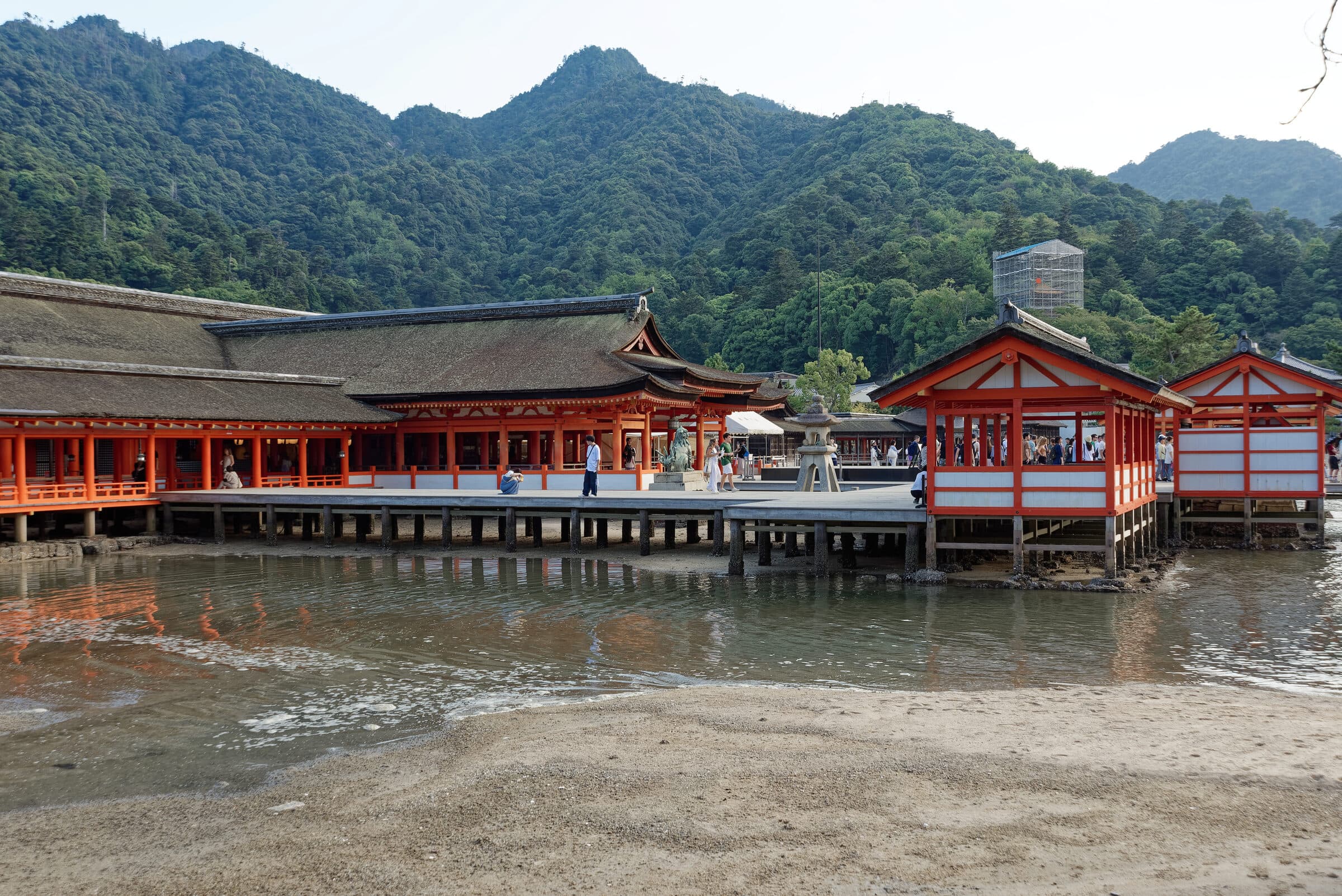
Itsukushima Shrine
嚴島神社
Hatsukaichi, Hiroshima · Shinto shrine
Whether you see a shrine floating on the sea or a shrine standing on a mudflat depends entirely on what time you arrive — and almost nobody checks first.
partial — Something on the site is restricted or hidden at the time of our last check.
Read the tide section before you book anything. It is the whole visit.
Itsukushima enshrines the three Munakata goddesses, guardians of the sea routes, and the shrine's own account of its founding says the site was chosen deliberately because it is the place where the seawater draws in and out. Enshrinement is dated to 593; the halls you see are essentially Taira no Kiyomori's twelfth-century reconstruction.
So the building over water is not a picturesque accident. It is the point, and it is the reason the corridor floorboards have gaps in them — the structure is built to let a surge pass through rather than lift it.
You may have read that the shrine was built over the sea because the whole island was sacred and commoners could not build on its soil. That is a widely repeated explanation and it is not on the shrine's own pages. We would rather tell you what the shrine says.
Which kami is enshrined here
- Ichikishimahime-no-Mikoto 市杵島姫命
- Goddess of the sea passage, and the one from whose name Itsukushima is traditionally derived. Later widely conflated with Benzaiten.
- Tagorihime-no-Mikoto 田心姫命
- Goddess of the deep open sea.
- Tagitsuhime-no-Mikoto 湍津姫命
- Goddess of swift and turbulent currents.
Take part
What you can actually do here
Check the tide before you go
The same ticket buys two completely different places.
- Tide below 100 cm — the seabed is exposed and you can walk out and stand under the great torii.
- Tide above 250 cm — the shrine and the gate appear to float.
Those thresholds come from the Miyajima Tourist Association, which also runs the tool you actually need: an English date-picker that returns labelled "Walk to Torii Gate" and "Watch Floating Shrine" windows for any date you choose, here: check the tide for your date. That is the single most useful link on this page.
Note carefully: the shrine publishes no tide information at all. This is the tourist association's, not the shrine's. Plenty of visitors arrive having planned around a photograph and find the other version.
Walking the corridors
The route through the shrine is one-way and fixed: entrance, Marodo Shrine, the East Corridor, the main hall, the stages, Daikoku Shrine, Naga-bashi, Tenjin Shrine, the West Corridor, the arched bridge, the Noh stage, out. You cannot double back, so do not rush past something meaning to return.
The great torii
It is fully restored and completely uncovered. The repair that ran from June 2019 finished in December 2022 — if you were putting the trip off because of scaffolding, stop. Just over sixteen and a half metres tall (16.6 m), around sixty tonnes, and it is not buried in the seabed: it stands under its own weight on reinforced ground.
At low tide you can walk right up to it. People press coins into the pillar joints for luck; the shrine publishes no rule against it, but it was reported as a real problem before the restoration and staff have had to dig them out. Please don't.
Getting out to the gate by boat
A hand-rowed rokai-bune passes under the torii — ¥1,500 adult, ¥500 child, about 20–30 minutes, boarding near the shrine entrance. High tide only, roughly 10:00–15:00, and the operator states it cannot run every day depending on tide and weather. This is not the same as the JR ferry's otorii sailing, which passes close by but not through.
Etiquette
Where this place differs
Standard shrine sequence.
One footwear warning, and it is the shrine's own: the corridor floorboards are deliberately gapped as a high-tide measure, and heels get caught in them. The shrine puts this on two separate pages, which tells you how often it happens. If you also plan to walk out to the torii, you want shoes you do not mind getting muddy — the flat is soft silt and sharp oyster shell.
New to this? Read the full worship sequence first.
Goshuin
Getting the seal here
The shrine publishes nothing about goshuin. We searched its site: no seal, no amulet counter, no page. What collectors report is a counter to the right of the main hall — inside the paid area, so you must pay admission first — at around ¥300, usually written into your book. Treat all of that as unconfirmed.
Before you go
The five-storey pagoda is wrapped in scaffolding. Restoration runs from February 2025 to October 2027, but the shrine's own notice gives a more useful date: the scaffolding is scheduled to come down in December 2026. Until then the pagoda is effectively not viewable.
Structural reinforcement of the East Corridor — the first stretch of the route — also runs to December 2026, and a repair to the Naga-bashi, which is on the route, is still listed as in progress past its stated end date. No corridor closure is currently announced, and when partial closures have happened before the shrine has posted them, so check its construction page close to your date.
The deer will eat your ticket, and that is worse for the deer than for you. The tourist association is blunt about it: modern paper is chemically treated and eating it is life-threatening to them, and they will take anything a human has handled — plastic bags, clothing. Keep paper, maps and food out of reach and take your rubbish with you, and do not casually feed them — the association asks visitors not to.
Bring cash, and plan around the ropeway rather than the ferry if you are going up Mount Misen — the last boats are late (JR around 22:14) but the mountain shuts much earlier.
Seawater over the corridor floor is a known occurrence several times a year at very high tides. The shrine states it is open every day and publishes no closure policy; reports of viewing being suspended above roughly 380 cm exist but we could not confirm them officially. On a typhoon day, check the tide tool and phone ahead.
Map
Sources
This entry was compiled from the following, most of them in Japanese.
Others people visit for the same reasons
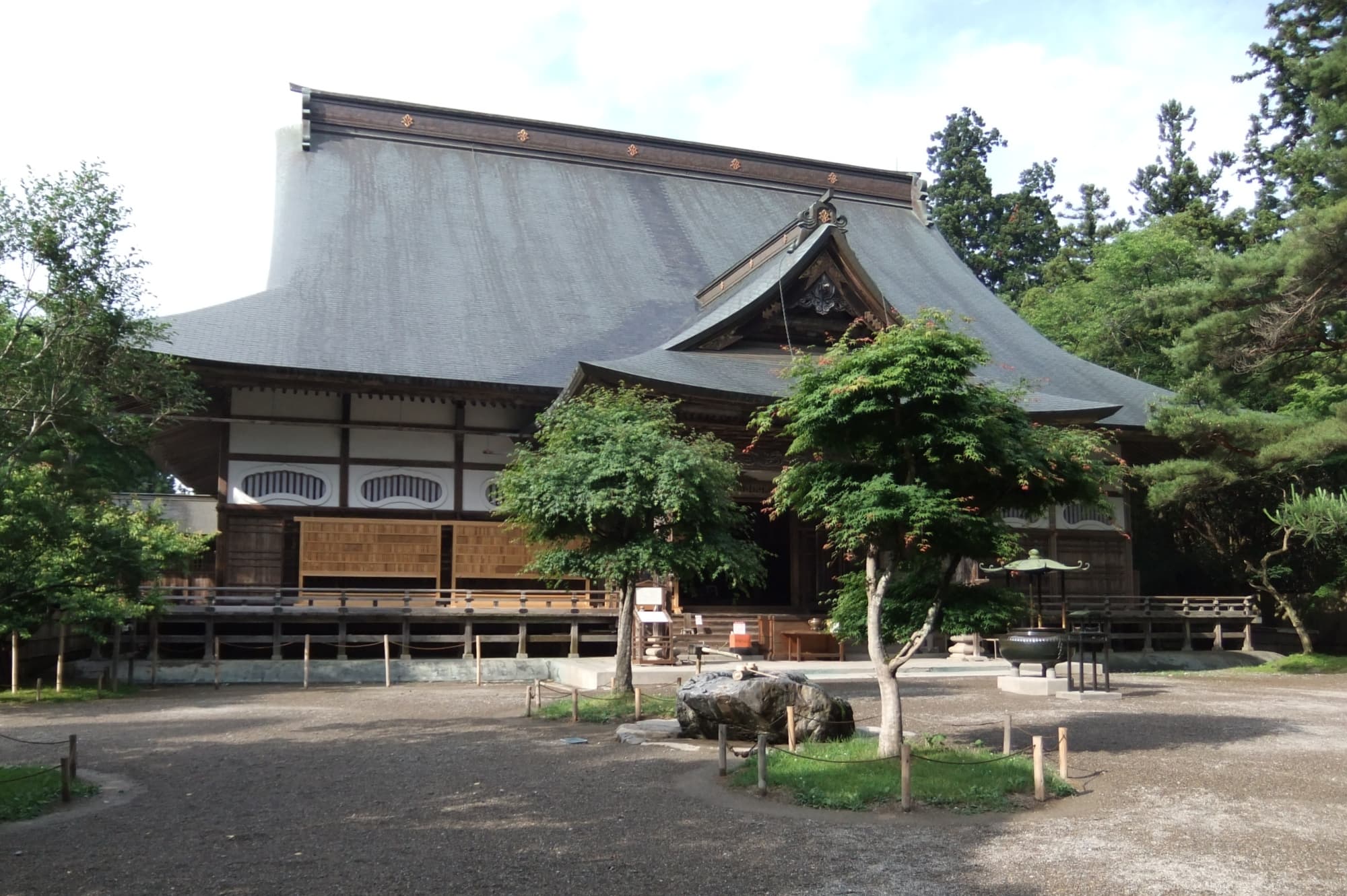
Chuson-ji
中尊寺 · Hiraizumi, Iwate
A World Heritage Tendai temple whose golden hall was raised in 1124 as a vow for the repose of the dead of both sides in a war — and it is a temple, so do not clap.
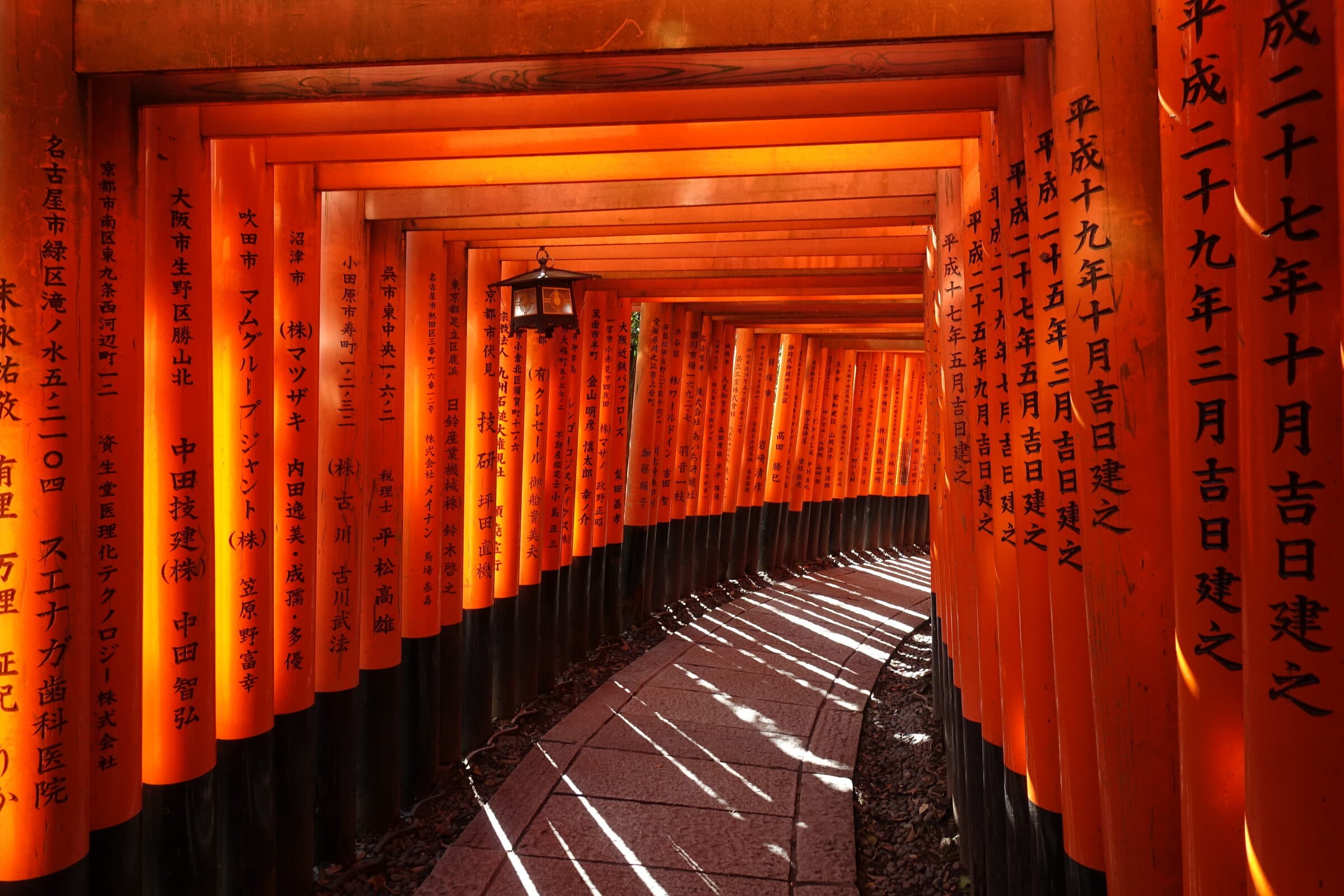
Fushimi Inari Taisha
伏見稲荷大社 · Fushimi, Kyoto
Ten thousand vermilion gates, and every one of them is a receipt — somebody paid for it because something they asked for came true.
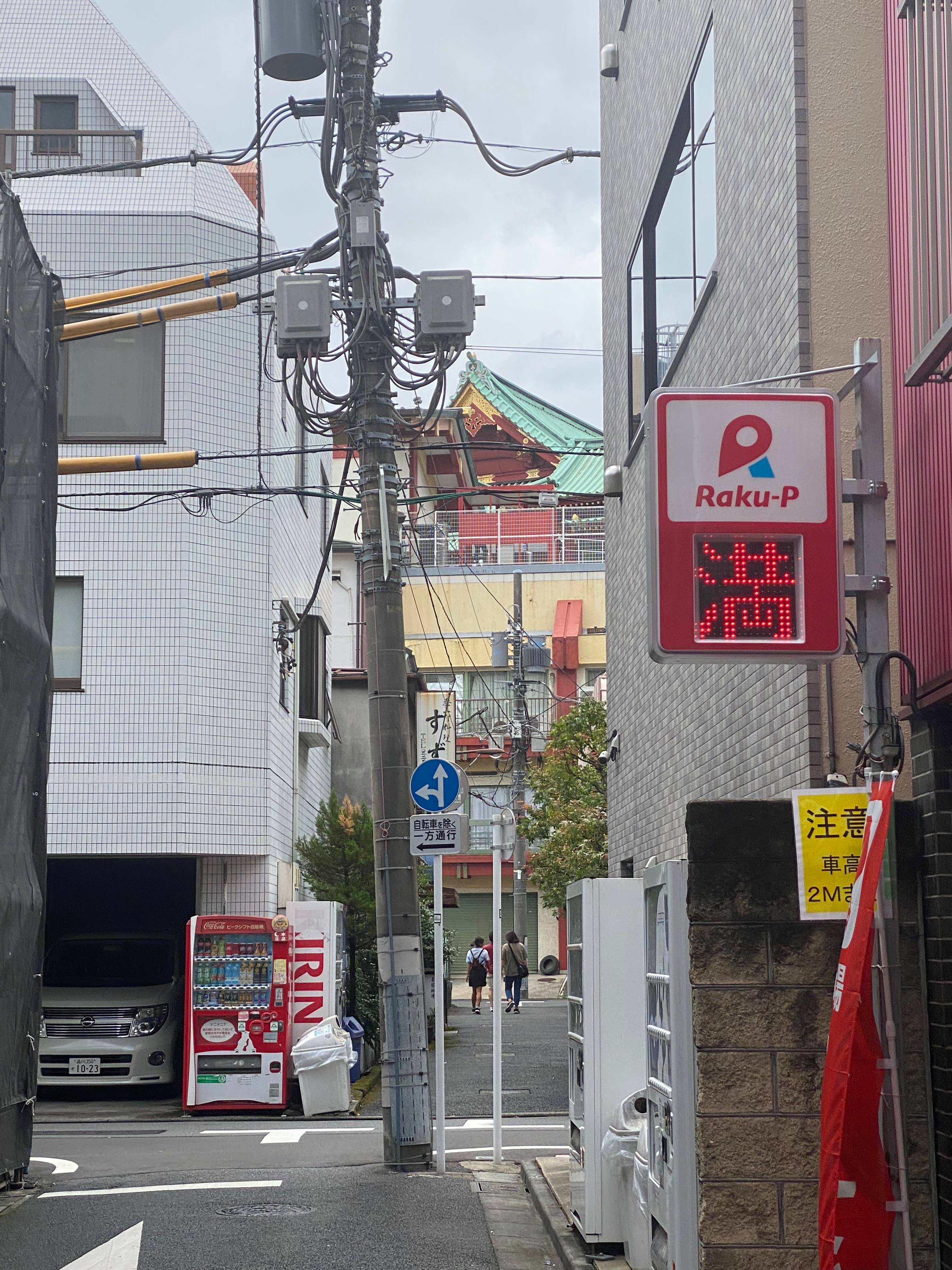
Kanda Myojin
神田明神 · Chiyoda, Tokyo
The tutelary shrine of Edo's merchant districts, next door to Akihabara — and the most relaxed major shrine in Tokyo about how you approach it.
Kurumazaki Jinja
車折神社 · Ukyo, Kyoto
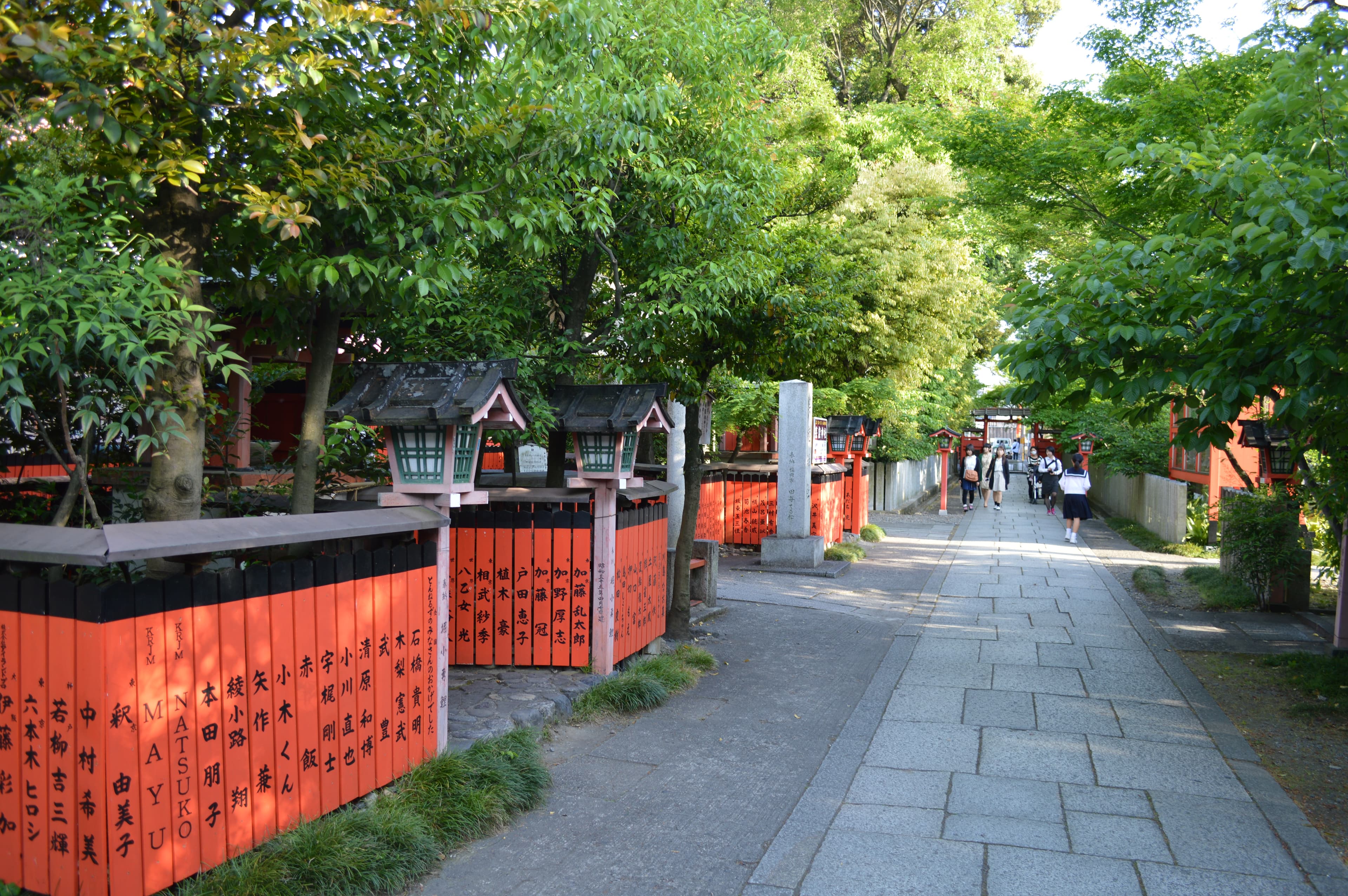
The Arashiyama shrine where promises are kept — and where four thousand vermilion plaques carry the names of Japanese performers, dedicated by the performers themselves.