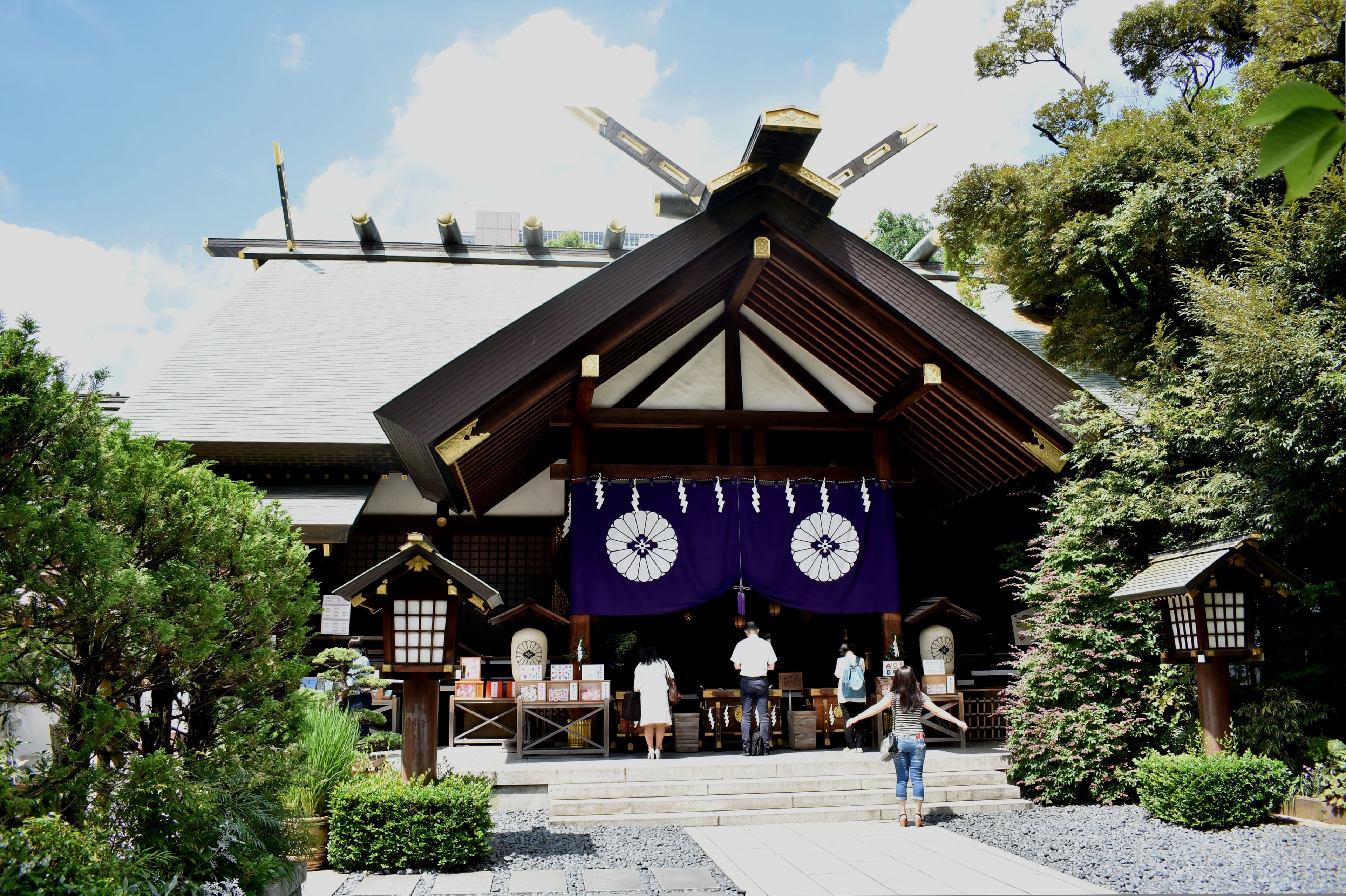
Tokyo Daijingu
東京大神宮
Chiyoda, Tokyo · Shinto shrine
Tokyo's stand-in for Ise, and the shrine that invented the modern Shinto wedding — now the busiest place in the city to ask for a partner.
Tokyo Daijingu was established in 1880 so that people in the new capital could pay respects to Ise Jingu without making the journey west. That is why the two deities of Ise — Amaterasu and Toyouke — are enshrined here, and why the shrine is still called the Ise of Tokyo.
What made it famous is narrower and more recent. In 1901 it staged the model ceremony that became the modern Shinto wedding; before that, weddings were held at home. The shrine states this on both its Japanese and English pages. Three of the other kami enshrined here are musubi deities — musubi means to tie, to bind, to bring into being — and over the twentieth century that association slid from cosmology towards romance. By the 2000s this was the enmusubi shrine in Tokyo, and it has stayed that way.
You should expect to see that rather than escape it. The precinct is small, urban, five minutes from Iidabashi Station, and on a weekend the queue at the offering box is long and overwhelmingly young. If you came for architecture you will find little; if you came to see what living popular devotion looks like in a modern city, few places in Tokyo show it more plainly.
Which kami is enshrined here
- Amaterasu-Sume-Ohkami 天照皇大神
- The sun goddess and ancestral deity of the imperial line — the central figure of Ise. The romanization here is the shrine's own.
- Toyouke-no-Ohkami 豊受大神
- Guardian of agriculture, industry and the food that sustains daily life; the deity of Ise's Outer Shrine.
- Ameno-Minakanushi-no-kami 天之御中主神
- The first deity to come into being at the origin of the universe; one of three creation kami.
- Takamimusubi-no-kami 高御産巣日神
- A creation deity of generative force. The *musubi* in the name is the same word used for tying and matchmaking.
- Kamimusubi-no-kami 神産巣日神
- The paired creation deity of generative force.
- Yamatohime-no-mikoto 倭比賣命
- The imperial princess who, in the tradition, founded the Inner Shrine at Ise.
Take part
What you can actually do here
There is no ritual unique to this shrine — the sequence at the hall is the ordinary one. What is distinctive here is the objects.
- Enmusubi omamori, including the well-known suzuran (lily-of-the-valley) design, ¥700–1,500.
- Omikuji in an unusually wide range, ¥100–300, including koi-mikuji written specifically about romantic prospects, and versions divided by blood type.
The shrine's own worship page is unusually explicit about the temizu, and worth following because many visitors get it wrong: take one ladleful and make it last. Rinse the left hand, then the right, pour water into your left palm to rinse your mouth, rinse the left hand again, then stand the ladle upright so the remaining water runs down the handle. Do not put your mouth on the ladle, and do not drink.
Etiquette
Where this place differs
Standard two bows, two claps, one bow. The shrine specifies claps with the hands about shoulder-width apart, and bows at roughly ninety degrees rather than a nod.
New to this? Read the full worship sequence first.
Goshuin
Getting the seal here
Offered. The seal office is open 9:00–17:00.
The price is not published on any of the shrine's pages, which is normal — most shrines do not publish it. Whether the seal is written directly into your book or issued as a pre-written sheet is likewise not stated officially, so do not plan around either.
Before you go
The closing times do not match, and this catches people out. The grounds stay open until 21:00, but the amulet office shuts at 19:00 and the seal office at 17:00. Arrive in the evening and you can pray, and that is all — no omamori, no goshuin. If either matters to you, come before 17:00.
The precinct is genuinely small and gets very crowded at weekends. Almost all practical information on the official site is in Japanese only; the English pages cover the shrine's history and an introduction to Shinto, and nothing operational.
Map
Sources
This entry was compiled from the following, most of them in Japanese.
Others people visit for the same reasons
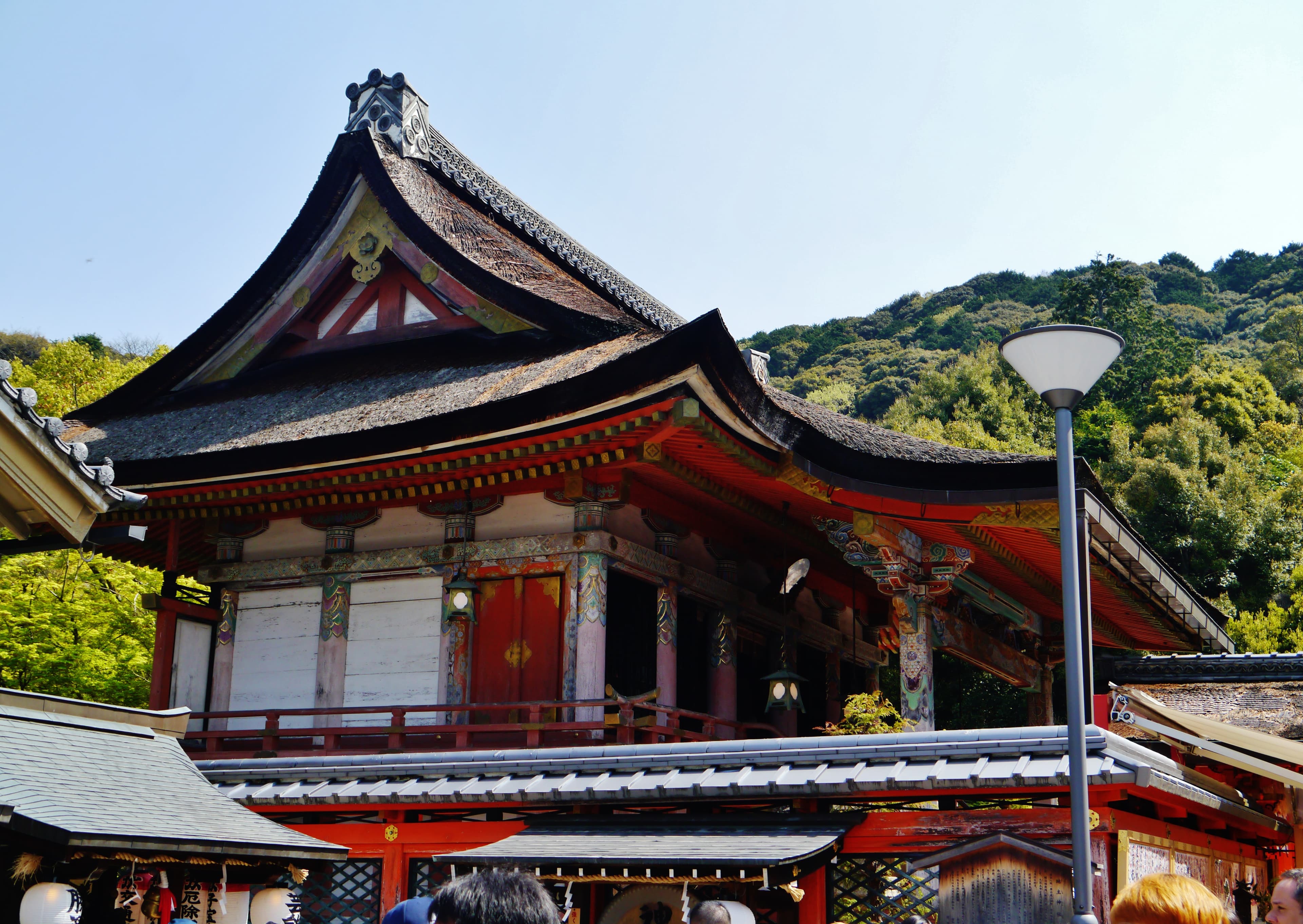
Jishu Jinja
closed地主神社 · Higashiyama, Kyoto
Kyoto's famous love-stone shrine inside Kiyomizu-dera — closed since 2022, with no reopening date, and still listed as open almost everywhere in English.
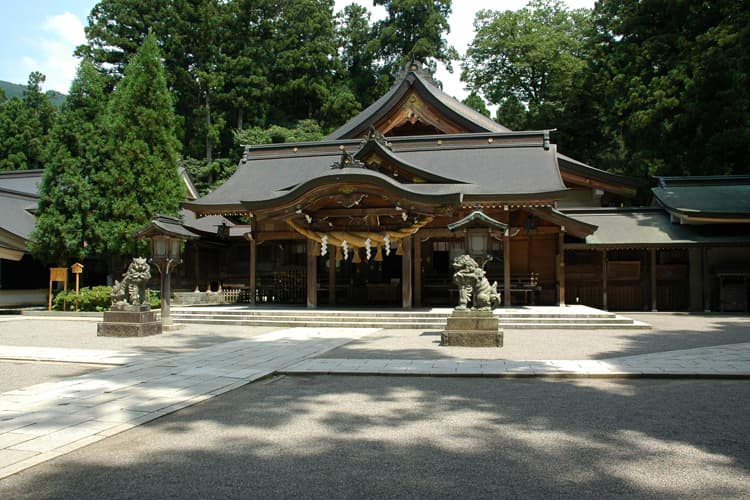
Shirayama Hime Jinja
白山比咩神社 · Hakusan, Ishikawa
Head shrine of some three thousand Hakusan shrines, at the foot of a sacred mountain — and one of the few places that still offers misogi, cold-water ablution, as a standing rite.
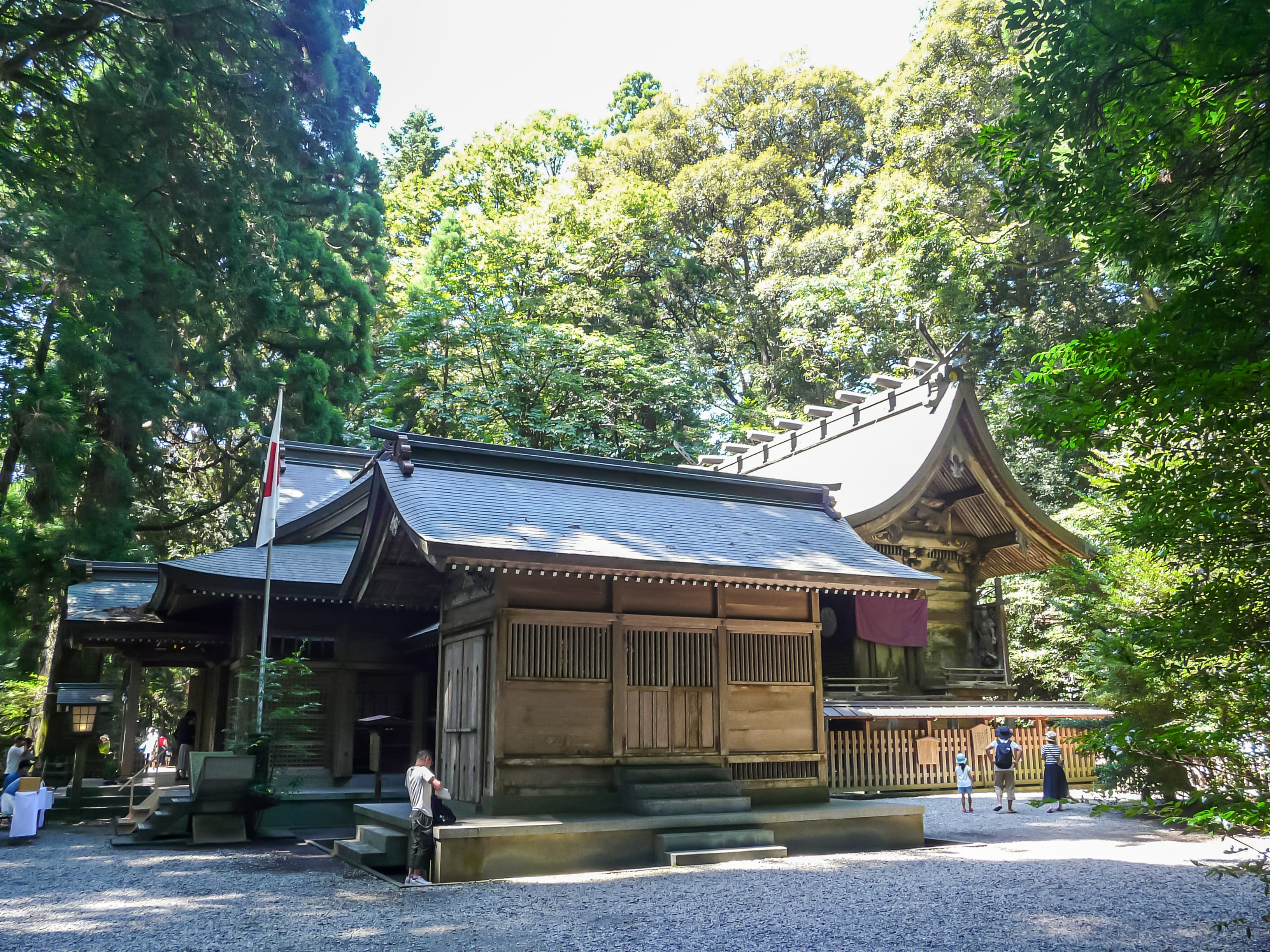
Takachiho Jinja
高千穂神社 · Takachiho, Miyazaki
The head shrine of Takachiho's eighty-eight shrines, where four kagura dances are performed for visitors every night of the year at eight o'clock.
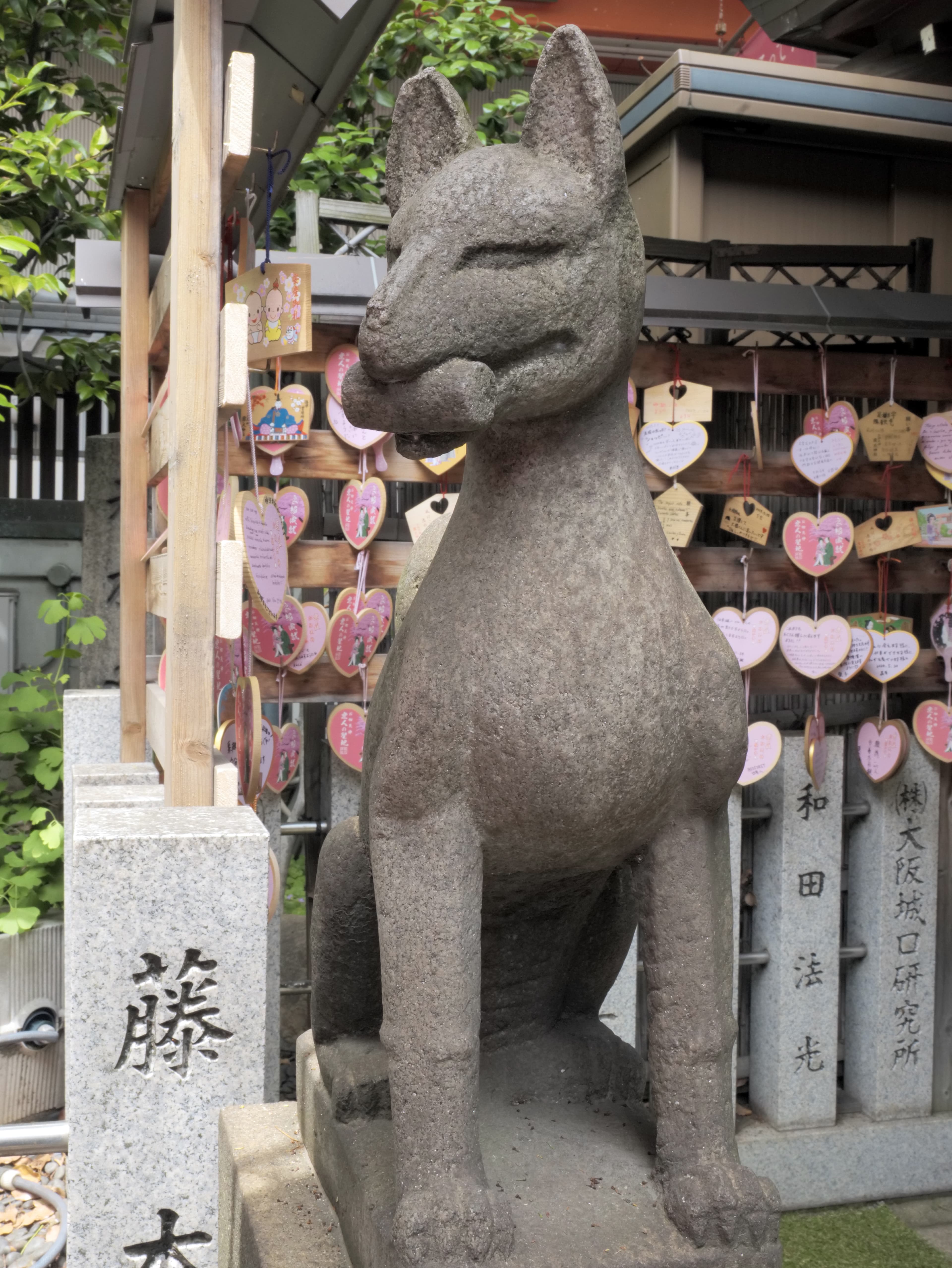
Tsuyu no Tenjinsha (Ohatsu Tenjin)
露天神社(お初天神) · Kita, Osaka
A small Osaka shrine hemmed in by izakaya, known for love — because two people really did die here in 1703, and Japan's greatest playwright wrote it down.