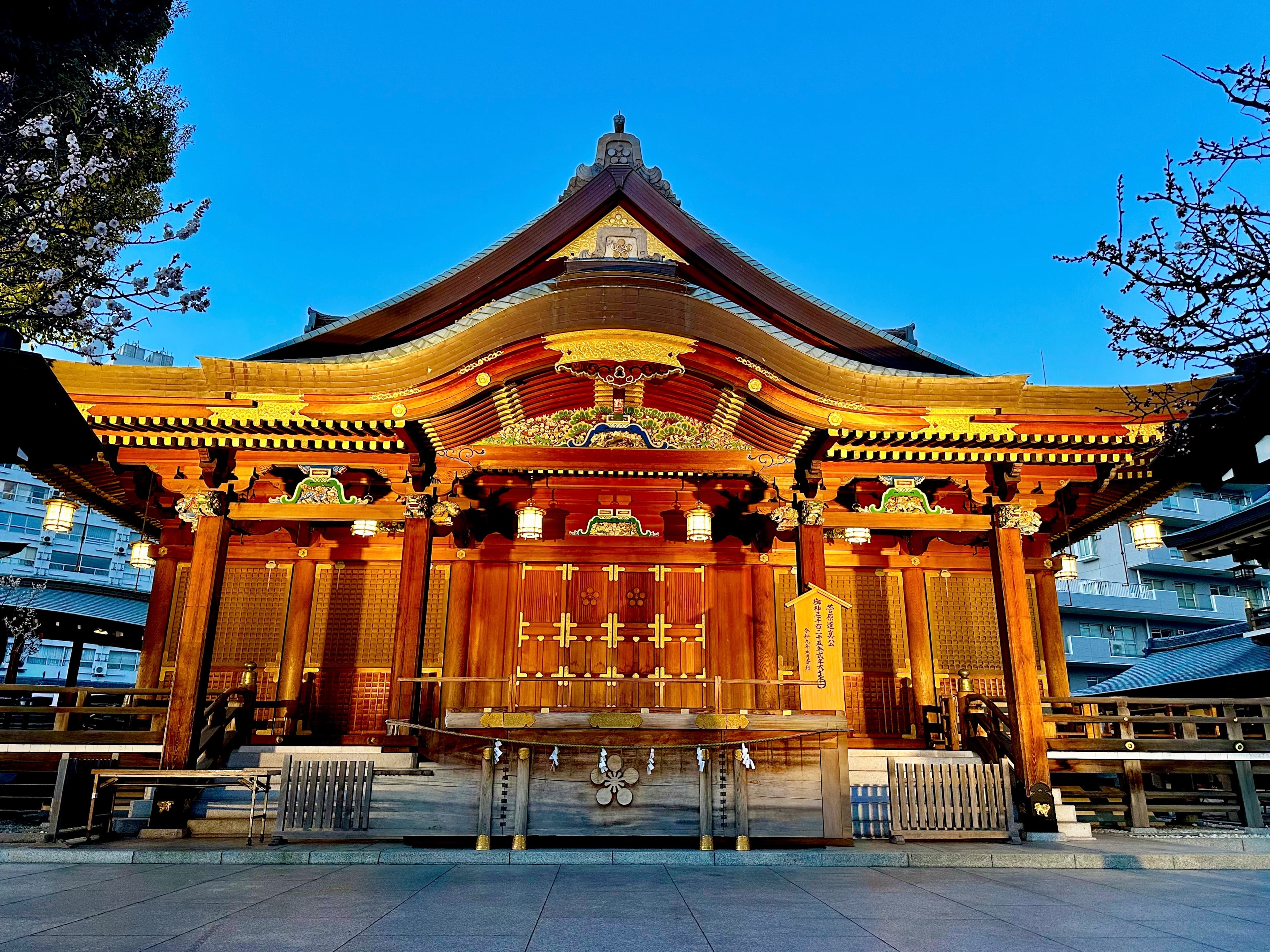
Yushima Tenmangu
湯島天満宮
Bunkyo, Tokyo · Shinto shrine
Tokyo's exam shrine. In February the ema racks are so dense with entrance-exam prayers that you cannot see the wood.
Yushima Tenmangu is a Tenjin shrine, which means it enshrines Sugawara no Michizane — a real ninth-century scholar and statesman who died in political exile, was blamed for the disasters that followed, and was eventually deified. Over a thousand years his portfolio narrowed from placating an angry spirit to something very specific: examinations.
By tradition the shrine was founded in 458 for Ame-no-Tajikarao, the kami of physical strength, and Michizane was added in 1355 at the petition of local residents. Both are still enshrined; only one of them draws the crowds.
The result is one of the most legible religious sites in Tokyo. Come in February and the ema racks are stacked several deep with the names of schools and universities, written by teenagers and by their parents. Whatever you believe, it is a very direct look at what people in a secular-seeming country actually do when something matters and is out of their hands. The grounds also hold roughly two hundred white plum trees, and the plum festival runs from February into early March — the same weeks, which is not a coincidence.
Which kami is enshrined here
- Ame-no-Tajikarao-no-Mikoto 天之手力雄命
- The kami of physical strength, who pulled Amaterasu out of the rock cave. Enshrined at the founding.
- Sugawara no Michizane 菅原道真公
- Scholar and statesman (845–903), deified as Tenjin; patron of learning, literature, poetry and calligraphy. Added in 1355.
Take part
What you can actually do here
Nade-ushi — stroking the ox. There are two reclining stone oxen on the grounds, one beside the purification basin. The shrine explains the connection in its own history: Michizane was born on a day of the Ox and died on a day of the Ox, and his testament asked that the ox drawing his body choose the burial place.
The practice, as the shrine describes it, is loose rather than prescribed. You stroke the part of the ox that corresponds to your own trouble — someone with a bad leg strokes its leg, someone with sinus problems strokes its nose. Some stroke the horns; some simply put their palms together. There is no fixed number of times and no correct order.
Ema. Sold at the amulet office, 9:00–19:00. The shrine documents no special procedure — you write, you hang it. What is worth knowing is that in exam season your plaque joins tens of thousands of others, and that is rather the point of doing it here.
Etiquette
Where this place differs
Standard shrine sequence: two bows, two claps, one bow.
New to this? Read the full worship sequence first.
Goshuin
Getting the seal here
Offered, and this shrine is unusually clear about the rules — which matters, because they are two-tier.
- Reception 9:00–19:00.
- Direct writing into your goshuincho ends at 17:00. After that you get paper.
- Special goshuin are issued on paper only and are never written into a book. The shrine states this outright.
Price is not published.
Before you go
Part of the plum garden is under renovation and two stone monuments have been moved — the kien hyojin-seki and the Michizane precept stele are not where older guides place them.
The 17:00 goshuin cutoff is the thing people get wrong here. Reception runs to 19:00, so it looks like you have plenty of time, but after 17:00 your book will not be written in.
One oddity: the official website is encoded in Shift-JIS and renders as garbage in many browsers and translation tools. That is the site, not your device.
Map
Sources
This entry was compiled from the following, most of them in Japanese.
Others people visit for the same reasons
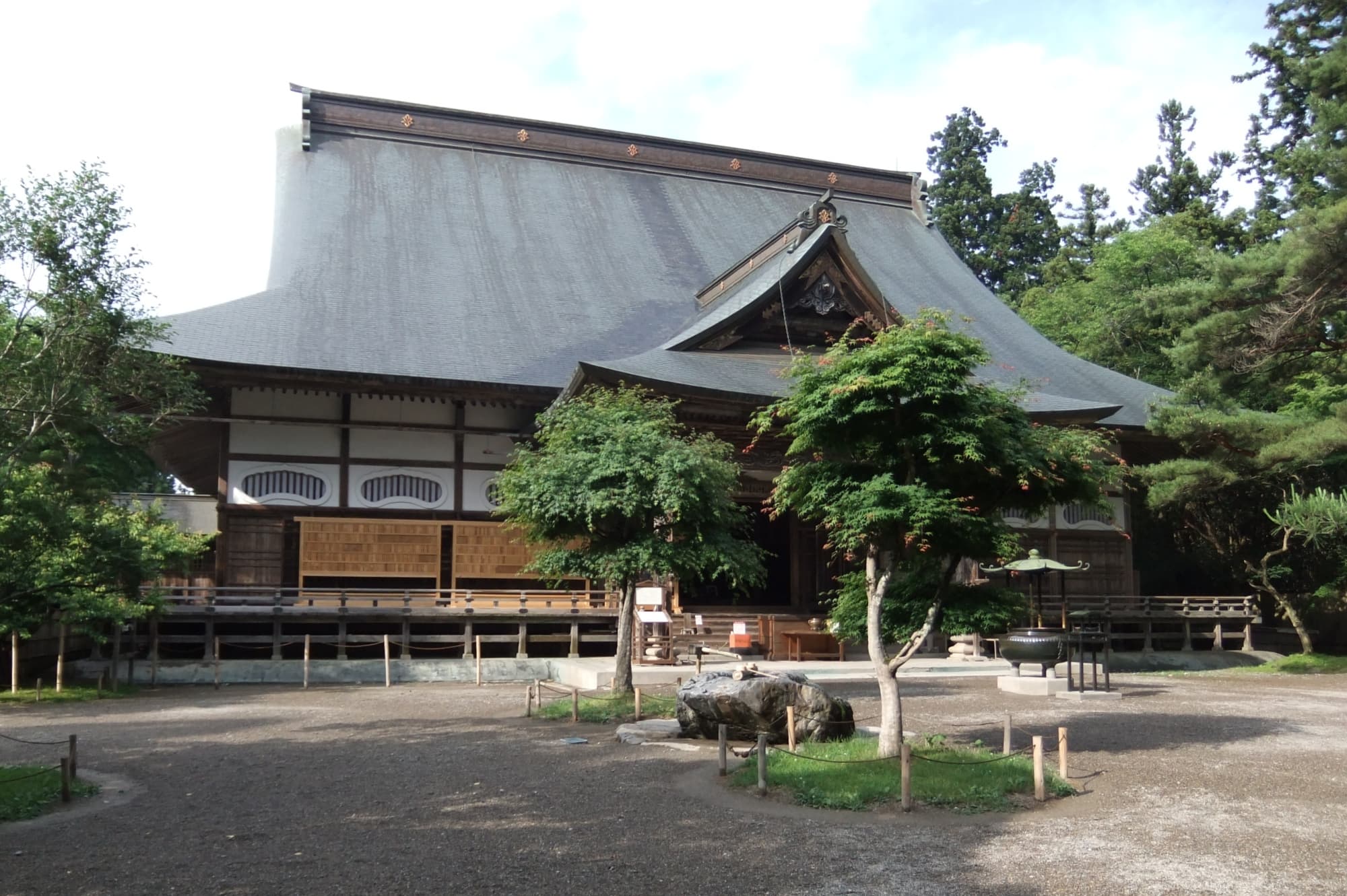
Chuson-ji
中尊寺 · Hiraizumi, Iwate
A World Heritage Tendai temple whose golden hall was raised in 1124 as a vow for the repose of the dead of both sides in a war — and it is a temple, so do not clap.
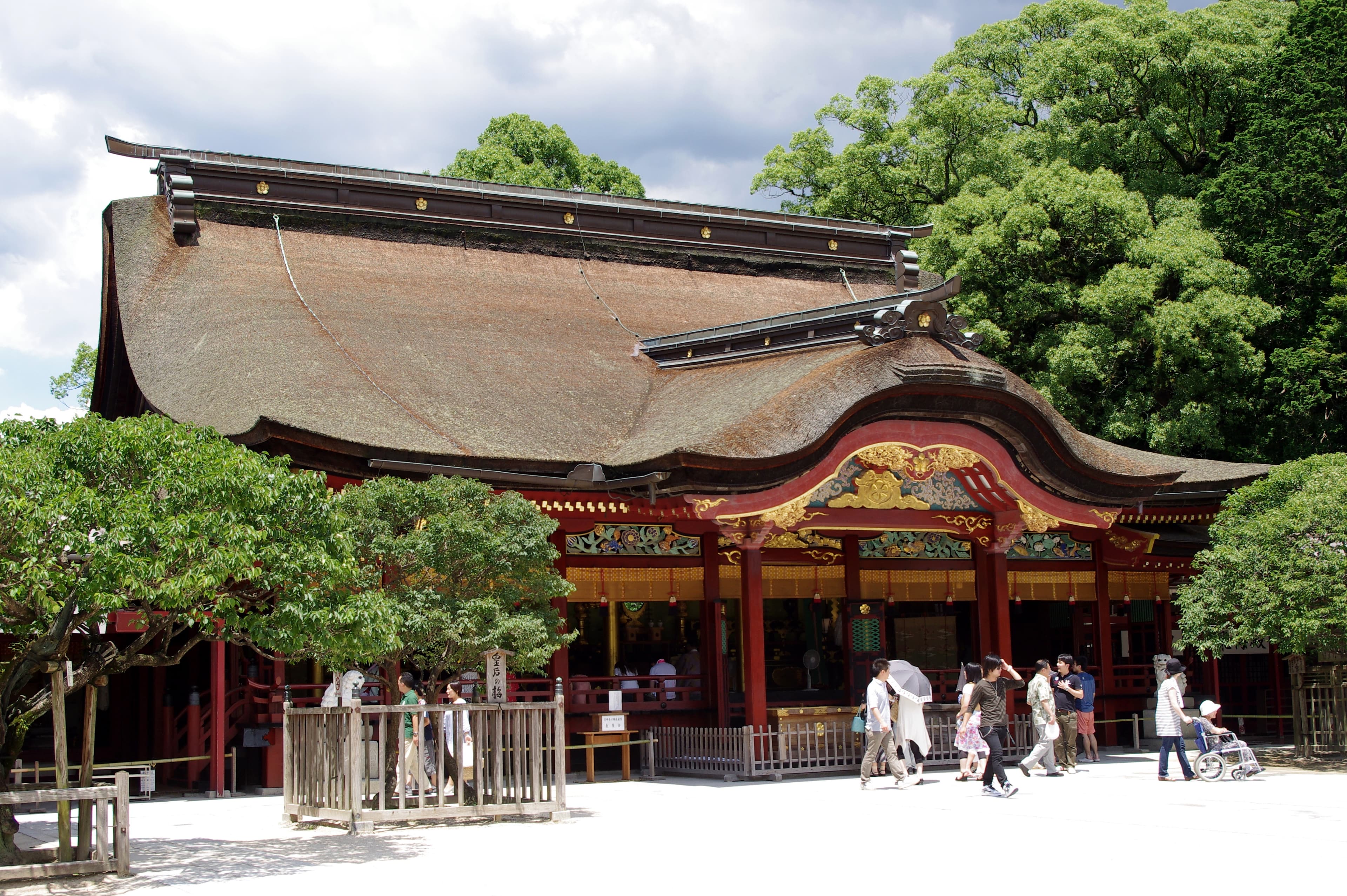
Dazaifu Tenmangu
partial太宰府天満宮 · Dazaifu, Fukuoka
The head shrine of every Tenmangu in Japan, built over the grave of an exiled scholar — and currently mid-way through the end of a 124-year restoration.
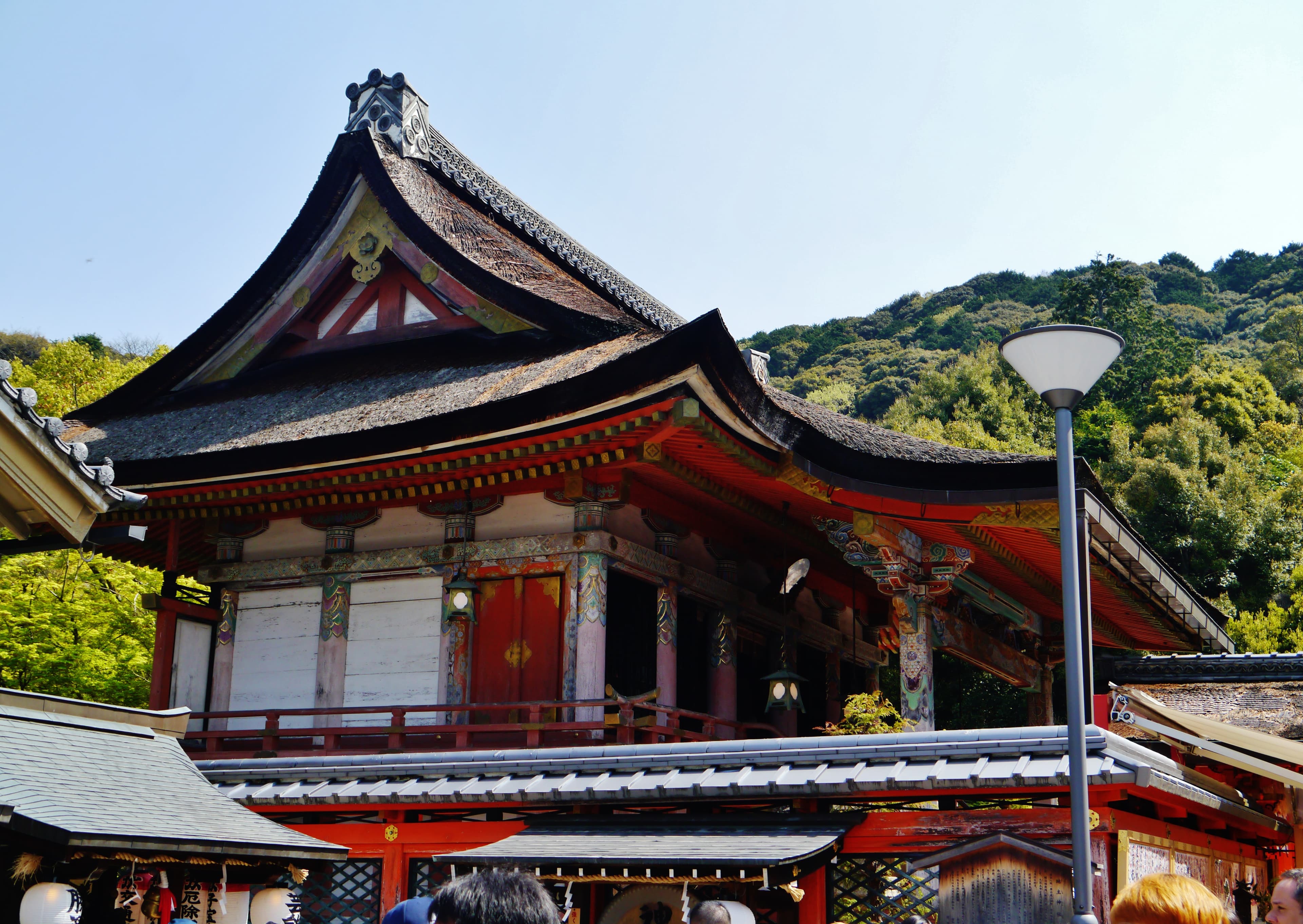
Jishu Jinja
closed地主神社 · Higashiyama, Kyoto
Kyoto's famous love-stone shrine inside Kiyomizu-dera — closed since 2022, with no reopening date, and still listed as open almost everywhere in English.
Shirayama Hime Jinja
白山比咩神社 · Hakusan, Ishikawa
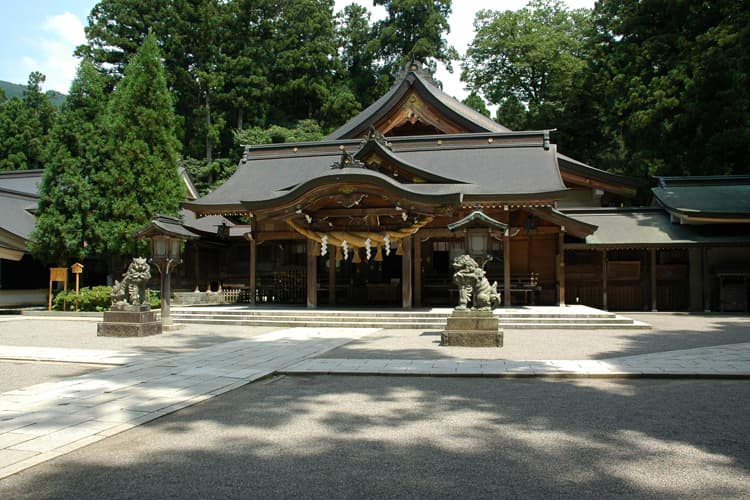
Head shrine of some three thousand Hakusan shrines, at the foot of a sacred mountain — and one of the few places that still offers misogi, cold-water ablution, as a standing rite.