Usually asked on someone else's behalf
The thing that distinguishes this category in practice is that people often are not asking for themselves. A visit about health is frequently made by a family member — for a parent facing surgery, for a child who is ill. That changes the tone at the hall, and it is worth being aware of if you are visiting a health-associated shrine as a sightseer on a weekday morning.
Japanese distinguishes several requests that English flattens into "health": byoki heiyu is recovery from a specific illness that someone currently has; mubyo sokusai is a general year without illness or accident; enmei choju is long life. If you are writing an ema, being specific is closer to how it is actually done.
The physical gestures
This is the category with the most touch in it, which is unusual — most shrine practice is done at a distance.
At Tenjin shrines you will find a reclining stone ox, the nade-ushi, and the practice is to stroke the part of the animal that corresponds to your own trouble. Yushima Tenmangu describes it loosely on its own pages: someone with a bad leg strokes its leg, someone with sinus problems strokes its nose. There is no set number of times and no correct order. Both of Yushima's oxen are worn smooth in the places people worry about, which tells you more about a society than most museum labels.
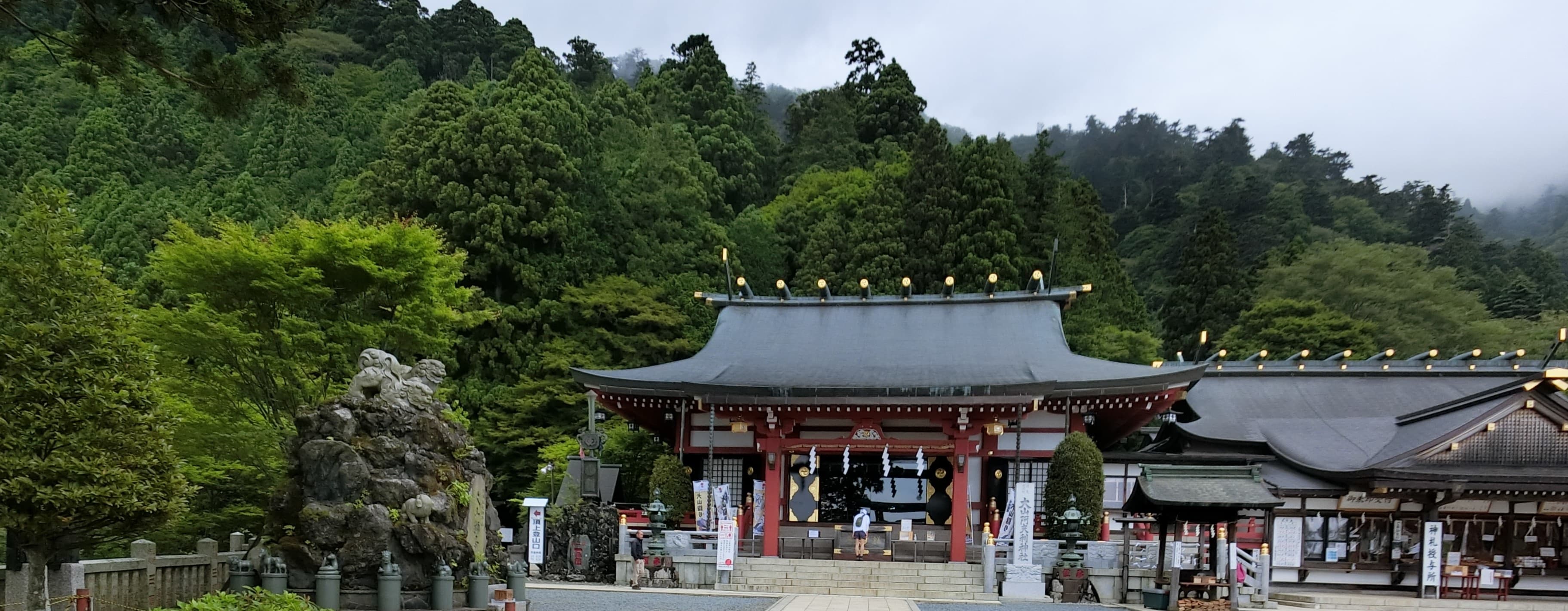
Mountain shrines like Oyama Afuri Jinja bring a different logic — sacred spring water, and the physical act of the climb itself as part of the request.
Before you go
If you are visiting on behalf of someone seriously ill, consider a gokito — the formal prayer service a priest performs, rather than the informal bow at the offering box. You arrange it at the shrine office, it costs a few thousand yen, and at most shrines it can be requested on the day. It is the form that matches the weight of the occasion.