Kiyomizu-dera
清水寺
Higashiyama, Kyoto · Buddhist temple
The stage is uncovered again, the love stones inside have been shut since 2022, and the queue at the waterfall is arguing about something the temple has answered in two different places.
partial — Something on the site is restricted or hidden at the time of our last check.
If you are here in the week of 9–16 August 2026, read the Sennichi-mairi section below before anything else — it is the one week of the year you can go further inside than usual.
Kiyomizu-dera is a Kannon pilgrimage site — the temple's own framing is that it is a place filled with Kannon's compassion, and that you come to give thanks for being alive and for the people around you rather than to present a list of demands.
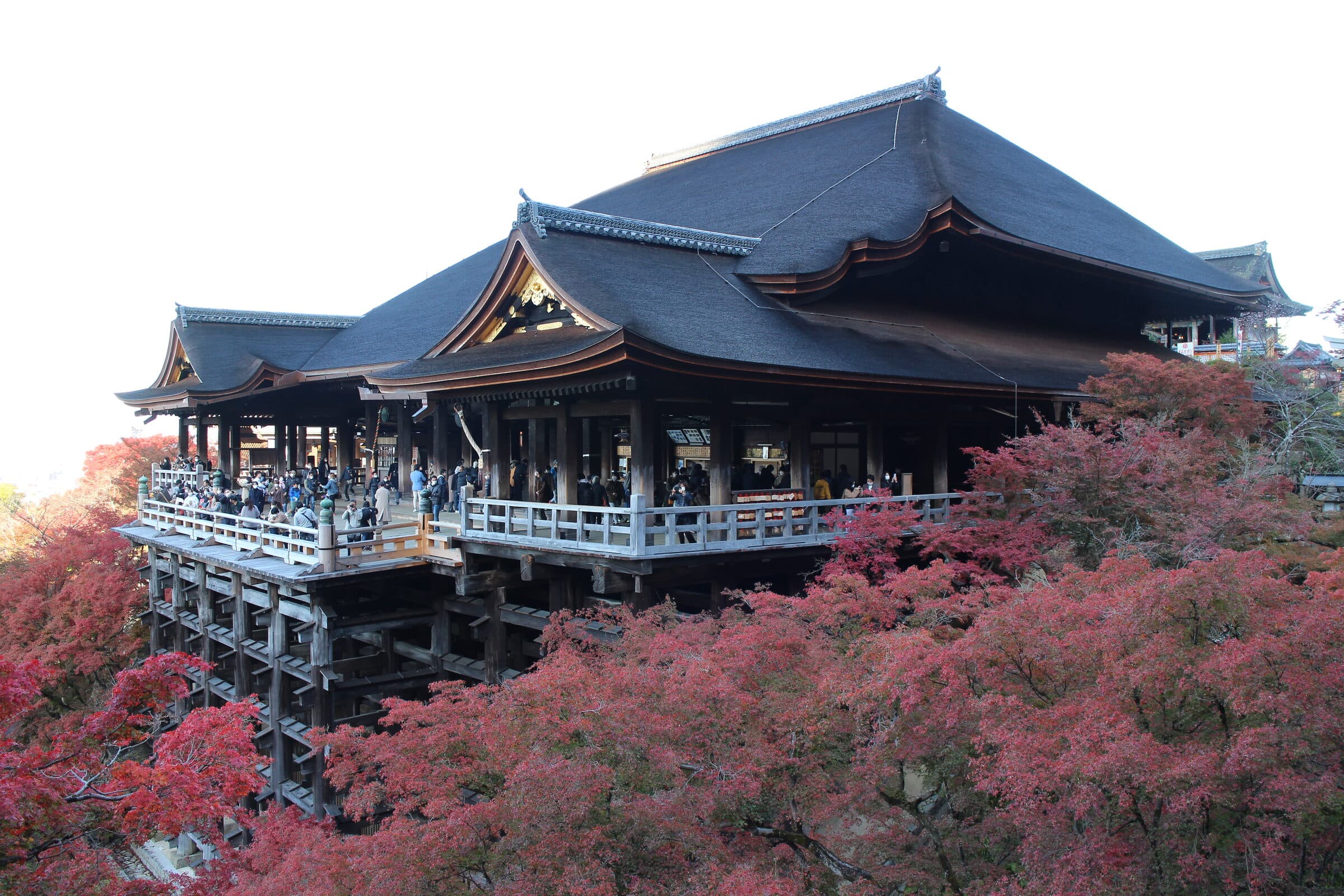
The main hall was rebuilt in 1633 by Tokugawa Iemitsu, is a National Treasure, and is held up without nails in the kake-zukuri suspended style — the stage itself rests on eighteen zelkova pillars, standing about thirteen metres above the stones below. The temple points to Ishiyama-dera and the Nigatsu-do at Todai-ji as built the same way.
Two things to know before you arrive, because both are widely got wrong and both are covered below: the honzon is a hidden image on a thirty-three-year cycle and you will not see it, and Jishu Shrine — Kyoto's famous love-stone shrine, inside this precinct — has been closed since 2022.
The good news is that the scaffolding is gone. The great Heisei repair finished, the temporary shelter came off in December 2020, and the stage has been fully open to the sky ever since.
Who is enshrined here
- Juichimen Senju Kanzeon Bosatsu 十一面千手観世音菩薩
- The eleven-headed, thousand-armed Kannon. The temple's own gloss: eleven expressions and forty-two arms expressing great compassion and saving people from suffering. The variant here, with two arms raised above the head holding a small Buddha, is known as the 'Kiyomizu type' and is unique to this temple.
Take part
What you can actually do here
The Otowa waterfall — the temple answers this twice
Three streams fall from bamboo conduits below the Okuno-in, and the queue below them is where the arguing happens. The temple has said two different things about it, in two different places, and both are worth having.
On its visitor pages — the ones headed "how to worship here" — the framing is single: you scoop the water with a ladle and pray for purification of the six senses and for your wishes to be fulfilled. No division at all.
In a feature article on the same site, it acknowledges the popular reading: the waters of the three streams are said to bring benefits in study, health and matchmaking — and it suggests not being greedy and taking just one. So the "take one" custom is the temple's own, and so is the trio of themes.
What we could not find anywhere is the bit visitors argue hardest about: which stream is which. Left-for-study, middle-for-love, right-for-longevity is not assigned on any page of the temple's site. Pick a stream, take it, and do not let anyone tell you that you chose wrong.
The spring is where the temple began and where its name comes from — kiyomizu, pure water. It has long been called golden water and life-prolonging water. Fudo Myoo is enshrined beside it.
The stage
Walk out on it. The route runs from the Nio-mon along the Asakura-do corridor, through the ticket gate, into the outer sanctuary of the main hall and out onto the deck. Note that ordinary visitors go only as far as the outer sanctuary — the inner chambers are normally closed. Assuming you can walk up to the altar is a common mistake.
Tainai-meguri — walking through the dark
At the Zuigu-do, near the start of the approach, you can go down into a pitch-black basement and walk it holding a beaded handrail, symbolically inside the womb of the Dai-Zuigu Bosatsu. It is genuinely disorienting and it is the most physical act of participation on the site.
It is running, but with numbers limited — the temple still carries a capacity notice. That is a queue condition, not a closure. The fee is not published; visitors report ¥100.
The one week you can go further in
Right now there is an exception to the outer-sanctuary rule. Sennichi-mairi runs 9–16 August 2026, and during it visitors may enter the nai-naijin, the innermost chamber. One day's worship in this period is traditionally reckoned equal to a thousand days.
- Inner sanctuary 9:00–17:00, with 17:00 the cut-off for entry.
- No reservation — the temple says so explicitly. Turn up.
- ¥500 / ¥200, the ordinary admission — the temple's own English announcement for this year states it. No separate or combined ticket.
- On 14–16 August the grounds are also lit after sunset, last entry 21:00, gates 21:30.
Even then the honzon itself stays closed in its shrine. What you get is the room, not the statue.
Etiquette
Where this place differs
This is a temple: palms together, bow, no clapping.
Eating anywhere in the grounds is prohibited, including while walking — which is a genuine trap, because Kiyomizu-zaka immediately outside is wall-to-wall street food and the temple's grounds extend to the plaza in front of the Nio-mon. Sealed drinks for hydration are fine.
Also prohibited: smoking anywhere, drones, tripods and monopods, wedding, cosplay, model and commercial shoots, live-streaming, and pets other than assistance dogs. Personal snapshots are fine. Sitting down in the grounds and occupying one spot for a long photo session are asked against rather than banned — the temple's wording there is a request. School and group commemorative photos are a different matter — those are arranged through the temple's photo room by the Nio-mon.
New to this? Read the full worship sequence first.
Goshuin
Getting the seal here
Offered at the nokyosho, which is marked on the temple's own grounds map near the Asakura-do side.
The temple states that the amulet counter and the seal office begin issuing from around 8:00 — worth noting, because the gate opens at 6:00, so the first two hours of the day are for worship only. Closing time, price and whether it is written into your book are not published.
Kiyomizu-dera is number 16 of the Saikoku thirty-three and holds several of the Rakuyo thirty-three, so more than one seal exists here.
Before you go
Jishu Shrine is closed and this is the biggest expectation gap in Kyoto. The love-fortune stones — walk between them with your eyes closed — are inside this precinct and have been shut since 2022 for renovation, with the shrine stating that both the construction period and the reopening date are undetermined. Guidebooks, blogs and map apps still send people here for them. You will pay Kiyomizu-dera's admission and find a closed gate. We have a full entry on Jishu Jinja if you want the detail.
You will not see the Kannon. It is a hidden image opened roughly once every thirty-three years; the last opening was in 2000. Even during Sennichi-mairi the statue remains in its closed shrine. What stands in for it is a substitute image.
The stage is not scaffolded. If you have been putting off a visit because of the repairs, they finished — the shelter came down in December 2020.
Map
Sources
This entry was compiled from the following, most of them in Japanese.
Others people visit for the same reasons
Fushimi Inari Taisha
伏見稲荷大社 · Fushimi, Kyoto
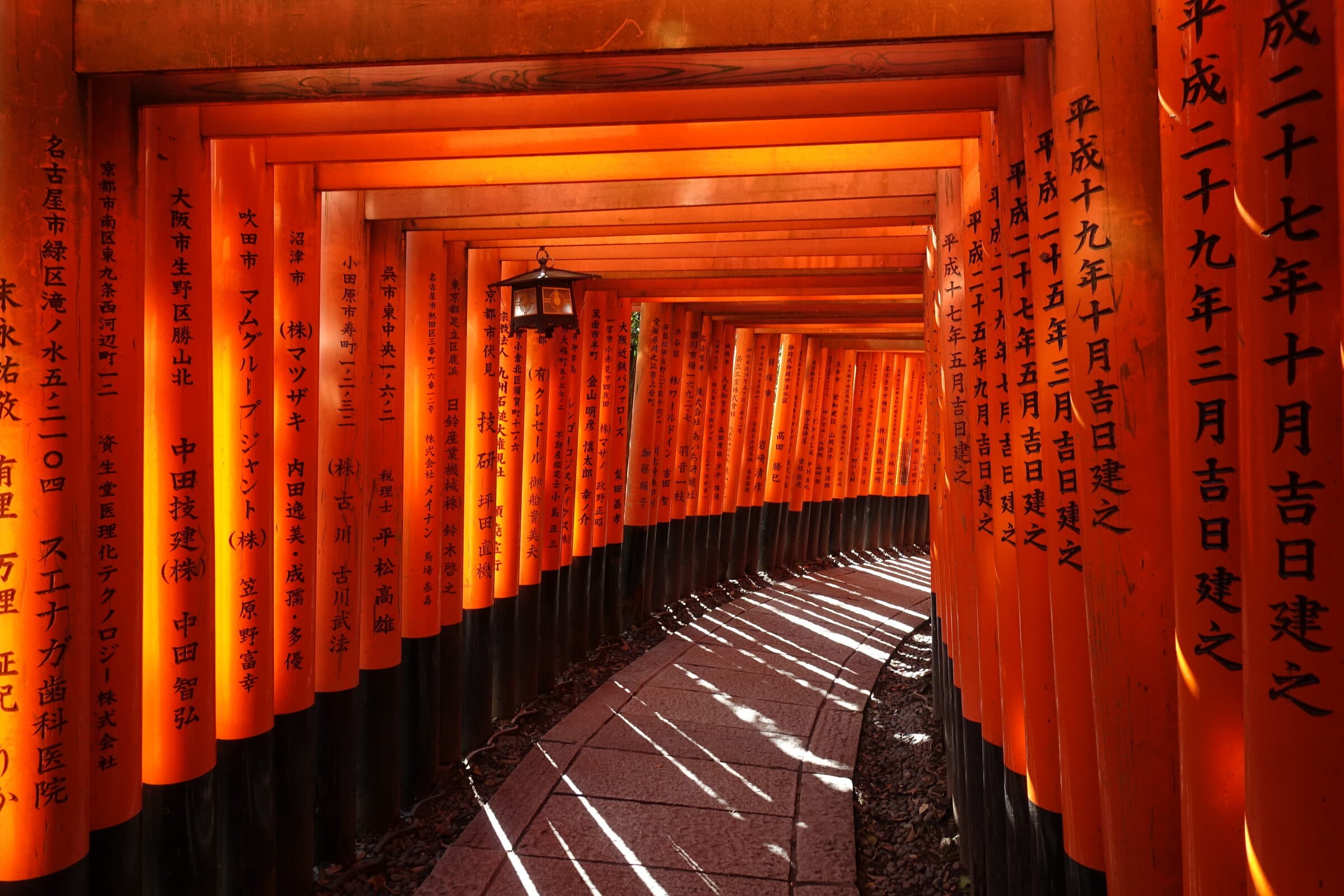
Ten thousand vermilion gates, and every one of them is a receipt — somebody paid for it because something they asked for came true.
Kanda Myojin
神田明神 · Chiyoda, Tokyo
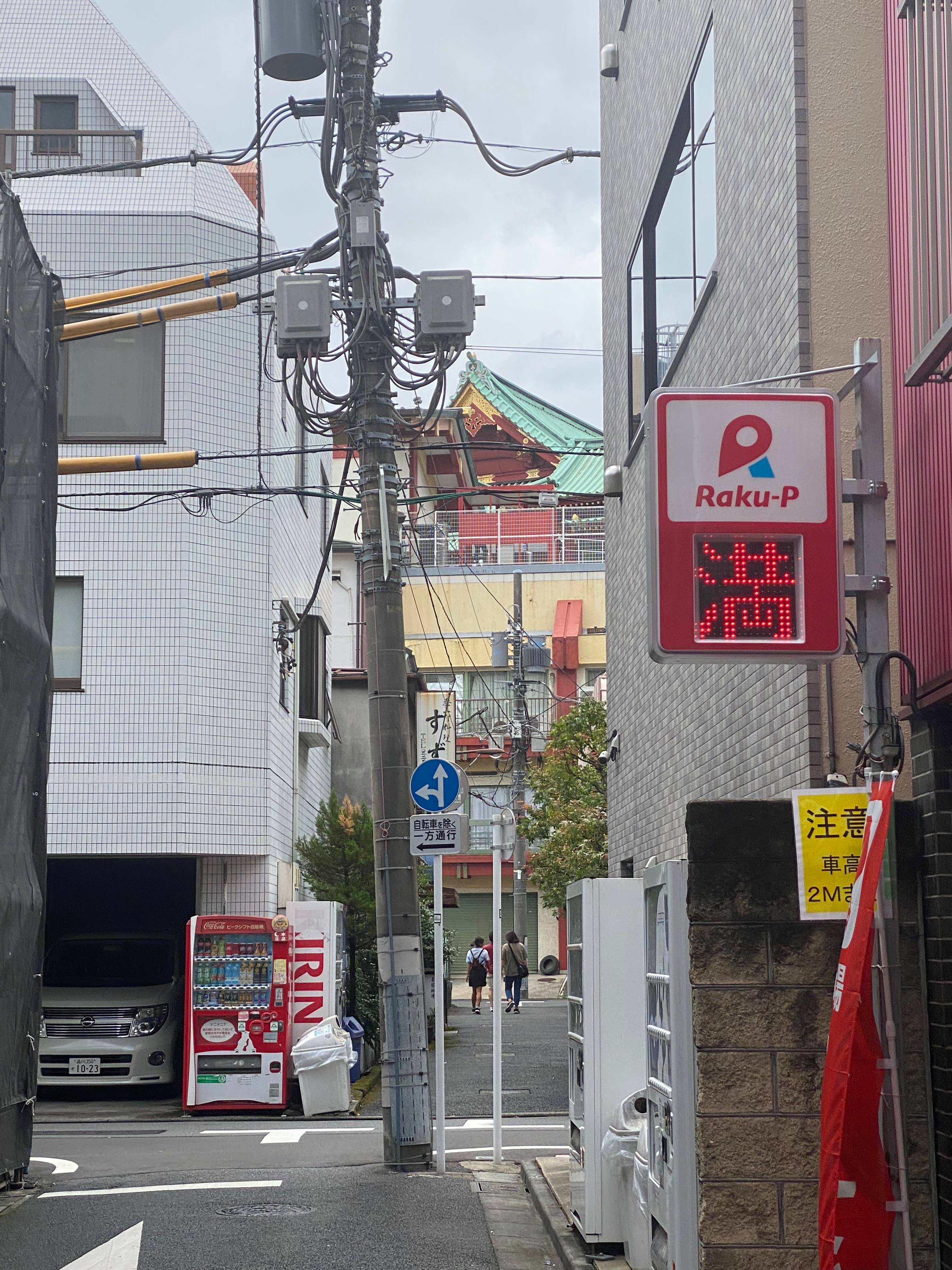
The tutelary shrine of Edo's merchant districts, next door to Akihabara — and the most relaxed major shrine in Tokyo about how you approach it.
Meiji Jingu
明治神宮 · Shibuya, Tokyo
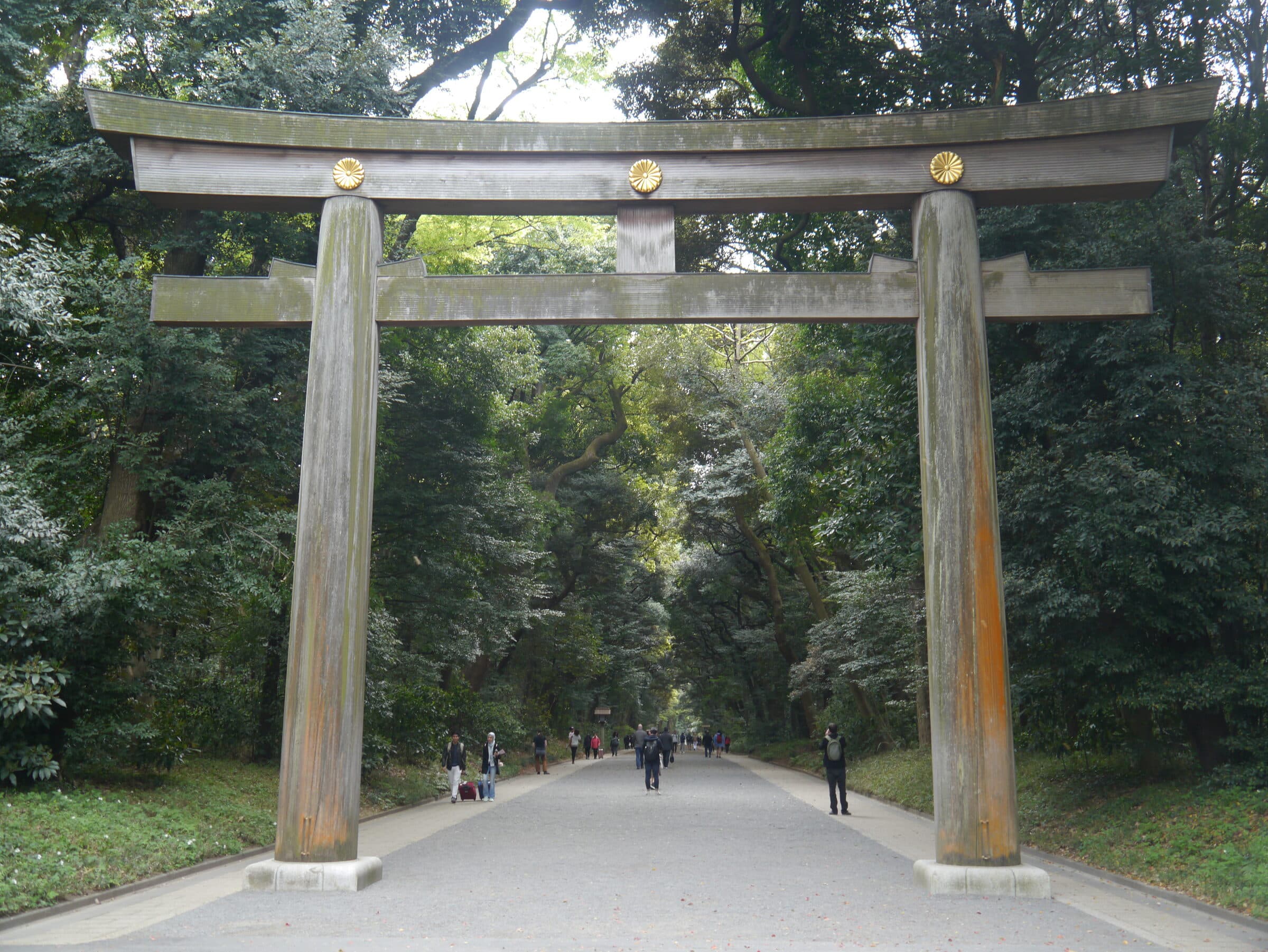
A forest of a hundred thousand donated trees, planted from scratch in 1920 and designed to outlive everyone who planted it — with a shrine in the middle.
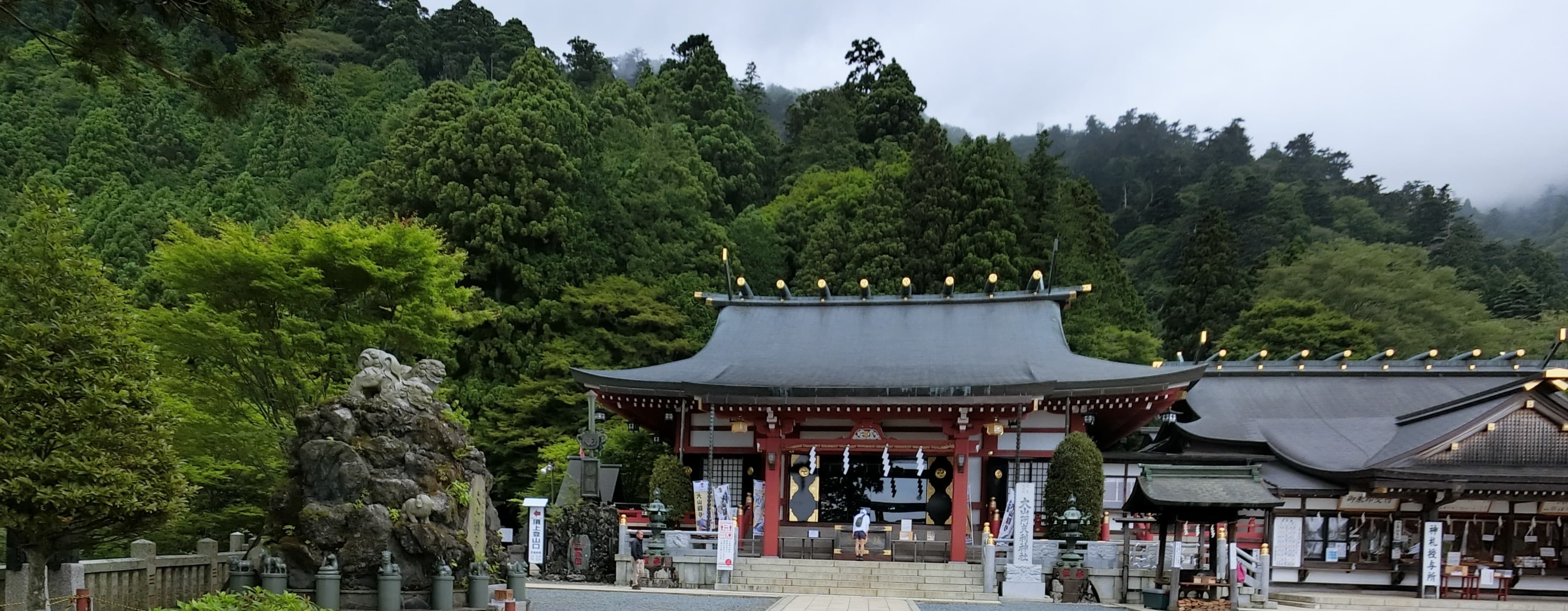
Oyama Afuri Jinja
大山阿夫利神社 · Isehara, Kanagawa
A mountain shrine ninety minutes from Tokyo where the lower hall is a cable-car ride and the upper hall is a two-hour climb — and the difference matters.