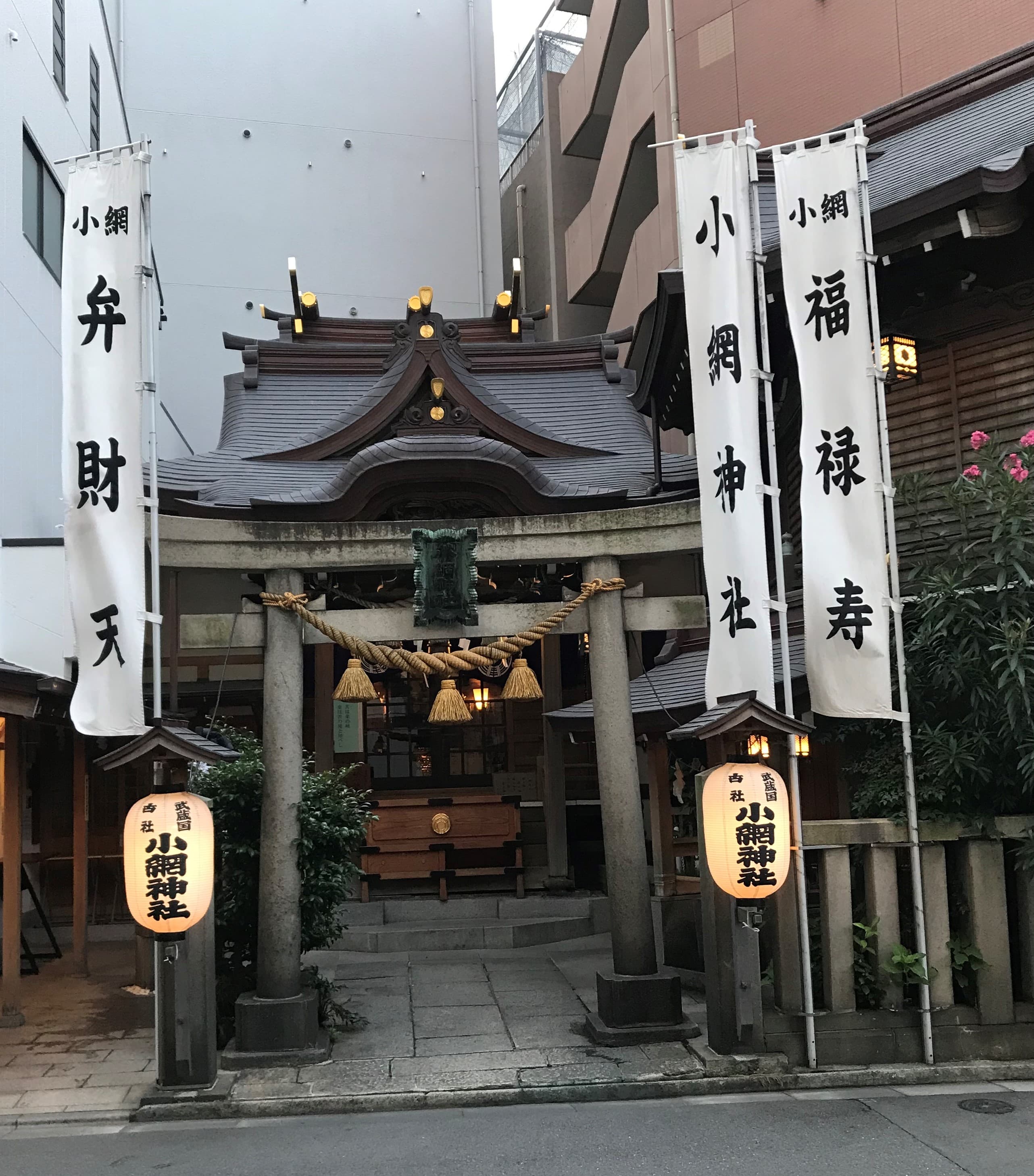
Koami Jinja
小網神社
Chuo, Tokyo · Shinto shrine
A tiny Nihonbashi shrine with a reputation for strong luck built on two documented survivals — and a coin-washing well that is the reason most people come.
Koami Jinja occupies a plot barely wider than a house on a Nihonbashi side street, and it is one of the more interesting shrines in Tokyo precisely because its reputation rests on something checkable. Its association is kyoun-yakuyoke — strong luck, and the warding-off of misfortune — and the tradition points at two events. The hall was destroyed in the Great Kanto Earthquake of 1923, but the priest escaped carrying the sacred objects. In the 1945 air raids, which flattened much of central Tokyo, the shrine took no damage.
Whether you read that as protection or as chance, it is a much more concrete claim than most shrines make, and it is why the kyoun framing sticks.
Three deities are enshrined here, and unusually they come from three different registers: an Inari deity of grain and prosperity, a goddess identified with the Buddhist Benzaiten, and one of the Seven Lucky Gods. That syncretic mixture is normal in Japanese practice and worth noticing rather than tidying away.
Which kami is enshrined here
- Uka-no-Mitama-no-Kami 倉稲魂神
- An Inari deity of rice and grain, and by extension of prosperity. The shrine itself glosses him simply as O-Inari-sama.
- Ichikishimahime-no-Kami 市杵島比賣神
- A water and island goddess long identified with Benzaiten, associated with wealth and the arts. The shrine glosses her as Benzaiten directly.
- Fukurokuju 福禄寿
- One of the Seven Lucky Gods. The shrine credits him with three virtues: personal character, good fortune and wealth.
Take part
What you can actually do here
Zeni-arai — washing money. To the left as you face the main hall is a small well dedicated to Manpuku Funanori Benzaiten. The shrine's own description of the practice is one sentence: purify money in the well water, then keep it in your wallet, and you will receive fortune in money matters. It is popularly called the Zeni-arai Benten of Tokyo.
Note what the shrine does not say. There is no specified coin, no specified amount, no basket, no instruction on drying. Anything more elaborate you read elsewhere did not come from here.
The two dragons. Carved on either side of the worship-hall porch are a rising dragon and a descending dragon. The rising one carries the worshipper's prayer up; the descending one brings the response back down. You look up at them from where you stand at the offering box — most visitors never notice them.
Etiquette
Where this place differs
Two things here are not standard, and both are still in force.
- The bell rope has been removed. You cannot ring the bell. Do not look for it.
- The temizu ladles have been removed. Purify your hands under the running water directly.
New to this? Read the full worship sequence first.
Goshuin
Getting the seal here
Offered. The amulet and seal counter runs 9:00–17:00.
Price is not published. On the question of whether it is written into your book: collectors' sites report that direct writing is suspended and only pre-written sheets, including cut-paper designs, are issued. The shrine does not confirm this anywhere on its own site, so treat it as likely but unverified — and bring low expectations rather than a specific plan.
Before you go
The shrine asks visitors to stay away at certain times, and means it. It requests that people avoid 1–15 January and weekends and holidays through January and February, because the queue overflows into a public street the site is too small to absorb. This is the shrine's own request, not a crowding tip.
Formal prayer services are reservation-only, by telephone in Japanese, opening at 9:00 on the first of the month two months ahead — and they typically fill by midday. Socks or stockings are required or the rite will not proceed. In practice this is not accessible to a short-term visitor without Japanese.
There is no parking, no bicycle parking, and no mail order of amulets.
Map
Sources
This entry was compiled from the following, most of them in Japanese.
Others people visit for the same reasons
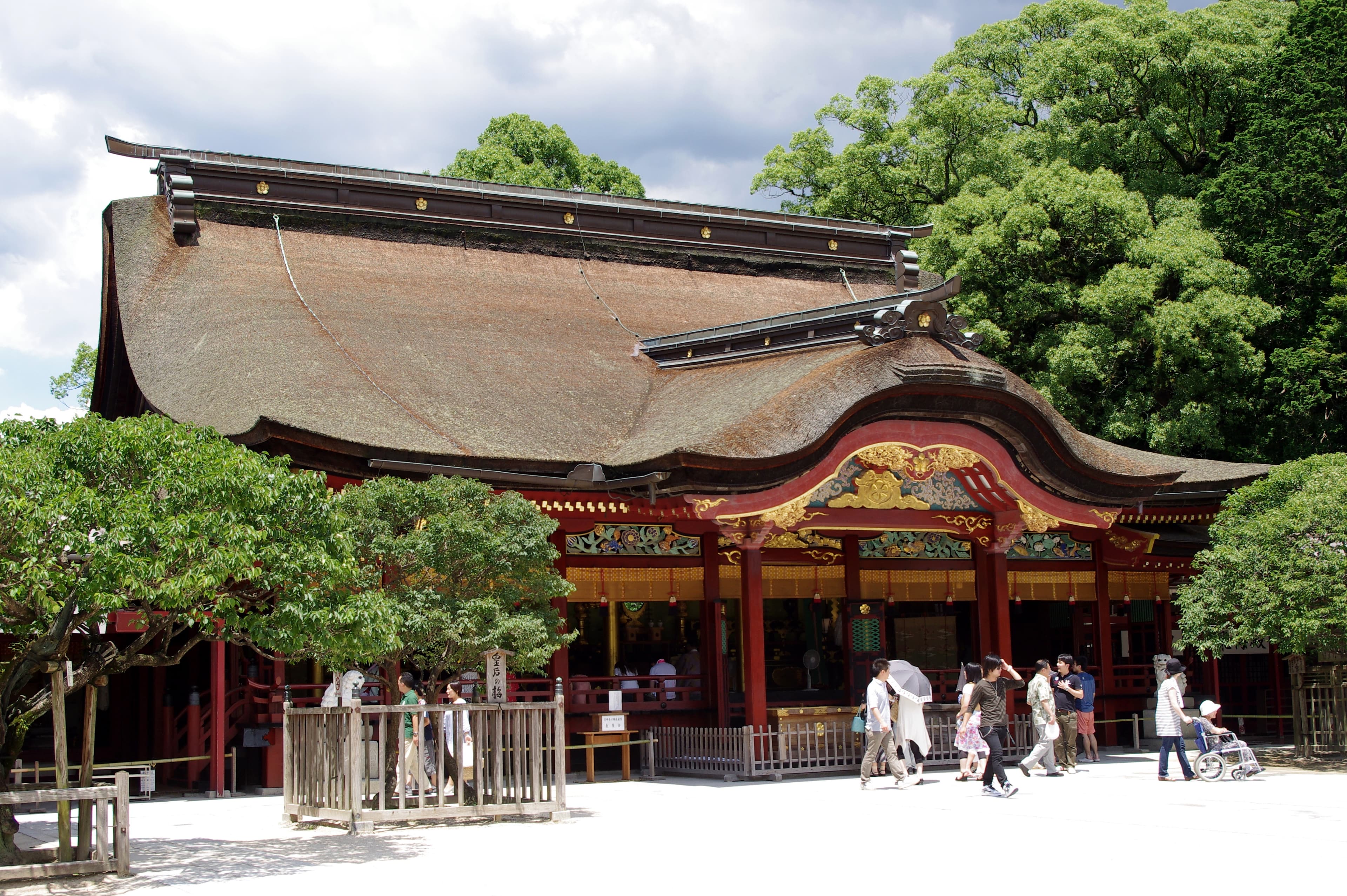
Dazaifu Tenmangu
partial太宰府天満宮 · Dazaifu, Fukuoka
The head shrine of every Tenmangu in Japan, built over the grave of an exiled scholar — and currently mid-way through the end of a 124-year restoration.
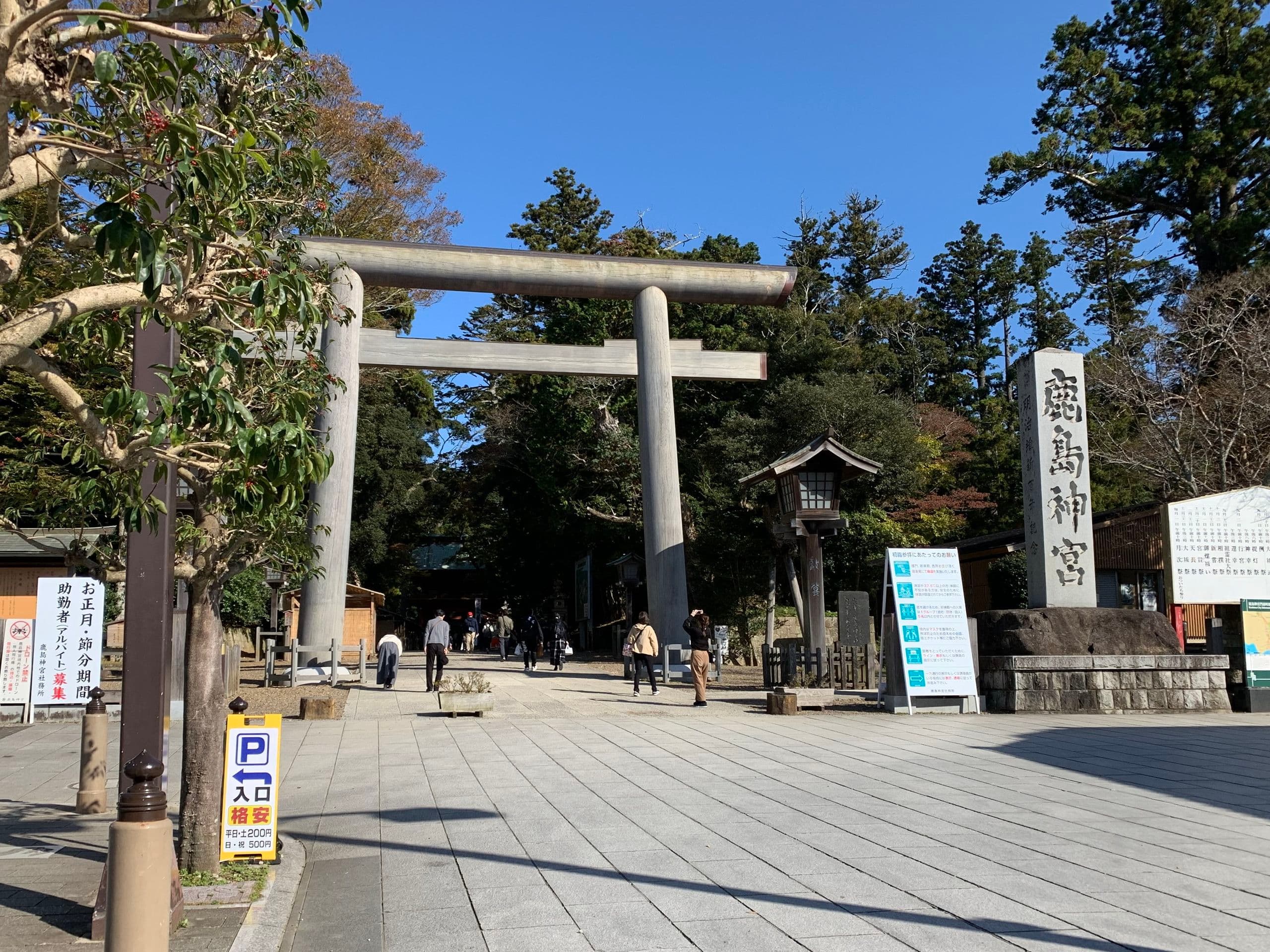
Kashima Jingu
partial鹿島神宮 · Kashima, Ibaraki
A vast forest shrine to the sword-and-thunder kami, where a stone said to pin down the earthquake catfish sits at the end of a 700-metre cedar path.
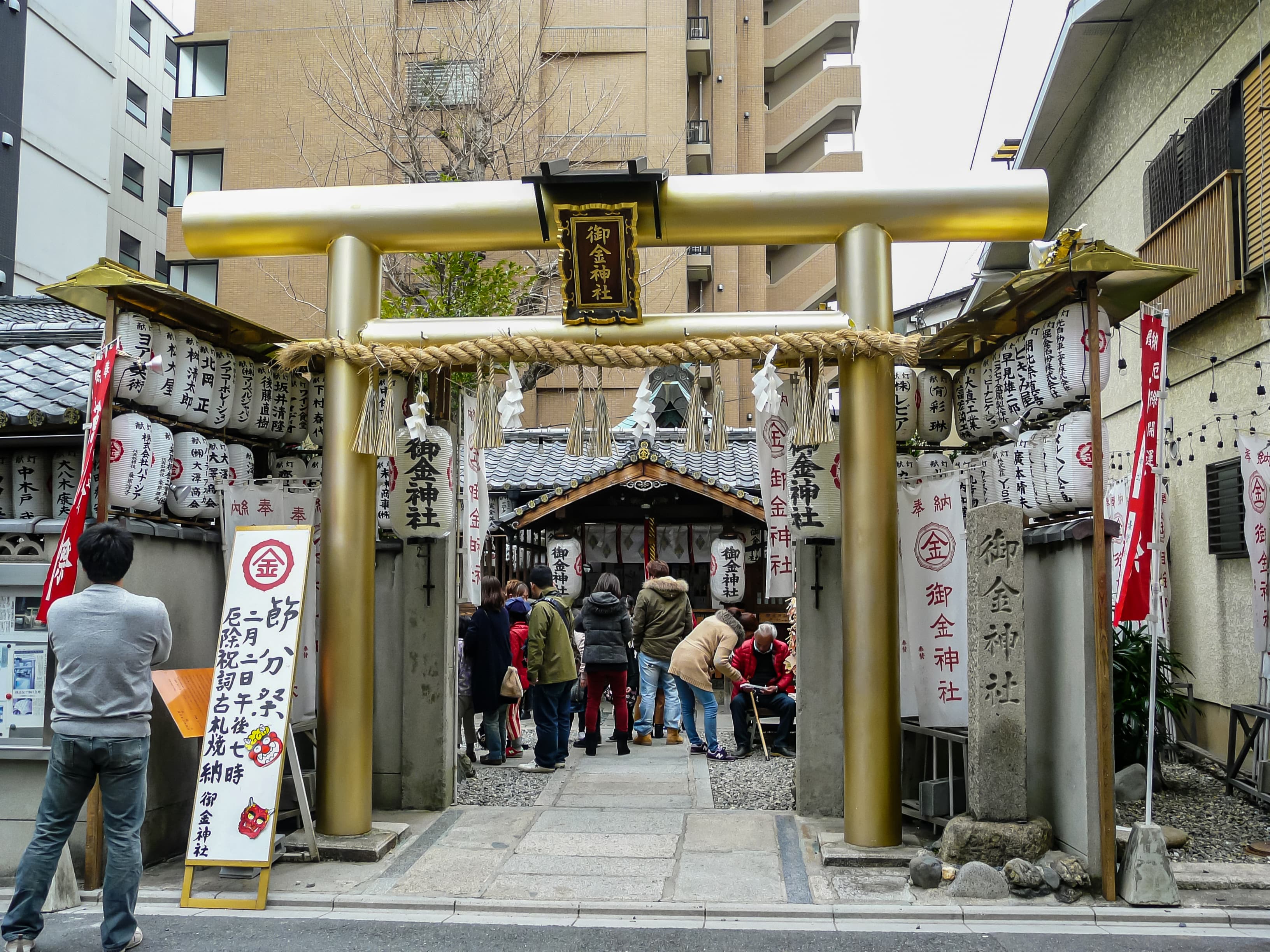
Mikane Jinja
御金神社 · Nakagyo, Kyoto
A tiny shrine to the deity of metals with a gold-leafed torii, wedged into a Kyoto residential street — and it publicly disowns the coin-washing ritual the internet teaches you to do there.
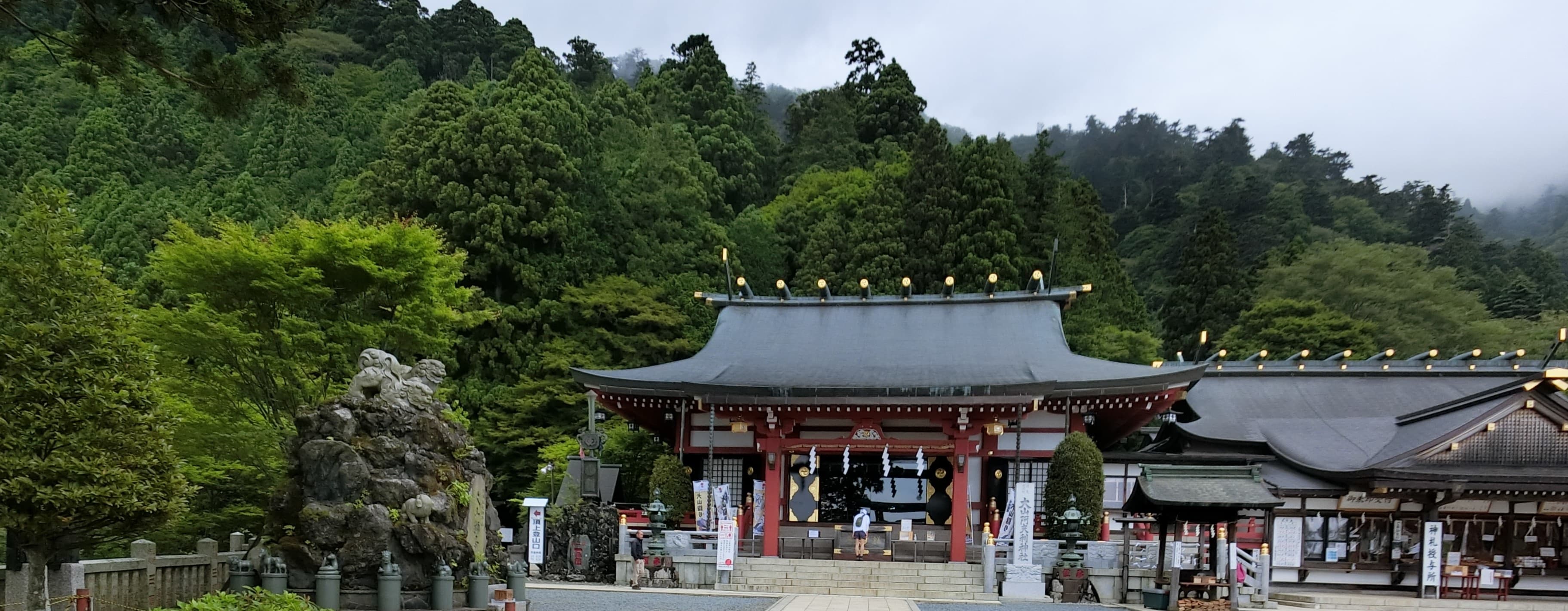
Oyama Afuri Jinja
大山阿夫利神社 · Isehara, Kanagawa
A mountain shrine ninety minutes from Tokyo where the lower hall is a cable-car ride and the upper hall is a two-hour climb — and the difference matters.