Mikane Jinja
御金神社
Nakagyo, Kyoto · Shinto shrine
A tiny shrine to the deity of metals with a gold-leafed torii, wedged into a Kyoto residential street — and it publicly disowns the coin-washing ritual the internet teaches you to do there.
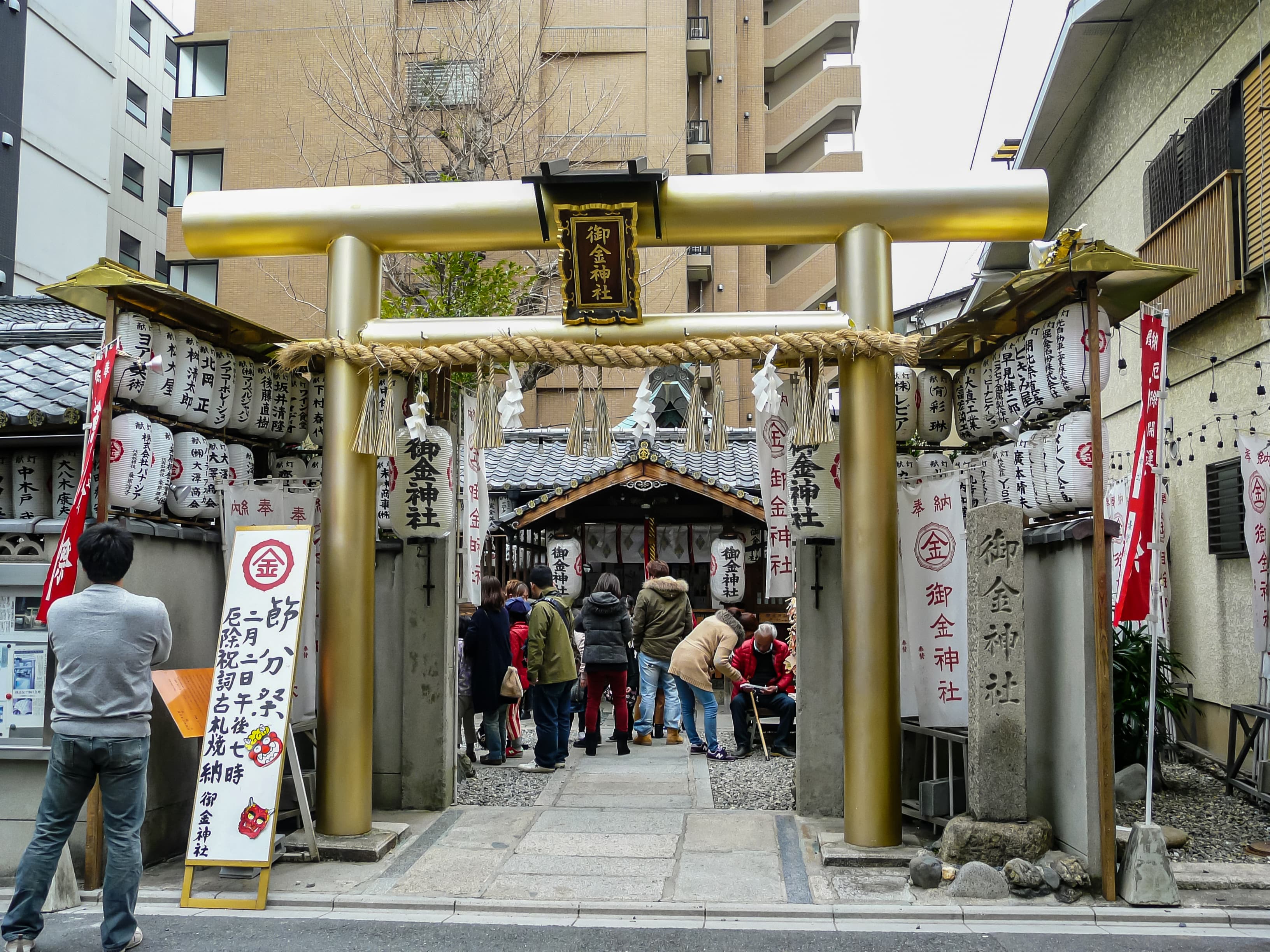
Mikane Jinja is small enough to walk past. It has no forecourt; the gold-leafed torii opens straight onto a narrow residential street in Nakagyo, and the whole precinct is perhaps the size of a large room.
The principal deity is Kanayamahiko, guardian of metals, mines and minerals — gold, silver and copper. That is the original association, and it is broader than it now looks: the shrine's own page lists the development of metalworking and related industries alongside money luck. Over time the metal became money, and the requests narrowed to finance, securities, investment, business growth, and, quite openly, lottery wins.
It is also one of the clearest cases we have found of a shrine being misrepresented by the English- and Japanese-language internet at once, which is why the section below matters more than usual.
Which kami is enshrined here
- Kanayamahiko-no-Mikoto 金山毘古神
- The principal kami: guardian of all metals, mines and minerals — gold, silver and copper. The shrine's own wording.
- Amaterasu-Omikami 天照大神
- The sun goddess, co-enshrined here.
- Tsukuyomi-no-Mikoto 月読神
- The moon deity, co-enshrined here.
Take part
What you can actually do here
Fuku-tsutsumi mamori — the shrine's signature item, a cloth amulet pressed with gold leaf, meant to hold your bankbook or new banknotes. The shrine stresses that each is leafed by hand, so stock is limited and it sells out often.
A naming warning: the shrine calls it 福包み守り. The name fukuzaifu ("fortune wallet") and the ¥2,000 price you will see quoted come from third-party blogs and resale listings, not from the shrine, which publishes no price. The shrine also states it sells no amulets online and warns about imitations sold elsewhere.
Other items: a ginkgo-leaf ema and amulet drawing on the sacred ginkgo on the grounds, a gamaguchi-purse-shaped amulet, and an omikuji that uniquely includes a dai-dai-kichi — a "great great blessing" lot above the usual top result.
Etiquette
Where this place differs
Do not wash coins in the purification basin here. This is the shrine's own instruction, and it is unusually direct: washing money at the temizuya is not a form of worship this shrine endorses, and it asks visitors to refrain from using the basket.
Blogs, videos and other visitors will tell you the opposite. They are wrong, and the shrine has said so in writing. If money-washing is what you want, that is a practice belonging to other shrines — Koami Jinja in Tokyo, for instance — not this one.
New to this? Read the full worship sequence first.
Goshuin
Getting the seal here
Offered, and the terms are unusually clear:
- Pre-written sheets only. The shrine states it will not write into your goshuincho.
- It does not sell goshuincho either.
- Available 10:00–16:00, when the office is staffed.
Price is not published.
Before you go
Outside 10:00–16:00 there is nobody there. The grounds stay open all day and night, but arrive early or late and you get the torii and nothing else — no amulets, no goshuin.
Photograph considerately. The shrine asks it plainly. There is no forecourt to stand in, so a queue of people photographing the golden torii means a queue standing in a residential street; the shrine also asks visitors not to play location-based phone games there. This is somebody's neighbourhood.
Map
Sources
This entry was compiled from the following, most of them in Japanese.