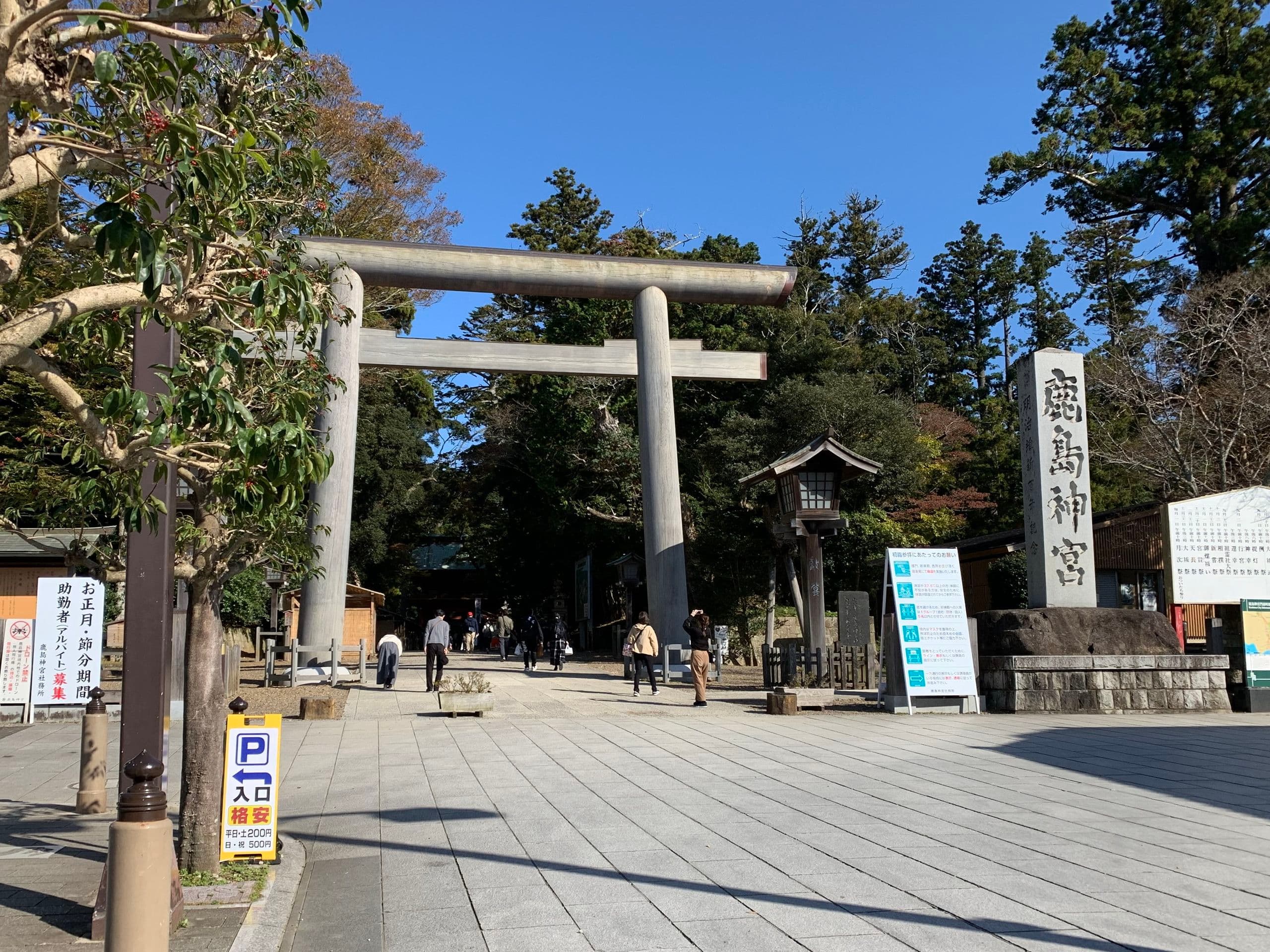
Kashima Jingu
鹿島神宮
Kashima, Ibaraki · Shinto shrine
A vast forest shrine to the sword-and-thunder kami, where a stone said to pin down the earthquake catfish sits at the end of a 700-metre cedar path.
partial — Partly restricted at the time of our last check — see the caution below.
Kashima Jingu enshrines Takemikazuchi, a kami of thunder and the sword who appears in the founding myths as the one sent down to negotiate — at sword-point — the transfer of the land. He is the patron of the martial arts, and the shrine has a long association with beginnings: with setting out, with the start of a campaign or an undertaking. That is a more specific thing to bring here than general good fortune.
It is also physically unlike the urban shrines most visitors see. The precinct is a large stretch of forest, and reaching the inner shrine means walking a cedar-lined path of about 700 metres. Beyond it is the Kaname-ishi, the pivot stone.
The shrine is open at all hours, every day of the year, which its own FAQ states plainly. Two things are currently degraded, though, and both are covered below.
Which kami is enshrined here
- Takemikazuchi-no-Okami 武甕槌大神
- Kami of thunder and the sword, and of the founding of the land; patron of the martial arts. Written 建御雷神 in the Kojiki and 武甕槌神 in the Nihon Shoki.
- Takemikazuchi-no-Okami no Aramitama 武甕槌大神荒魂
- The 'rough spirit' aspect of the same kami, enshrined at the inner shrine, whose hall was donated by Tokugawa Ieyasu in 1605.
Take part
What you can actually do here
The Kaname-ishi. A stone at the far end of the inner path, of which only a small rounded top is visible. It is said to run enormously deep and to hold down the head of the catfish whose movements cause earthquakes. Tokugawa Mitsukuni is recorded as having tried to dig it out, and as having given up. Walking out to it is the thing to do here — it is roughly 700 metres beyond the inner shrine and turns the visit into a proper walk through the forest.
The deer park. Deer are this kami's messengers, and the connection is genealogical rather than decorative: when Kasuga Taisha was founded in Nara, the deity was carried there from Kashima on the back of a deer, which is why Nara has deer at all. The shrine keeps around twenty. Whether feed is sold, and at what price, is not documented.
Mitarashi Pond, fed by over 400,000 litres of spring water a day, is the shrine's purification site, and the midwinter cold-water austerity is still performed there at New Year. Whether outsiders may take part is not documented.
Etiquette
Where this place differs
Standard sequence. Two shrine rules that are stricter than usual: dogs may not enter the precinct at all, because they frighten the deer — assistance dogs excepted — and people within fifty days of a death in the family are asked to refrain from entering, with a purification available at the gate if the visit is unavoidable. Collecting plants, animals or soil is prohibited.
New to this? Read the full worship sequence first.
Goshuin
Getting the seal here
Offered at the amulet office, 8:30–16:30. Goshuincho are ¥1,500–2,000. The price of the seal itself is not published; collectors report ¥500 each for the main shrine and the inner shrine.
Currently degraded, and this is officially announced. During the preparations for the Ofunasai the shrine has switched to pre-written paper seals. Separately, from 1 January to 3 February each year it issues paper only — no writing into books, scrolls or boards. A commemorative Ofunasai seal is being issued from 1 August to 6 September 2026.
Before you go
The treasure hall has been shut since 2018 and the National Treasure sword is not on view. Guidebooks still list it. This is the single most common disappointment here.
1–3 September 2026 is a once-in-twelve-years event. The Shikinen Taisai Ofunasai falls in the Year of the Horse: an imperial-envoy rite on the 1st, a night procession the same evening, a boat procession with more than eighty escort vessels on the 2nd, and the return rite on the 3rd. It will be extraordinary and it will be extremely crowded; access restrictions are not published in advance.
Trains run about once an hour, and Suica and PASMO cannot be used on the Kashima Rinkai Railway section. Check the timetable before you commit to a return.
Map
Sources
This entry was compiled from the following, most of them in Japanese.
Others people visit for the same reasons
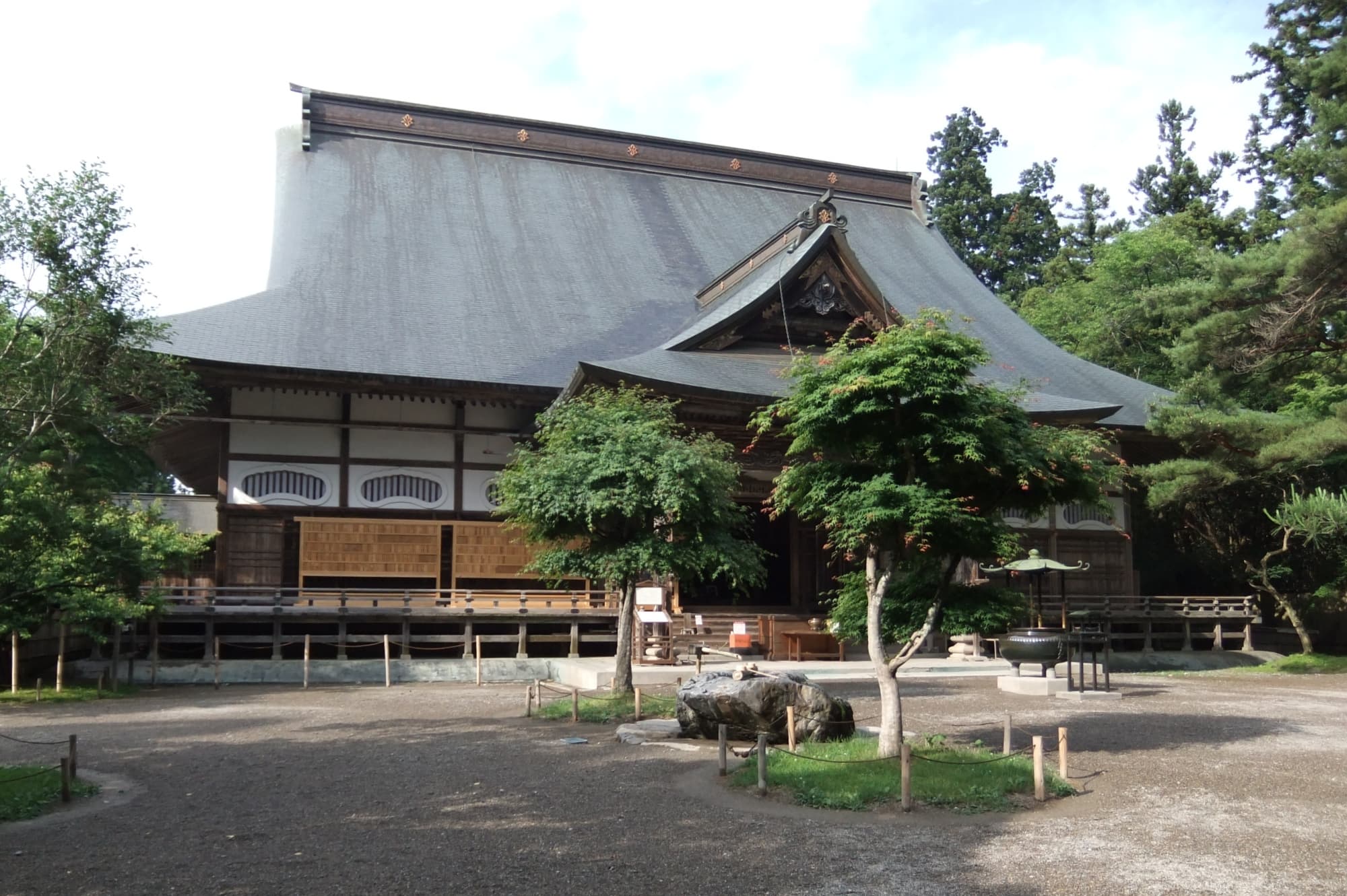
Chuson-ji
中尊寺 · Hiraizumi, Iwate
A World Heritage Tendai temple whose golden hall was raised in 1124 as a vow for the repose of the dead of both sides in a war — and it is a temple, so do not clap.
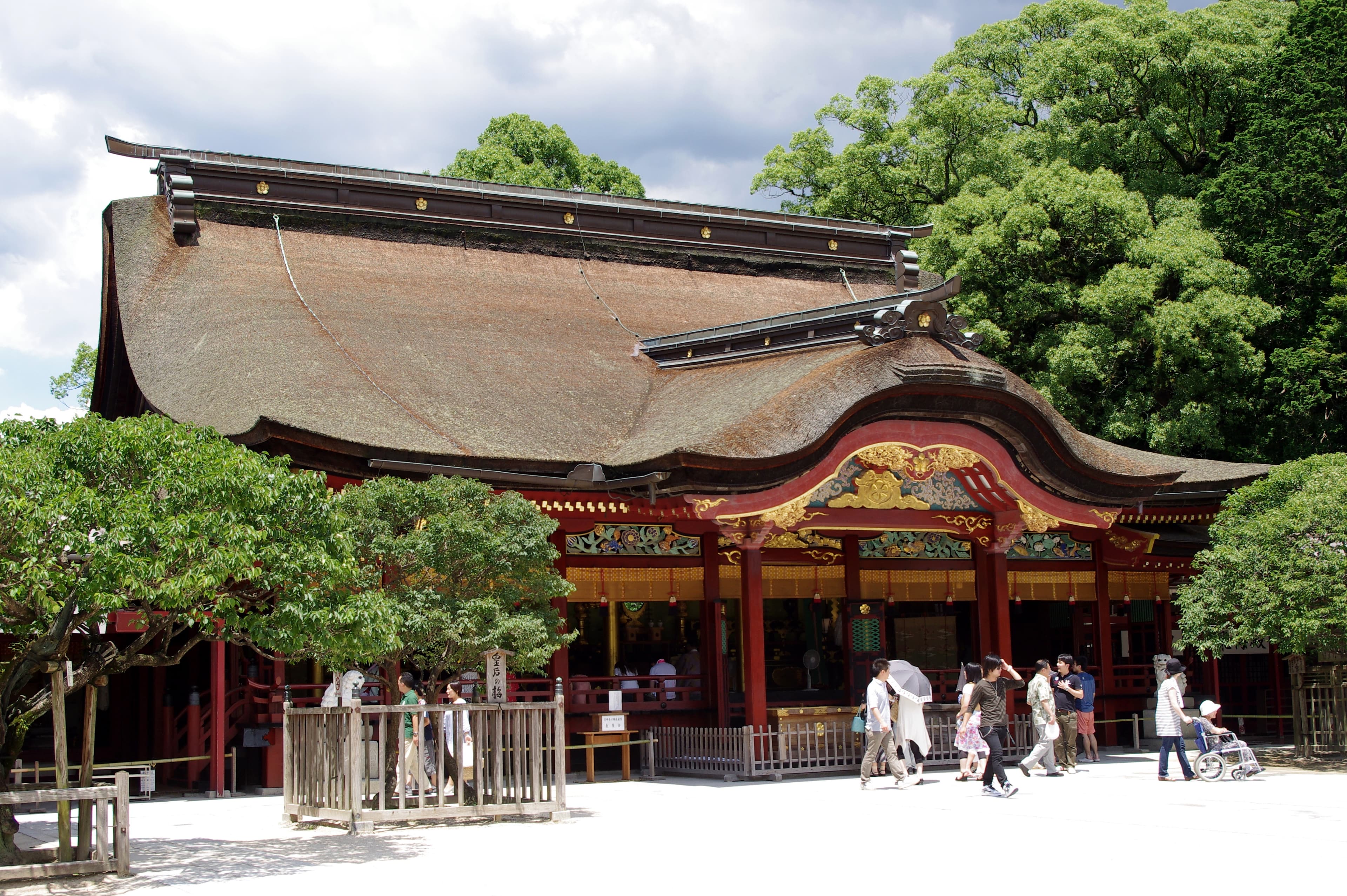
Dazaifu Tenmangu
partial太宰府天満宮 · Dazaifu, Fukuoka
The head shrine of every Tenmangu in Japan, built over the grave of an exiled scholar — and currently mid-way through the end of a 124-year restoration.
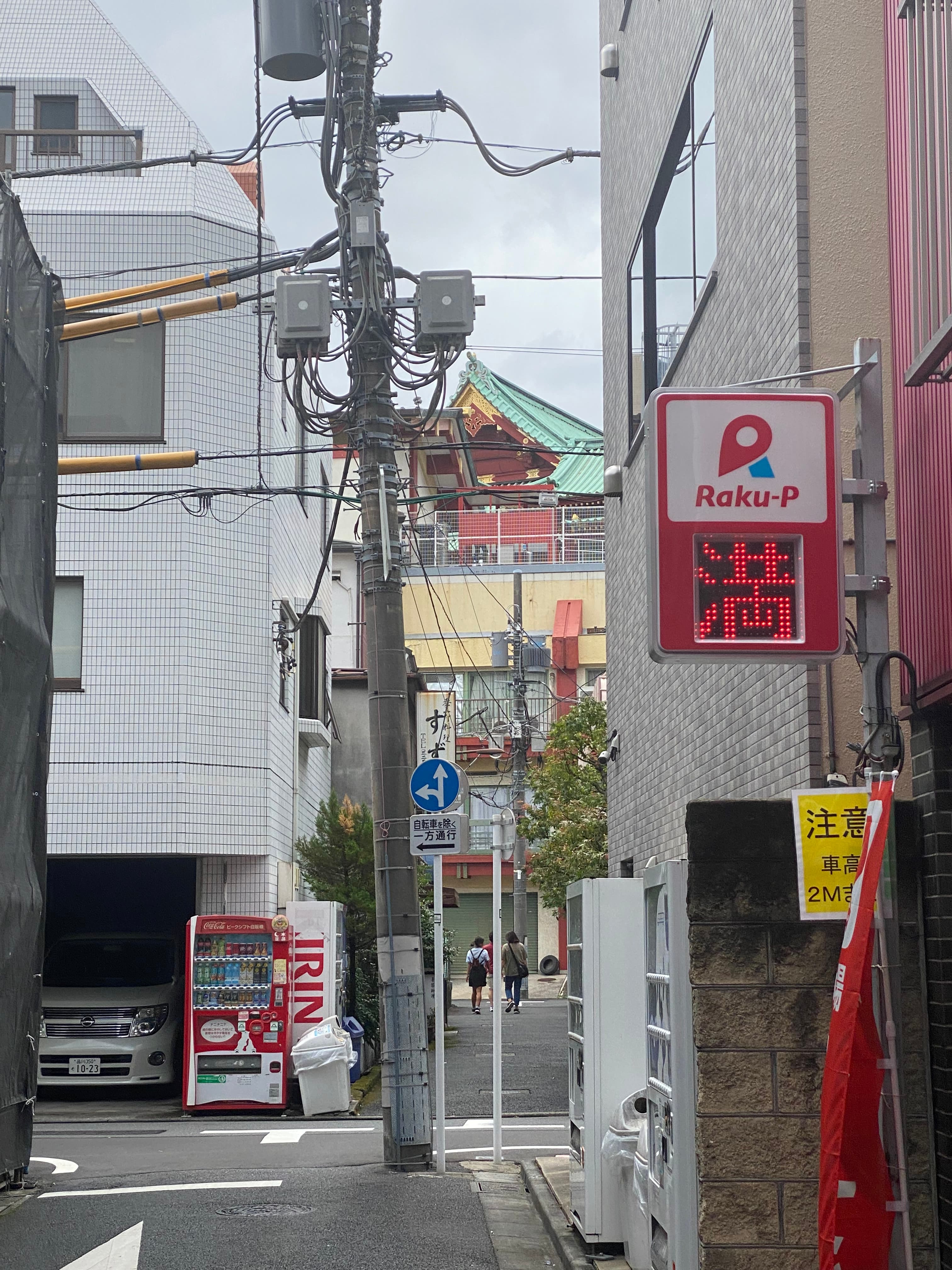
Kanda Myojin
神田明神 · Chiyoda, Tokyo
The tutelary shrine of Edo's merchant districts, next door to Akihabara — and the most relaxed major shrine in Tokyo about how you approach it.
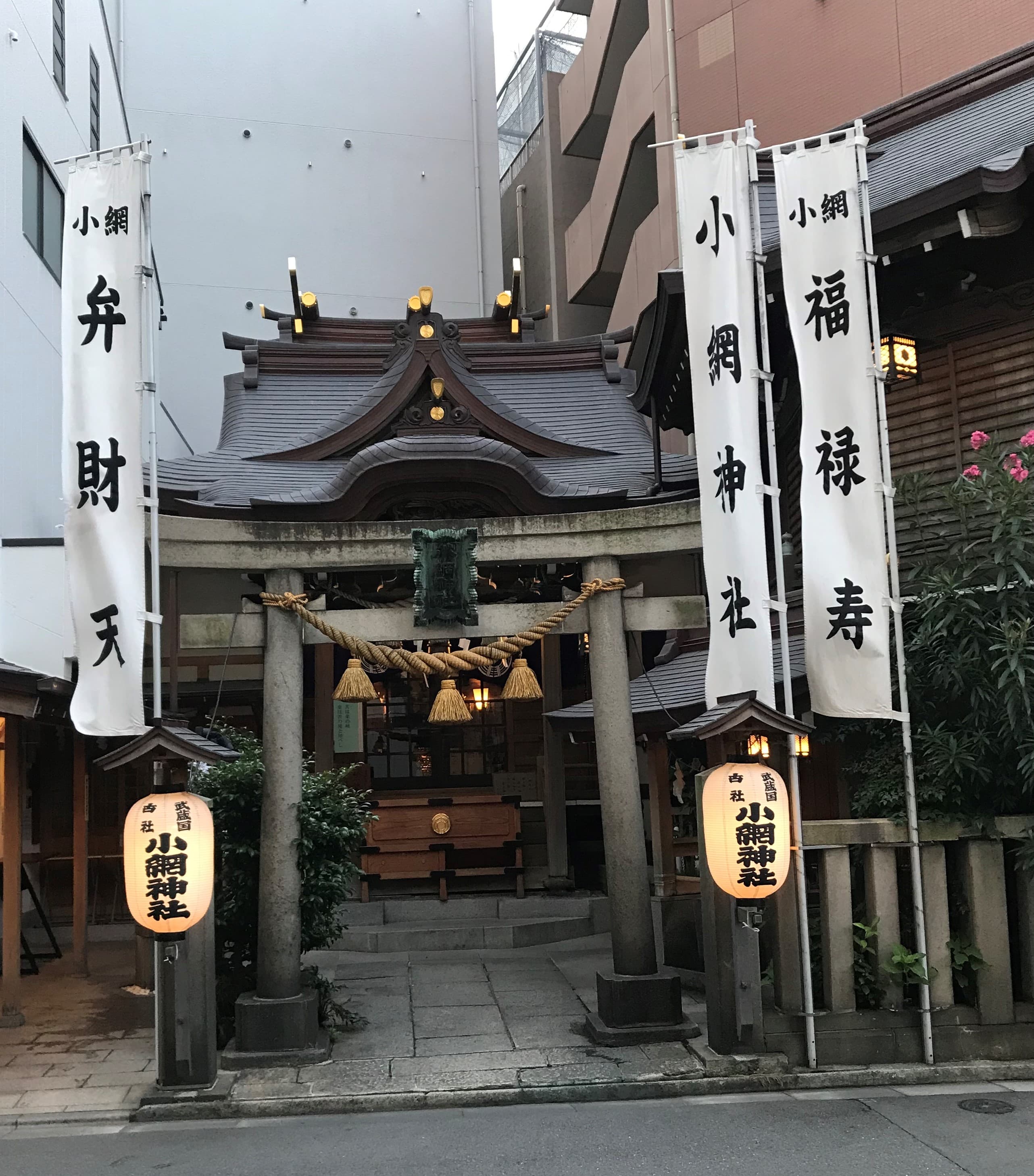
Koami Jinja
小網神社 · Chuo, Tokyo
A tiny Nihonbashi shrine with a reputation for strong luck built on two documented survivals — and a coin-washing well that is the reason most people come.